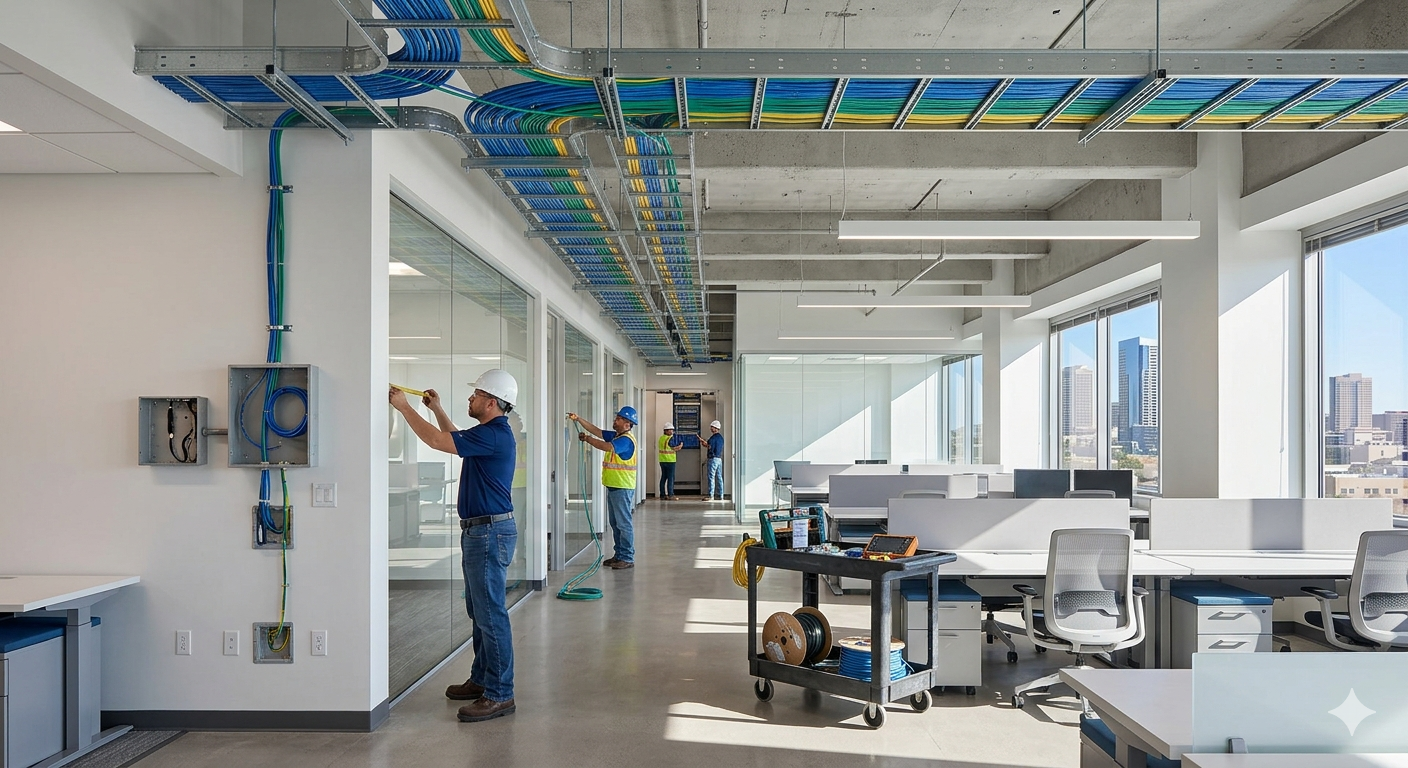
When we work with businesses across Phoenix planning a structured data cabling installation, we consistently see that proper preparation makes the difference between a smooth two-day project and a week-long headache. Over our years installing commercial network cabling throughout the Valley, we’ve learned that facilities that take the time to prepare see fewer delays, reduced costs, and better long-term system performance.
The Phoenix commercial landscape presents unique challenges for structured cabling phoenix projects. From desert heat affecting cable routing through attics to the concrete construction common in our commercial buildings, local factors significantly impact installation timelines and techniques. Whether you’re upgrading an existing office or preparing a new space at Scottsdale Quarter or Downtown Phoenix Convention District, understanding what contractors need before they arrive saves everyone time and money.
Here’s what proper preparation for structured data cabling phoenix installation looks like:
Clear access to all cable pathways including ceiling spaces, electrical rooms, and wall cavities
Documented network requirements with specific data drops, equipment locations, and bandwidth needs
Coordinated scheduling with other trades and minimal disruption to business operations
Proper permits and approvals secured before installation begins
Designated workspace for installers with power access and equipment staging areas
Assess Your Space and Document Network Requirements
Before any cable gets pulled, you need a comprehensive understanding of your network infrastructure needs. In our experience installing office network cabling phoenix systems, the most successful projects start with detailed site surveys and clear documentation of requirements. This isn’t just about counting desks and adding data drops.
Walk through your space and identify every location requiring network connectivity. Consider not just current workstations but future expansion, wireless access point placements, security cameras, VoIP phones, and any IoT devices. We typically recommend planning for 20-30% additional capacity beyond immediate needs, especially in growing Phoenix businesses where expansion happens faster than anticipated.
Document the following details for your installer:
Total number of data drops with exact locations marked on floor plans
Cable types required (Cat6 for most business applications, Cat6a for higher bandwidth or future-proofing)
Equipment room locations for network switches, patch panels, and telecommunications equipment
Power requirements including dedicated circuits for network equipment and PoE considerations
Special requirements such as shielded cabling for areas with electromagnetic interference
Understanding Cable Pathways and Infrastructure
Phoenix commercial buildings vary dramatically in construction. Older properties near downtown may have limited ceiling space and concrete block walls, while newer facilities at Desert Ridge Marketplace or Chandler Fashion Center typically offer more flexible cable routing options. Your preparation strategy depends heavily on your building’s infrastructure.
Schedule a pre-installation walkthrough with your cabling contractor. We examine ceiling accessibility, identify existing cable trays or conduit, locate potential obstacles like HVAC ductwork, and determine whether walls allow for vertical cable runs. This assessment prevents surprises on installation day that could derail your timeline.
“The buildings we work with in Phoenix’s commercial districts present everything from modern suspended ceilings with ample plenum space to older structures requiring creative routing solutions. Knowing what you’re working with before installation day determines whether a project takes two days or two weeks.” – Enzo Audio Visual installation team
Clear Physical Access and Coordinate with Building Management
Physical access problems cause more installation delays than any other factor in commercial network cabling phoenix projects. Locked electrical rooms, blocked ceiling access points, and occupied spaces prevent installers from completing their work efficiently. We’ve seen projects at locations like Scottsdale Fashion Square delayed by days because proper access wasn’t secured in advance.
Coordinate with your building management or landlord at least two weeks before installation. Secure keys or access codes for all relevant spaces including electrical rooms, telecommunications closets, roof access (if exterior cable runs are needed), and any locked ceiling areas. If your space shares infrastructure with other tenants, notify building management about the installation timeline and any potential impacts.
Preparing Work Areas
Professional cat6 cabling installation phoenix requires space for equipment, tools, and cable spools. Designate a staging area near your main equipment room where installers can set up. This area needs power outlets, protection from weather (particularly important during Phoenix summers), and enough clearance for 500 or 1000-foot cable spools.
Clear the installation path throughout your facility:
Remove ceiling tiles along planned cable routes or ensure they’re easily accessible
Clear furniture and equipment from areas where drops will be installed
Relocate stored items from electrical rooms and telecommunications closets
Protect sensitive equipment from dust and debris that cable installation generates
Move obstructions blocking access to walls where outlets will be mounted
Handle Permits, Approvals, and Code Requirements
Phoenix and surrounding municipalities have specific requirements for low voltage cabling phoenix installations in commercial spaces. While low-voltage work often doesn’t require the same permitting as electrical work, commercial installations typically need inspections to ensure compliance with fire codes, building codes, and telecommunications standards.
Your contractor should handle permit applications, but you’re responsible for providing necessary building information and coordinating with landlords for approval. Commercial spaces in mixed-use developments like CityScape Phoenix or Westgate Entertainment District often have additional requirements from property management regarding installation methods and approved contractors.
Verify these requirements at least three weeks before your scheduled installation:
Local permits for commercial telecommunications installations
Building owner approvals for any penetrations or permanent modifications
Fire marshal requirements for plenum-rated cabling in air handling spaces
Insurance certificates if required by your lease or building management
Access scheduling for any shared building infrastructure
Understanding Plenum Requirements
Phoenix commercial buildings with suspended ceilings used for air circulation require plenum-rated cable. This fire-resistant cable costs 30-40% more than standard cable but meets strict fire safety codes. Your installer needs to know before ordering materials whether your ceiling spaces qualify as plenum areas, which affects both material costs and installation timelines.
Building inspectors in Phoenix take plenum requirements seriously. Using non-plenum cable in plenum spaces results in failed inspections and complete cable replacement, potentially adding thousands of dollars and weeks to your project timeline.
Schedule Around Business Operations
Strategic scheduling minimizes disruption to your business operations during business network cabling phoenix installation. We’ve completed installations during business hours in occupied offices, but the process goes much faster and smoother when spaces are empty or during off-hours.
Consider these scheduling approaches based on your business needs:
Weekend installations eliminate employee disruption but may incur overtime charges from contractors
After-hours work keeps your business operational but requires building access outside normal hours
Phased installations allow section-by-section completion with minimal impact on any single area
During remodels or relocations provides the ideal scenario with empty spaces and concurrent construction
Communicate your installation schedule to all affected employees at least one week in advance. Let them know which areas will be impacted, expected noise levels, and any temporary loss of network connectivity. For retail or customer-facing businesses at locations like Tempe Marketplace or Biltmore Fashion Park, schedule installations during closed hours to avoid customer disruption.
Prepare Your Existing Network Infrastructure
If you’re adding to or replacing existing structured cabling phoenix infrastructure, preparation includes documenting and potentially decommissioning old systems. We frequently encounter commercial spaces where previous installations were never properly labeled or documented, creating confusion during upgrades.
Before your installation team arrives, create documentation of your current network:
Photograph existing patch panel configurations so they can be replicated after upgrades
Label all active cables if they aren’t already marked with destinations
Identify obsolete cabling that should be removed rather than left in place
Document switch configurations so network settings can be restored quickly
Back up critical data before any network equipment disconnection
Planning for Network Downtime
Even well-planned installations require some network downtime when connecting new infrastructure to existing systems. Work with your IT staff or managed service provider to determine the best window for this transition. Phoenix businesses operating across multiple time zones or with 24/7 operations need particularly careful planning to minimize impact.
Schedule downtime during your lowest-activity periods. For most offices, this means weekend mornings. For retail operations at centers like Arizona Mills Mall or SanTan Village, very early mornings before opening provide the best windows. Budget at least 2-4 hours for the final switchover even if your installer is highly efficient.
Common Mistakes That Delay Commercial Cabling Projects
Over years of ethernet cabling installation phoenix projects, we’ve identified recurring mistakes that extend timelines and increase costs. Learning from others’ experiences helps you avoid these pitfalls.
Underestimating cable quantities and drop locations. Many businesses count only current workstations without considering conference rooms, break rooms, wireless access points, and future expansion. We typically see requests for additional drops halfway through projects, which requires new materials orders and scheduling delays. Plan for 20-30% more drops than your immediate count suggests.
Failing to coordinate with other trades. HVAC contractors, electricians, and general contractors often need the same ceiling and wall spaces. When trades aren’t coordinated, you end up with schedule conflicts and completed work being undone. If you’re part of a larger renovation, ensure your project manager integrates cabling installation into the master schedule.
Ignoring environmental factors in Phoenix commercial spaces. Attic temperatures in Phoenix regularly exceed 140°F during summer months. Cable installed in these extreme conditions requires different techniques and materials than standard installations. Installers also need early morning or evening scheduling during peak summer to safely work in these environments.
Not preparing adequate power infrastructure. Modern structured wiring installation phoenix projects include network equipment requiring dedicated circuits and often uninterruptible power supplies. Discovering power inadequacies during installation creates costly delays while electricians add circuits. Your electrical infrastructure assessment should happen during the planning phase, not installation day.
Choosing the lowest bid without verifying experience. Commercial cabling in Phoenix’s diverse building stock requires experience with everything from historic downtown structures to modern tilt-up warehouses. Contractors unfamiliar with local building types, code requirements, or Phoenix’s unique challenges deliver subpar results. Projects requiring corrective work after inadequate initial installation can cost 50-70% more than doing it right the first time.
Professional Network Cabling Installation in Phoenix
While understanding preparation requirements helps facilities managers and business owners plan effectively, professional installation ensures your structured data cabling phoenix system meets current standards and future needs. Enzo Audio Visual has provided structured cabling phoenix installation services throughout the Phoenix Metropolitan area since 2011.
Our team brings specialized expertise in commercial environments ranging from small offices to large-scale facilities at locations like Mesa Riverview and Kierland Commons. We’re familiar with the building codes, permitting requirements, and construction methods common throughout Phoenix, Tempe, Scottsdale, and surrounding communities. This local knowledge translates to more accurate project estimates, faster installations, and systems designed for Arizona’s unique commercial landscape.
Professional installation provides certified cable testing and documentation that DIY or inexperienced contractors can’t match. We test every cable run with specialized equipment ensuring it meets TIA/EIA standards for your specified category (Cat6, Cat6a, etc.). This documentation proves valuable for insurance purposes, future troubleshooting, and system expansions. It also prevents the frustrating intermittent connectivity issues caused by marginal cable installations that pass casual inspection but fail under load.
Our experience with integrated systems gives us perspective beyond just pulling cable. We understand how your cabling infrastructure supports VoIP phone systems, wireless networks, security cameras, and digital signage. This holistic view during the planning phase helps businesses avoid costly mistakes like insufficient cable types for PoE requirements or inadequate backbone cabling for future bandwidth needs.
Conclusion: Setting Your Project Up for Success
Proper preparation transforms structured data cabling installation from a disruptive, uncertain process into a smooth, predictable project. The businesses we work with that invest time in thorough planning consistently experience shorter installation timelines, fewer surprises, and better long-term system performance. Whether you’re preparing a new office space or upgrading existing infrastructure, the preparation steps outlined here apply across Phoenix’s diverse commercial real estate landscape.
Start your preparation at least 4-6 weeks before your desired installation date. This timeline allows for necessary permits, materials ordering, coordination with building management, and scheduling around your business operations. The larger and more complex your installation, the more lead time you need for thorough preparation.
“The most successful commercial cabling projects share one common factor: clients who understand their requirements and prepare their spaces accordingly. When businesses take preparation seriously, everyone benefits through faster installations, better results, and systems that perform reliably for years.” – Enzo Audio Visual project management team
Enzo Audio Visual specializes in commercial data cabling throughout Phoenix and the surrounding metropolitan area. Our team handles everything from initial site surveys and network planning through installation, testing, and documentation. We work with businesses of all sizes to design scalable network infrastructure that supports current operations and future growth.
Contact us today for a consultation about your commercial network cabling phoenix project and discover how proper planning and professional installation create the reliable network infrastructure your business depends on.
Fast and reliable internet connectivity is no longer a luxury; it’s a necessity for every business. Whether you’re managing a bustling office in downtown Phoenix or operating a warehouse in the outskirts of the Valley, your company’s ability to communicate, collaborate, and perform depends heavily on your network infrastructure. That’s where fiber optic technology comes in. For businesses deciding between single-mode or multi-mode fiber optic in Phoenix, understanding the difference between the two options is essential for making the right investment in performance, scalability, and cost efficiency.
Understanding Fiber Optic Technology
Fiber optic cables use light signals to transmit data, providing much faster speeds and greater reliability than traditional copper cables. These fibers are made of glass or plastic strands that carry light pulses, allowing information to move at nearly the speed of light. Unlike copper-based networks that suffer from signal interference and distance limitations, fiber optic systems deliver consistent, high-speed connections across long distances with minimal data loss.
For commercial environments, including offices, retail stores, hotels, or event spaces, fiber optic networks enable seamless video conferencing, real-time data sharing, and reliable cloud access. However, when planning a commercial fiber optic installation in Phoenix, businesses often face a crucial question: should you choose single-mode or multi-mode fiber optic cables?
What is Single-Mode Fiber Optic?
Single-mode fiber optic cables use a very small core, typically around 9 microns in diameter, that allows only one mode of light to pass through. This narrow core minimizes signal reflection and dispersion, allowing data to travel much farther distances with minimal loss. Because of this, single-mode fiber is ideal for long-distance communication, think multi-building campuses, data centers, or large commercial facilities that need connections extending several kilometers.
Single-mode fiber optic networks are designed for precision and performance. They’re capable of supporting higher bandwidths and faster data transmission rates than multi-mode fiber. This makes them a top choice for businesses planning to scale or those that rely heavily on data-intensive operations such as cloud computing, 4K video streaming, or large-scale data storage systems.
Advantages of Single-Mode Fiber
Longer distance transmission: Ideal for connections that span multiple locations or large properties.
Higher bandwidth capacity: Perfect for businesses that anticipate growing network demands.
Future-proof investment: As technology evolves, single-mode infrastructure can easily handle upgrades to higher speeds.
Minimal signal loss: Ensures consistent performance over extended distances.
Disadvantages of Single-Mode Fiber
Higher equipment costs: The transceivers and installation equipment are typically more expensive.
Complex installation: Due to precision requirements, it often requires expert installation and maintenance.
What is Multi-Mode Fiber Optic?
Multi-mode fiber optic cables feature a larger core, typically 50 or 62.5 microns, that allows multiple light paths or modes to travel simultaneously. While this design supports high data rates, it also increases signal distortion over longer distances. As a result, multi-mode fiber is best suited for shorter-range connections, such as within a single office building, retail store, or event venue.
For many small to mid-sized businesses, multi-mode fiber provides the best balance between cost and performance. It delivers high-speed data transfer for most commercial applications and is easier to install and maintain than single-mode systems.
Advantages of Multi-Mode Fiber
Cost-effective: Installation and hardware are typically less expensive than single-mode setups.
High-speed performance: Provides excellent speeds for short to medium distances.
Easier installation: Requires less precision during splicing and termination.
Ideal for local networks: Works perfectly for offices or facilities where all devices are within a few hundred meters.
Disadvantages of Multi-Mode Fiber
Limited distance: Signal quality degrades more quickly over long runs.
Lower bandwidth potential: Not as scalable for future high-speed applications.
Single-Mode Fiber vs Multi-Mode Fiber: Key Differences
When evaluating single-mode fiber vs multi-mode fiber, it’s important to consider several technical and practical factors that will influence your network’s performance and longevity.
Feature
Single-Mode Fiber
Multi-Mode Fiber
Core Diameter
~9 microns
50–62.5 microns
Light Source
Laser-based
LED-based
Distance Capacity
Up to 40+ km
Up to 2 km (depending on type)
Bandwidth
Virtually unlimited
Limited over distance
Cost
Higher
Lower
Best Use Case
Large campuses, data centers, long-distance networks
Offices, buildings, short-range applications
Understanding these differences is critical when planning fiber optic solutions for offices in Phoenix. The right choice depends on how far your network must reach, how much data you transmit, and your long-term infrastructure goals.
Choosing the Best Fiber Optics for Businesses in Phoenix
Selecting the best fiber optic for businesses requires a thorough assessment of current and future needs. A professional installation team will typically consider the following factors:
1. Distance and Layout
If your network needs to connect buildings across a large property or link remote departments, single-mode fiber is the smarter investment. For smaller office environments or in-building cabling, multi-mode fiber provides sufficient speed and reliability at a lower cost.
2. Bandwidth Requirements
Businesses that rely heavily on cloud storage, remote conferencing, and real-time collaboration will benefit from the higher bandwidth capabilities of single-mode fiber. Meanwhile, companies with more localized data requirements can comfortably operate on multi-mode systems without compromising performance.
3. Budget and Scalability
Single-mode networks cost more upfront but offer long-term scalability and fewer future upgrades. Multi-mode systems are budget-friendly and fast to deploy, but may require upgrades as your network demands increase.
4. Application Environment
The type of environment, such as corporate office, retail space, manufacturing floor, or entertainment venue, also plays a role. For example, an event production company might use multi-mode fiber for lighting and sound synchronization within a venue, while a large tech firm may prefer single-mode for data center connectivity.
Professional Commercial Fiber Optic Installation in Phoenix
While understanding the differences between single-mode and multi-mode fiber is important, proper installation and integration are equally crucial. Poorly installed fiber optic networks can lead to performance issues, data loss, and unnecessary maintenance costs.
Professional business network cabling in Phoenix ensures that your fiber optic infrastructure meets both current operational needs and future expansion plans. Certified installers like Enzo Audio Visual use high-quality materials, precision tools, and proven methods to deliver optimal signal performance and durability.
A proper commercial fiber optic installation in Phoenix includes:
Site assessment: Evaluating the layout, distances, and network goals.
System design: Planning routes, terminations, and connection points.
Cable installation: Implementing single-mode or multi-mode fiber with precision.
Testing and certification: Ensuring compliance with performance standards.
Ongoing maintenance: Monitoring and servicing your system for long-term reliability.
The Importance of Partnering with a Professional Team
Fiber optic technology has revolutionized business connectivity, but achieving its full potential requires expertise. Whether you’re upgrading from copper cabling or designing a new network from the ground up, working with experienced professionals ensures your system is tailored to your unique business needs.
Enzo Audio Visual specializes in providing high-performance fiber optic solutions for offices, retail stores, and commercial environments across Phoenix. Our expert technicians design, install, and support cutting-edge network systems that deliver exceptional speed, reliability, and scalability.
Why Phoenix Businesses Are Choosing Fiber
Businesses throughout Phoenix are upgrading to fiber optic internet because it offers clear advantages over traditional broadband and coaxial connections. Fiber delivers symmetrical upload and download speeds, which are crucial for cloud-based collaboration, VoIP systems, and remote communication. It also provides unmatched reliability, helping prevent costly downtime.
As more companies adopt hybrid work models and digital transformation strategies, the demand for advanced business network cabling in Phoenix continues to grow. Investing in the right fiber optic infrastructure now ensures your organization remains competitive, connected, and prepared for the future.
Final Thoughts
The decision between single-mode or multi-mode fiber optic in Phoenix ultimately depends on your business’s size, network range, and performance goals. Single-mode fiber is ideal for large-scale or long-distance operations that demand top-tier performance, while multi-mode fiber is a cost-effective solution for smaller, localized networks.
Partnering with a trusted provider ensures that your system is installed correctly, optimized for your operations, and ready to evolve with your business needs.
Take Your Business Connectivity to the Next Level
Are you ready to take your commercial space to the next level? At Enzo Audio Visual, we’re dedicated to providing exceptional commercial AV solutions in the Valley. Whether you’re upgrading your office, securing your premises, or planning an unforgettable event, we have the expertise and technology to make it happen. Contact us today at (602) 769-7992 to schedule a consultation and discover how our custom solutions can transform your business. Let’s create something incredible together!
When planning a new commercial space or upgrading your existing network infrastructure, structured cabling is one of the most critical components to consider. It’s the backbone that connects your communication systems, supporting everything from internet access to phone lines, security cameras, and audio-visual systems. However, one of the first questions business owners and facility managers ask is: How much does structured cabling cost in Phoenix? The answer depends on several factors, including the type of cabling, the size of your facility, the complexity of the installation, and the quality of the materials used. This guide breaks down what influences the cost, what to expect from professional installation, and how to budget effectively for your next project.
What Is Structured Cabling?
Structured cabling is a standardized system of cables, connectors, and related hardware that provides a comprehensive telecommunications infrastructure for businesses. It supports data transmission, voice communications, security systems, and even audio-visual networks. A well-designed, structured cabling system is scalable, reliable, and organized, making it easier to maintain and upgrade as your business grows. The most common types of structured cabling used today include Category 5e (Cat5e), Category 6 (Cat6), and fiber optic cables, each serving different performance needs.
Why Structured Cabling Matters
The importance of structured cabling in a business environment cannot be overstated. A well-installed system minimizes downtime, enhances network performance, and supports future technology upgrades. Poor cabling, on the other hand, can lead to slow data transmission, signal interference, and unnecessary maintenance costs. For businesses in Phoenix’s fast-growing commercial landscape, a dependable network infrastructure is essential for maintaining productivity and efficiency.
Factors That Influence Structured Cabling Cost in Phoenix
1. Type of Cable
The type of cable you choose is one of the most significant factors influencing structured cabling cost in Phoenix. Cat5e cables are typically the most affordable option, supporting speeds up to 1 Gbps over short distances. Cat6 cables, which are increasingly standard for modern businesses, offer higher performance and bandwidth, supporting up to 10 Gbps. Fiber optic cables, while more expensive, provide the fastest speeds and are ideal for larger facilities that require long-distance transmission without signal loss.
2. Size and Layout of the Facility
The overall size of your building and the layout of the space will directly affect the total cost. A large facility with multiple floors or complex pathways will require more cable runs, conduits, and labor. For example, an open office layout may be easier and less expensive to wire than a space with numerous walls, drop ceilings, or hard-to-reach areas.
3. Data Cabling Cost Per Drop
The “data cabling cost per drop” is a key metric when estimating your total expenses. A “drop” refers to each connection point, such as a wall jack or workstation outlet. In Phoenix, the average data cabling cost per drop typically ranges from $100 to $250 for Cat6 installations. This cost includes materials, labor, and testing. More complex drops, such as those requiring longer cable runs or special pathways, may cost more.
4. Type of Installation
Structured cabling installation in Phoenix can vary depending on whether it’s a new construction project or a retrofit of an existing building. Installing cabling during new construction is generally less expensive since walls and ceilings are open, allowing easier access for technicians. Retrofitting an existing space may involve additional labor, cutting, patching, and rerouting cables, all of which can increase the final cost.
5. Equipment and Components
Beyond the cables themselves, structured cabling systems require additional hardware components such as patch panels, racks, conduits, and connectors. The quality and type of these materials can influence overall pricing. High-quality components are often worth the investment since they ensure durability, signal reliability, and compatibility with future upgrades.
6. Compliance and Testing
Professional cabling contractors in Phoenix must adhere to strict local building codes and industry standards such as ANSI/TIA-568. After installation, cables must be tested for signal integrity and performance. These steps ensure the system is safe, reliable, and ready for use, but they also contribute to the total cost of structured cabling installation in Phoenix.
Typical Structured Cabling Pricing Guide
While every project is unique, the following structured cabling pricing guide can help you estimate what to expect:
Cat5e cabling: $90–$150 per drop
Cat6 cabling installation cost: $100–$250 per drop
Cat6a cabling: $200–$300 per drop
Fiber optic cabling: $300–$600 per drop
These estimates include materials, labor, and basic testing. Additional costs may apply for specialized installations, conduit runs, patch panels, or extended cable routes.
Additional Cost Considerations
When calculating structured cabling cost in Phoenix, don’t forget to account for these potential add-ons:
Patch Panels and Racks: Expect to spend between $100 and $500, depending on size and quality.
Cable Management and Labeling: Proper organization improves maintenance and troubleshooting, but may add to labor costs.
Network Room Buildout: Creating or upgrading a server or telecom room could add $1,000–$5,000, depending on scope.
Permitting and Inspections: Some commercial installations may require local permits or inspections, adding to the timeline and budget.
Cost by Business Type
Different industries have different needs. Here’s how structured cabling installation in Phoenix might vary by business type:
Office Buildings: Typically $100–$200 per drop for Cat6 installations.
Retail Stores: Similar range but may include additional drops for POS systems and security cameras.
Warehouses: Often require longer cable runs and more durable conduit, raising costs to $150–$300 per drop.
Healthcare Facilities: Must meet strict safety and compliance standards, often costing $250–$500 per drop.
Educational Institutions: May involve multiple network segments, averaging $150–$350 per drop.
Benefits of Professional Structured Cabling Installation in Phoenix
Hiring a qualified contractor for your structured cabling project ensures that your system is installed safely, efficiently, and in compliance with all local and industry standards. A professional installer can design a cabling infrastructure that supports current needs while allowing for future expansion. At Enzo Audio Visual, we take a consultative approach to structured cabling installation in Phoenix, ensuring that every component is tailored to your business requirements.
Professional installation also helps minimize downtime. Poorly executed cabling can lead to intermittent connectivity issues, data loss, and reduced productivity. With a properly planned system, your business benefits from consistent performance, scalability, and lower maintenance costs over time.
The Value of Future-Proofing Your Network
Technology evolves rapidly, and your cabling infrastructure should be able to keep up. While Cat5e cables might meet today’s minimum requirements, Cat6 or fiber optic cabling is a smarter long-term investment. By choosing higher-performance materials now, you reduce the need for expensive upgrades later. When you consider the cost of structured cabling installation in Phoenix as a long-term investment rather than a one-time expense, it becomes clear that quality pays for itself in reliability and performance.
Choosing the Right Partner for Your Project
Selecting the right cabling contractor is just as important as choosing the right materials. Look for a company with experience in commercial installations, strong client testimonials, and a clear understanding of local building codes. Enzo Audio Visual is proud to serve businesses throughout the Valley with expert structured cabling solutions designed for performance and longevity. Our technicians are certified, experienced, and dedicated to delivering seamless results on every project.
How to Get an Accurate Quote
To receive an accurate estimate for structured cabling cost in Phoenix, request a professional on-site assessment. This allows technicians to evaluate your building layout, determine the number of drops required, and identify potential challenges. A detailed quote should include material costs, labor, testing, and any additional fees. At Enzo Audio Visual, we provide transparent, itemized estimates so you know exactly what you’re paying for, no surprises, no hidden fees.
Invest in a Reliable Network Infrastructure
Structured cabling is the foundation of your business’s communication and technology infrastructure. Investing in a professionally installed system ensures reliability, scalability, and performance for years to come. Whether you’re outfitting a new commercial space or upgrading an existing one, understanding the factors that influence structured cabling cost in Phoenix will help you make an informed decision.
Are you ready to take your commercial space to the next level? At Enzo Audio Visual, we’re dedicated to providing exceptional commercial audio-video solutions in the Valley. So, whether you’re upgrading your office, securing your premises, or planning an unforgettable event, we have the expertise and technology to make it happen. Just contact us today at Enzo Audio Visual to schedule a consultation and discover how our custom solutions can transform your business. Let’s create something incredible together!
Security is a top priority for any business, and in Phoenix, commercial property owners are increasingly turning to CCTV systems to protect their assets, employees, and customers. However, when it comes to installing commercial security cameras, there’s more to consider than just placement and image quality. One crucial but often overlooked aspect involves understanding CCTV signage requirements in Phoenix and how they impact compliance, privacy, and customer trust. In this guide, we’ll explore the laws, best practices, and signage considerations every business owner should know before setting up a surveillance system.
Understanding the Importance of CCTV Signage
When businesses install surveillance cameras, signage plays an essential role in informing employees, customers, and visitors that recording is taking place. Proper signage isn’t just a courtesy; it’s a compliance requirement in many jurisdictions. The purpose of CCTV signs is to ensure transparency and prevent privacy concerns, helping your business remain compliant with state and federal laws. In addition, visible security camera signage acts as a deterrent to theft, vandalism, and other criminal activity. Simply put, letting people know they’re being recorded can prevent incidents before they happen.
Business CCTV Laws in Arizona
While Arizona doesn’t have a single, specific statute exclusively dedicated to business CCTV laws in Arizona, several overlapping regulations govern how surveillance can be used. Arizona follows what’s known as a “one-party consent” rule for recording conversations. This means that at least one party being recorded must consent to the recording. However, when it comes to video surveillance without sound, the law focuses primarily on the expectation of privacy.
In general, businesses can install cameras in public or semi-public spaces where individuals do not have a reasonable expectation of privacy, such as retail floors, entryways, lobbies, and parking lots. Areas like restrooms, locker rooms, and private offices, however, are considered off-limits for video recording. When combined with clear security camera signage requirements, proper camera placement ensures businesses respect privacy while maintaining a secure environment.
CCTV Signage Requirements in Phoenix
Understanding the CCTV signage requirements in Phoenix is critical for businesses looking to comply with both state law and local regulations. While Arizona law does not explicitly mandate CCTV signage in all cases, Phoenix businesses are encouraged to display clear notices informing the public that they are under surveillance. These notices serve several important purposes:
Transparency: Signage assures customers and employees that surveillance is being conducted for safety and operational purposes.
Liability Reduction: Clearly displayed CCTV signs can help protect your business in the event of disputes or legal claims by showing that individuals were informed of video monitoring.
Compliance with Industry Standards: Some industries, such as healthcare or financial institutions, have additional federal or industry-specific compliance requirements that include notification of surveillance.
Enhanced Deterrence: Signage not only fulfills legal and ethical obligations but also serves as a psychological deterrent to potential offenders.
In short, while signage may not always be legally mandated, it’s a best practice that no business should overlook.
What to Include on Your CCTV Signs
When designing signage to meet security camera signage requirements, clarity is key. Signs should be easy to read, visible, and convey essential information. Here’s what a compliant CCTV sign typically includes:
Notification of Surveillance: Clearly state that the area is under video surveillance. Phrases such as “This area is monitored by CCTV” or “Security cameras in use” are effective and widely understood.
Purpose of Recording: It’s often helpful to mention why the recording is taking place, such as “for your safety and security.”
Business Identification: Include your company name or logo to clarify ownership of the system.
Contact Information: Providing a phone number or website can be beneficial, especially if individuals have questions about data use or privacy.
Visibility: Signs should be placed at eye level near entry points and in any monitored area to ensure people can easily see them.
The goal is to balance transparency and simplicity. Overly detailed signage may confuse or overwhelm viewers, while minimal wording may fail to communicate intent.
Federal and Industry Compliance Considerations
Beyond local laws, businesses must also be aware of federal regulations and industry-specific standards that can influence CCTV compliance for businesses. For example, organizations handling sensitive customer information, such as financial, legal, or healthcare entities, must comply with regulations like the Gramm-Leach-Bliley Act (GLBA) or the Health Insurance Portability and Accountability Act (HIPAA).
Both require reasonable security measures to protect client data, which can include monitored access to secure areas. Similarly, companies accepting credit card payments must adhere to the Payment Card Industry Data Security Standard (PCI DSS), which may necessitate video surveillance of areas containing payment processing equipment. In such cases, signage not only supports compliance but also reinforces your company’s commitment to privacy and security.
Consequences of Non-Compliance
Failing to meet CCTV compliance for businesses can lead to significant legal and reputational risks. Without proper signage, individuals could claim a violation of privacy, leading to civil complaints or lawsuits. Even if your surveillance system is technically legal, the absence of visible notifications may be perceived as deceptive or invasive, damaging your brand’s reputation. In regulated industries, non-compliance with notification requirements could result in fines, penalties, or loss of accreditation. In short, it’s far more cost-effective to invest in appropriate signage upfront than to face potential disputes later.
Choosing the Right Location for Signs and Cameras
The success of your commercial CCTV installation in Phoenix depends not just on what cameras you use, but where they’re installed, and where you display your signage. When planning your system, consider the following:
Entry Points: Place signage at every building entrance so visitors know from the outset that surveillance is in place.
Reception Areas: These are high-traffic zones that benefit from both cameras and visible signs.
Parking Lots: Outdoor signs should be weather-resistant and installed at key vehicle and pedestrian access points.
Interior Corridors and Elevators: These common areas often experience high foot traffic and are ideal for both surveillance and signage.
By positioning signs strategically, you not only comply with CCTV signage requirements in Phoenix but also maximize the deterrent effect of your system.
Working with a Professional Installer
While some business owners attempt to handle CCTV installation themselves, professional assistance ensures compliance and optimal performance. A licensed security and audiovisual specialist understands local regulations, privacy concerns, and signage guidelines. They can assess your property, recommend appropriate camera types, and ensure your setup aligns with business CCTV laws in Arizona. At Enzo Audio Visual, our team specializes in commercial CCTV installation in Phoenix, delivering custom security solutions that are both effective and compliant. From planning and design to signage placement and system integration, our experts handle every detail to ensure peace of mind and professional results.
The Role of Audio-Visual Integration in Modern Security
Modern security isn’t just about cameras; it’s about creating a comprehensive audiovisual network that enhances safety, communication, and productivity. Integrating surveillance with access control, intercoms, and digital displays allows businesses to monitor operations efficiently while maintaining a welcoming atmosphere for customers and employees. Whether you need AV installation for retail, an office building, or a hospitality venue, working with a provider like Enzo Audio Visual ensures that your system meets not only security camera signage requirements but also your broader operational goals.
Keeping Your Business Protected and Compliant
The bottom line is that compliance is not optional. Understanding CCTV signage requirements in Phoenix helps ensure your business operates within the law while maintaining a transparent and secure environment. By taking the time to plan your surveillance strategy, complete with proper signage, you demonstrate respect for privacy, reduce liability risks, and create a safer space for everyone who enters your property.
If you’re unsure whether your current setup meets all local and federal guidelines, it’s wise to schedule a professional compliance audit. A qualified expert can evaluate your cameras, signage, and storage practices to confirm that your system aligns with CCTV compliance for businesses.
Partner with Enzo Audio Visual for Complete CCTV Solutions
Are you ready to take your commercial space to the next level? At Enzo Audio Visual, we’re dedicated to providing exceptional commercial audio-video solutions in the Valley. Whether you’re upgrading your office, securing your premises, or planning an unforgettable event, our experienced team has the technology and expertise to make it happen. From commercial security cameras in Phoenix to state-of-the-art sound systems and interactive displays, we design custom solutions tailored to your needs. Contact us today at (602) 769-7992 to schedule a consultation and discover how our innovative systems can transform your business. Let’s create something incredible together!
In today’s fast-paced business world, where every event competes for attention, audience engagement has become the defining factor of success. Corporate events, in particular, rely on seamless communication, dynamic presentations, and memorable experiences to leave a lasting impression. While content and speakers are vital, the backbone of a truly engaging event often lies in one key element: professional AV setups. A well-designed audio-visual environment not only enhances communication but also sets the tone, atmosphere, and overall flow of the event. Whether it’s a conference, product launch, shareholder meeting, or networking gala, the right corporate audio video event services can transform an ordinary gathering into an unforgettable experience.
The Power of Audio-Visual Engagement at Corporate Events
Audio-visual engagement at corporate events depends on the audience’s ability to connect with the message being delivered. Poor sound quality, dim visuals, or malfunctioning equipment can quickly disengage attendees and undermine the event’s goals.
On the other hand, professional AV setups ensure that every sound is crisp, every image is clear, and every transition feels smooth and intentional. When AV technology is implemented strategically, it enhances storytelling, energizes audiences, and provides the sensory stimulation needed to keep participants attentive and inspired.
Why Professional AV Setups Matter
A professional audio and video setup goes far beyond simply placing speakers and projectors in a room. It involves a carefully curated blend of design, technology, and execution that aligns with the event’s purpose and brand identity. Professional AV setups take into account room acoustics, lighting, screen placement, and even audience psychology. For instance, immersive visuals can draw attention to key moments, while well-balanced sound ensures that every word is heard, no matter where attendees are seated.
In essence, quality AV for business events provides the foundation for clear communication, emotional connection, and an engaging overall experience.
Crafting the Right Atmosphere with Event AV Technology
Corporate event production services often emphasize atmosphere, and with good reason. The mood of an event is heavily influenced by its AV design. Dynamic lighting can create excitement during keynote speeches, while ambient soundscapes can make networking sessions more relaxed and inviting.
Event AV technology allows organizers to craft an environment that supports the goals of each session. For example, product launches benefit from dramatic lighting and synchronized video displays, while training sessions might rely on clear visuals and consistent audio to ensure comprehension. The right combination of light, sound, and visuals can turn a typical corporate event into an immersive brand experience.
Enhancing Communication and Retention
At the heart of every corporate event is the need to communicate ideas effectively. When audiences can see and hear clearly, they retain information longer and connect more deeply with the content. Professional AV setups make this possible by ensuring that speakers’ voices are projected evenly, visuals are high-definition, and transitions between segments are seamless.
Interactive screens, LED walls, and live video feeds further improve communication by making complex topics easier to visualize. When done right, AV for business events enhances not only engagement during the event but also the audience’s ability to recall and apply what they learned afterward.
Leveraging Technology for Interaction
Modern corporate event AV solutions are not limited to one-way communication. Today’s AV systems integrate interactive technologies that encourage participation and feedback. From live polling and Q&A sessions to augmented reality experiences and virtual collaboration tools, event AV technology enables audiences to play an active role rather than just observe.
This two-way interaction fosters a sense of involvement, transforming passive attendees into engaged participants. The more interactive the event, the stronger the connection between the audience and the message.
The Role of Visual Storytelling
Visual storytelling has become a cornerstone of effective communication in the corporate world. Through multimedia presentations, video montages, and real-time displays, professional audio and video setup solutions allow companies to convey their messages in compelling ways.
Instead of relying solely on verbal explanations, visuals can simplify complex ideas, evoke emotions, and reinforce key messages. Whether it’s a promotional video introducing a new product or a dynamic slideshow illustrating company milestones, visuals have the power to capture attention and inspire action.
The Technical Side of Professional AV Setups
Behind the polished execution of an event lies an intricate web of technology and expertise. Professional AV setups require precise coordination of multiple components, including sound systems, microphones, mixers, projectors, screens, cameras, lighting, and control systems. Each element must be configured to complement the others, and timing must be flawless to avoid distractions.
This is why many companies turn to experienced providers of corporate event production services who specialize in managing these technical details. A skilled AV team can anticipate potential challenges, troubleshoot in real-time, and maintain consistency throughout the event.
Tailoring AV Solutions to Your Event Goals
Every corporate event is unique, and so should be its AV design. For example, a product launch might prioritize visual drama and excitement, while an investor meeting might focus on clarity and precision. Understanding the event’s objectives is essential when designing the audio-visual setup. Professional AV consultants take time to assess the venue, audience size, and desired outcomes before crafting a solution that aligns perfectly.
This customization ensures that the technology supports the message rather than distracts from it. Tailored AV solutions not only optimize performance but also create an experience that feels cohesive and intentional.
The Future of Corporate Event AV Solutions
As technology evolves, so too does the potential for audience engagement. The future of event AV technology includes immersive experiences such as 3D projection mapping, holographic displays, and virtual event integration. These innovations allow brands to connect with audiences both in-person and remotely, expanding the reach and impact of their corporate gatherings. Hybrid events, where physical and digital elements coexist, are becoming increasingly popular.
With the right professional audio and video setup, companies can deliver a seamless experience to both live and virtual participants. This trend underscores the importance of investing in adaptable AV systems capable of meeting diverse audience needs.
Maximizing ROI Through AV Excellence
Corporate events represent significant investments of time, money, and resources. Ensuring a strong return on investment depends on delivering a memorable and effective experience. Professional AV setups not only enhance the quality of the event but also reflect positively on the company’s brand image.
Clear communication, engaging visuals, and reliable performance demonstrate professionalism and attention to detail. Moreover, well-executed AV for business events helps organizations achieve their goals, whether it’s generating leads, strengthening partnerships, or boosting employee morale.
Partnering with Experts for Success
To fully leverage the potential of audio-visual engagement in corporate events, partnering with experienced professionals is key. A dedicated AV provider brings not only technical know-how but also creative insight and logistical coordination. From initial planning to post-event support, professional teams handle every aspect of setup, testing, and operation.
This allows event organizers to focus on content and interaction, confident that the technical elements are in capable hands. By entrusting your event’s AV to experts, you ensure a polished, immersive, and reliable experience that captivates your audience and reinforces your brand.
Contact Enzo Audio Visual Today
Engaging your audience at a corporate event requires more than great content and charismatic speakers. It demands an environment that captivates the senses and enhances communication. Professional AV setups transform ideas into impactful experiences through clear sound, stunning visuals, and interactive elements.
As technology continues to evolve, the opportunities to create memorable corporate events are virtually limitless. Whether you’re hosting an intimate meeting or a large-scale conference, investing in high-quality corporate event AV solutions can make all the difference.
Are you ready to take your commercial space to the next level? At Enzo Audio Visual, we’re dedicated to providing exceptional commercial AV solutions in Phoenix and throughout the Valley. Whether you’re upgrading your office, securing your premises, or planning an unforgettable event, we have the expertise and technology to make it happen. Contact us today at (602) 769-7992 to schedule a consultation and discover how our custom solutions can transform your business. Let’s create something incredible together!
 Enzo Audio Visual