What to know about commercial audio in Tempe
Tempe has no decibel limit for noise
Tempe repealed its numeric noise limits, Sec. 20-6, on March 3, 2022. Older copies of the code still show 55 and 65 decibel commercial limits, and those no longer apply. The remaining test is whether noise is unnecessary, excessive or offensive and disturbs the peace of a neighborhood.
Source: Tempe City Code Ch. 20, Sec. 20-6 (repealed) and 20-11(a)
The City weighs time, distance and use
Tempe considers the time of day, the distance to residential sleeping facilities and whether the noise is commercial. A patio near apartments at 10 PM is judged differently from a dining room behind a wall at lunch. That makes speaker aim and a locked top level part of the design.
Source: Tempe City Code Sec. 20-11(b)(6)
Fines add up by the day
Civil fines for noise violations run from $100 to $1,000, and each day is a separate offense. Three civil violations within 24 months turn the next one into a criminal misdemeanor.
A liquor patio needs a security plan, and a downtown use permit can limit music
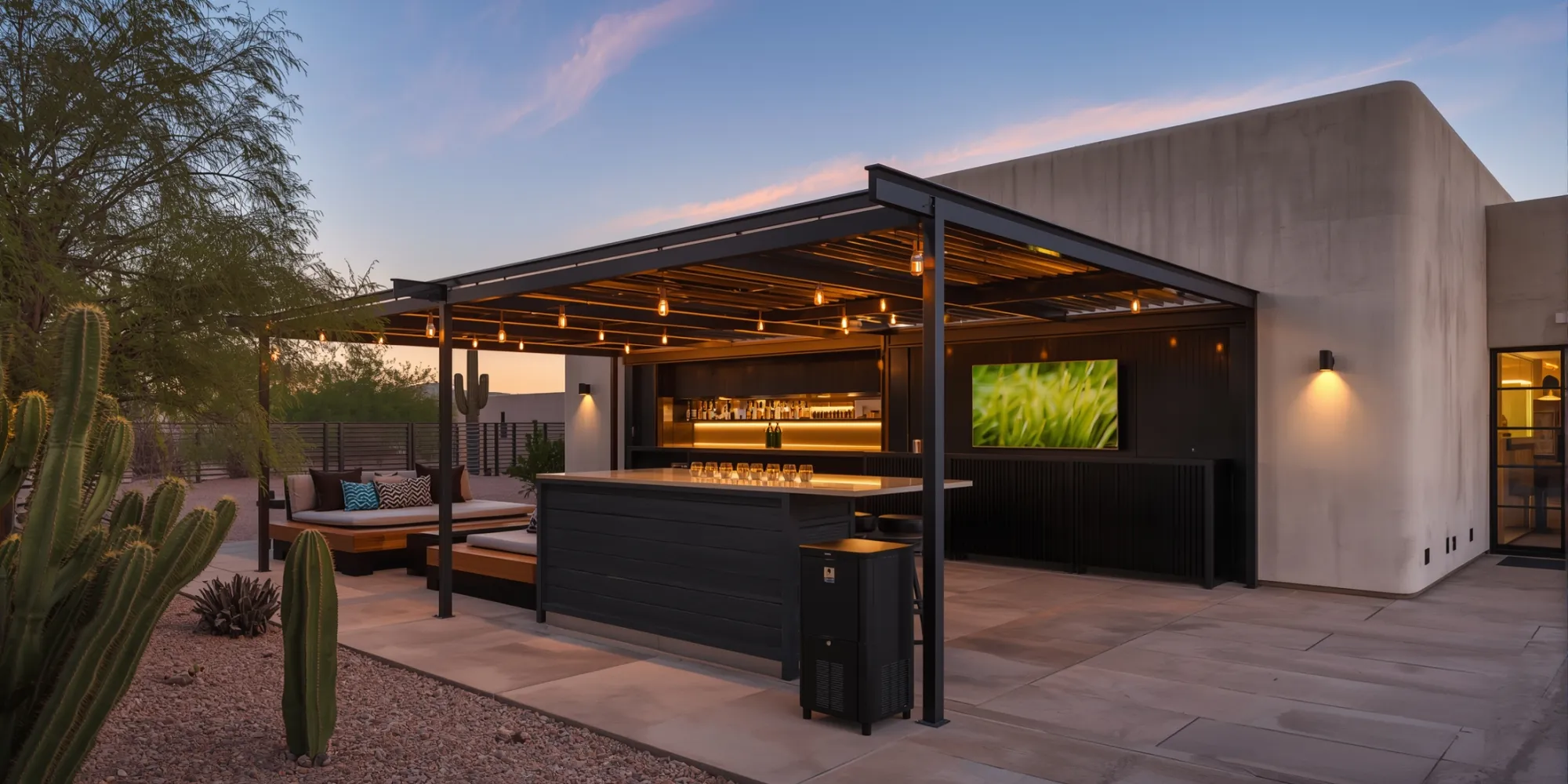
Outdoor seating where liquor is consumed needs a liquor license and a security plan. In one 2018 downtown case, a Series 6 bar in the City Center district was required to keep entertainment inside and end it at 1:55 a.m. That was one case, not a general rule, so read your own use permit before planning patio music.
Zones: who hears what
Most bars and restaurants want at least three zones: the dining room, the bar and the patio. Restrooms and entries often get their own. Each zone has its own volume and can play its own source, so the bar can run the game audio while the dining room stays on background music.
Staff control the zones from a wall panel or a phone. We set a maximum level on every zone, so a busy Friday doesn't end with the patio turned all the way up.
Speakers that suit the room
In-ceiling speakers keep a dining room clean. Surface-mount speakers work where there's no ceiling space, and pendants suit open ceilings. A bar with a crowd usually needs a subwoofer, so the music stays full without pushing the main speakers.
- Many small speakers at a low level sound better than a few loud ones.
- Long runs with many speakers often use a 70-volt system, which keeps the wiring simple.
- Outdoor speakers need to be rated for sun, heat and dust.
Patio sound in Tempe
Without a number to stay under, the safest plan is to keep sound pointed at your guests and away from the nearest homes. We aim patio speakers down and inward, use more speakers at lower volume, and lock the maximum level in the amplifier instead of leaving a knob anyone can turn.
Time matters as much as volume. We can set a lower patio ceiling after a chosen hour, so closing time sounds different from happy hour without anyone touching a control.
Amplifiers and the rack
Behind the speakers sits a multi-channel amplifier with built-in processing, which lets us tune each zone for its room. Everything lands in a labeled rack so the next service call is quick. We connect to your existing equipment when it still works.
Install steps
- We walk the rooms and check ceilings and cable paths.
- You get a plan with zones, speaker positions and a quote.
- We install after hours or on a slow day, so you stay open.
- We tune each zone, then show your staff how to run it.
- Service continues Monday to Friday, 8 AM to 5 PM.
Often paired with
In bars, audio usually goes in with TVs and video distribution, and with AV control so staff run music and TVs from one screen. The full Tempe list is on the Enzo in Tempe page.