What to know about LED video walls in Tempe
Lit signs need a permit and a sign contractor
Every illuminated sign except an address sign needs a sign permit. Applications must come from an Arizona sign contractor holding an active CR-38 license. Signs installed without a permit pay double. Tempe's code doesn't address LED video walls directly, so a wall that faces the street is a question for the City before ordering.
Flashing and animated signs are banned
Tempe bans signs with intermittent or flashing lighting, animated or moving parts, or sound, with exceptions for the drive-through sign type and the changeable-copy type. Freestanding changeable-copy signs are limited to drive-throughs, freeway signs, theatres, museums, service stations, places of worship and fuel canopies. A restaurant or bar doesn't qualify.
A thick cabinet on a facade needs engineering
Building-mounted signs that stick out more than 16 inches from the building face need structural calculations with the sign permit. LED cabinets are deep, so that rule can apply to a wall on the front of a building.
Source: ZDC Sec. 4-904(A)(6)
Fees are published and may have changed
Tempe's sign permit fee has been $368 for one sign and $140 for each additional sign. The City says an annual increase took effect July 1, 2026, so confirm the current schedule before you budget.
Source: City of Tempe, Signs FAQ
Inside walls and outside walls
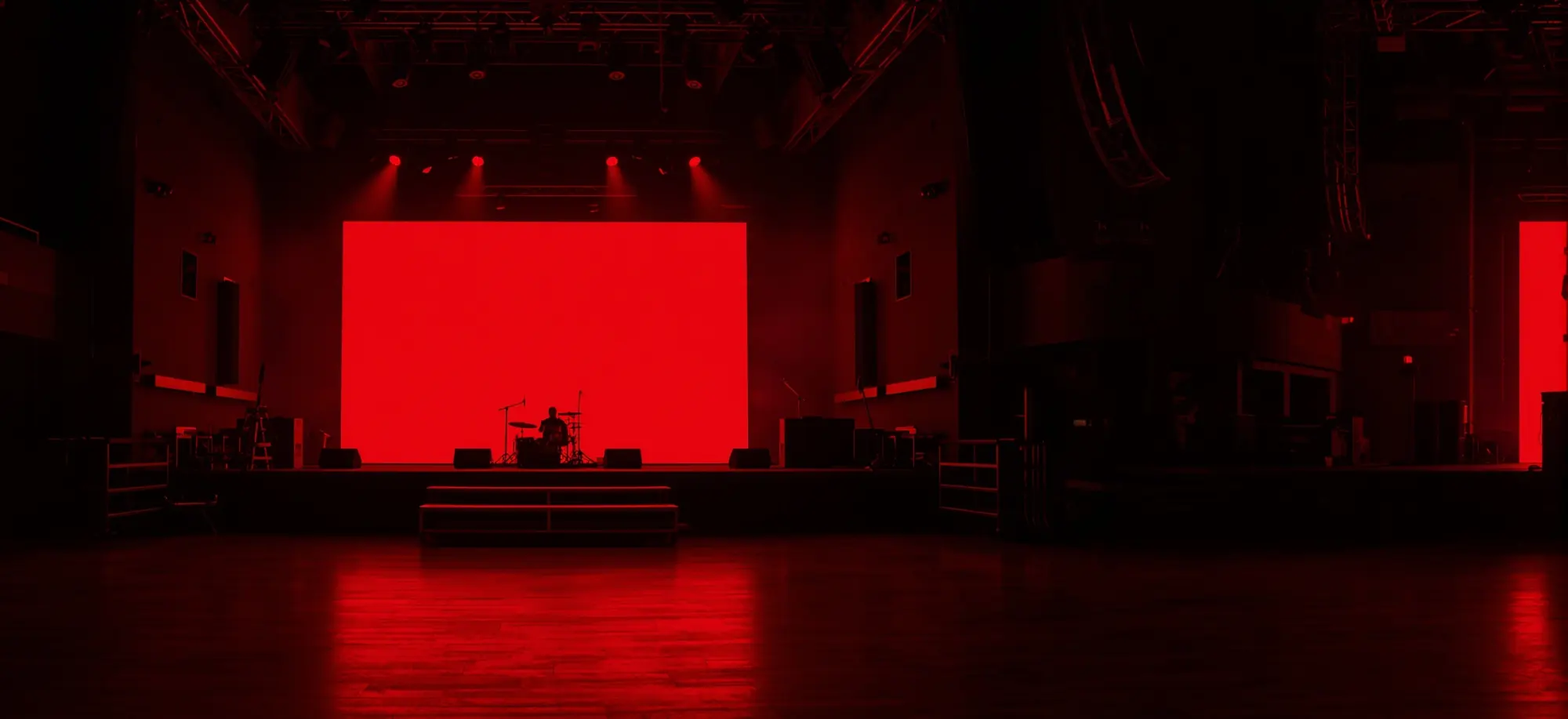
A wall in a lobby, bar, stage or showroom is an AV job. A wall visible from the street may be a sign. We ask the City early, because the answer can change the size, the position or whether the wall is allowed at all.
Pixel pitch and viewing distance
Pixel pitch is the distance between LEDs. A finer pitch looks sharper up close and costs more. A common rule of thumb is about eight feet of viewing distance for each millimeter of pitch, so a 2.5 mm wall looks best from about 20 feet. Text and menus need a finer pitch than video and graphics.
- Bar and lobby walls viewed from a few feet need a fine pitch.
- Stage backdrops viewed from across a room can use a coarser one.
- Brightness matters more than pitch near windows.
Power, cooling and structure
An LED wall draws real power and gives off heat. We plan dedicated circuits, ventilation and a mounting structure that holds the weight, with service access to the cabinets. A wall that can only be serviced by taking it apart gets expensive fast.
Content and control
The wall needs a player or processor that sends it picture. Many venues run a scheduled loop for the day and switch to a feed for events. We set that up so staff change content from a panel, not a laptop behind the bar.
Calibration and keeping a wall healthy
LED panels age unevenly, so a wall can drift in color or brightness over time. We calibrate the wall at install so the panels match, and we leave spare modules and a clear service path so one failed panel doesn't take the whole wall down.
Heat is the main enemy in Arizona. Rooms with a wall need cooling that keeps up in summer, and a wall near glass needs brightness that holds against afternoon sun. We check both on the walkthrough, not after the wall is up.
Often paired with
Walls need sound, so they usually go in with commercial audio, and with AV control for source switching. Smaller screens for menus belong with digital signage. Everything else we install locally is on the Enzo in Tempe page.