What to know about security cameras in Tempe
Bars and nightclubs file a security plan with the police
Tempe City Code Sec. 26-70(c)(1) requires a security plan for bars, cocktail lounges, taverns, dance clubs and nightclubs, and the same article treats operating without an approved plan, or not following it, as a violation. The list of what a plan must contain mentions a floor plan with evacuation routes and does not mention cameras. The terms are set with the Police Department, so we build the camera layout to match your plan and never tell you a camera is mandated when it isn't.
Source: Tempe City Code Sec. 26-70
A liquor patio needs its own security plan
Outdoor seating where liquor is consumed requires a liquor license and a security plan under Zoning and Development Code Sec. 3-425(B)(2). If your patio is new or you are adding one, the cameras covering the seating area, the gate and the sidewalk edge belong in the same conversation as the plan.
Connect Tempe tells police where your cameras are
Tempe police run a voluntary program called Connect Tempe. Businesses register their cameras so investigators know where to request footage after an incident. The city says no live access is given. A second option lets police see a feed only during criminal activity or emergencies nearby, through a FususCORE device. That one is voluntary too, so read the program terms before you opt in.
Permit and code questions go to the Permit Center
Tempe adopted the 2024 I-Codes and the 2023 NEC effective July 1, 2026. Until December 31, 2026 a permit application can use either the 2018 or the 2024 codes, and from January 1, 2027 every application must meet the 2024 codes. The city's electrical permit exemption list covers Class 2 and Class 3 control and signal circuits not essential to human life, but it does not say which camera systems qualify. We confirm with the Permit Center at 480-350-4311 before work starts.
Source: City of Tempe Building Safety
What a camera installation includes
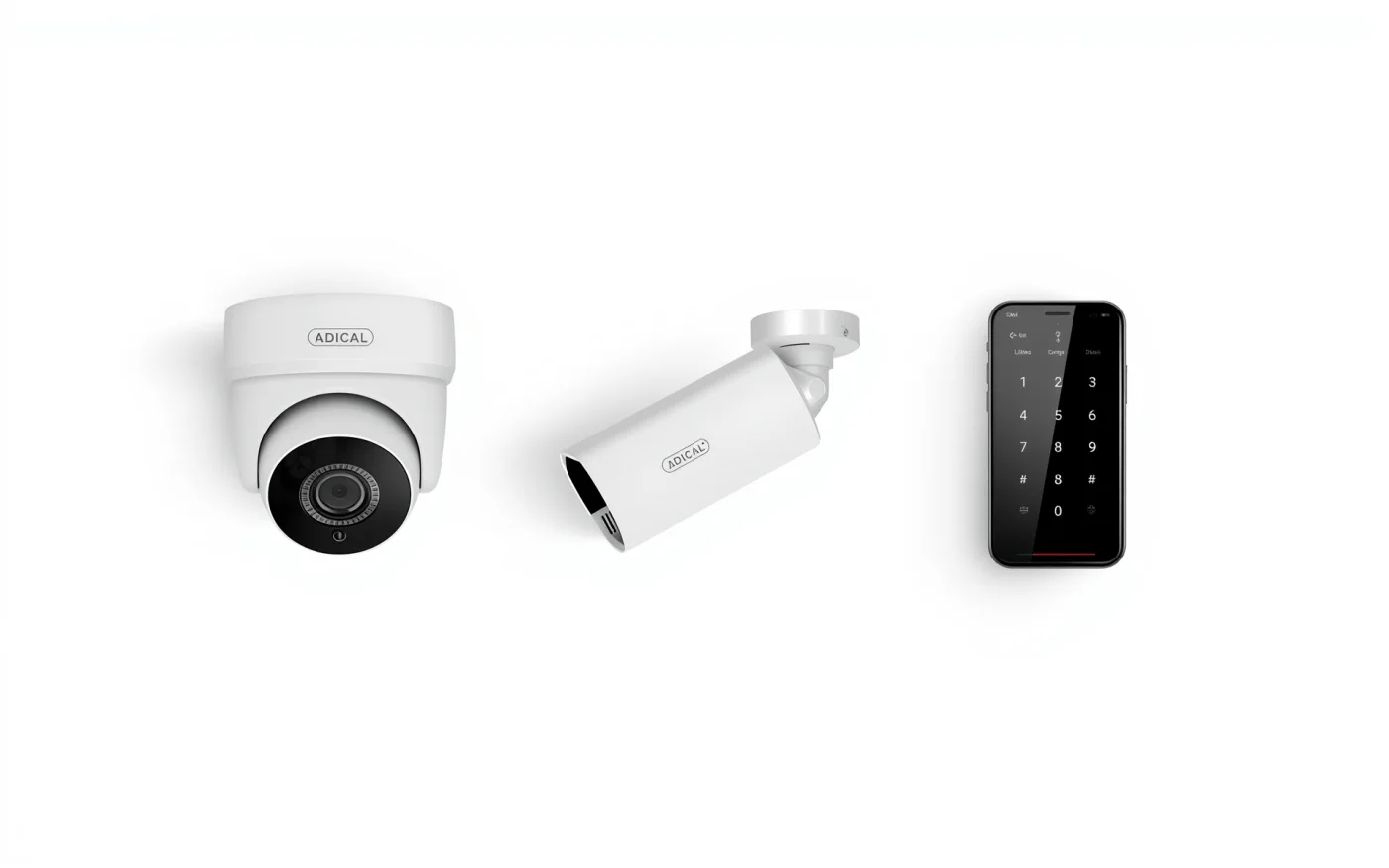
A finished system has the cameras, the cable to each one, a network switch that powers them, a recorder, storage, and a way for you to watch and search from a phone or a computer. We handle all of it and label every cable so the next technician can trace it.
Most new systems use IP cameras on Cat6 cable. One cable carries both video and power (PoE), which keeps the install clean and lets us mount cameras where there is no outlet. If you already have coax cameras that still work, we can often keep them and add IP cameras alongside.
Choosing and placing cameras
Placement decides whether footage is useful. A camera aimed at a doorway at face height shows who walked in. A camera high on a wall showing the whole room shows what happened. Most businesses need both.
- Entrances and exits, at face height, with even light on the person rather than behind them.
- Registers, bars and cash handling areas, from above and slightly in front.
- Patios and parking lots, with cameras rated for sun, heat and dust and lenses that handle bright sky and dark corners in the same frame.
- Back doors, alleys and loading areas, which are common trouble spots after hours.
- Wide cameras for context and narrower lenses where you need to read a plate or a face.
Recorders, storage and how long footage lasts
Footage goes to a network video recorder (NVR) with hard drives. How many days it keeps depends on the number of cameras, their resolution, how often they record and the size of the drives. We size the storage to the retention you want, then tell you the number of days it will hold before you buy.
Many owners also want a copy off site. We can set the recorder to send clips to the cloud, or arrange a second recorder, so a stolen or damaged box doesn't take the footage with it.
Remote viewing and keeping cameras safe
Viewing from your phone is standard. We set up accounts for the people who need access, with their own logins, so you can remove someone the day they leave. Cameras go on their own network segment, separate from your point-of-sale and guest WiFi, with default passwords changed and firmware updated. A camera that can be reached from the internet by anyone is a risk we don't leave behind.
If you want alerts for motion in a closed kitchen or a lot after hours, we configure them by zone and schedule so your phone isn't buzzing all day.
Cameras in Tempe's busy districts
Tempe's Downtown Refresh Project finished rebuilding the Mill Avenue streetscape from University Drive to Rio Salado Parkway, and the city lists about 30 businesses opened on or near Mill in 2025 and 2026. Tempe Town Lake hosts more than 40 special events a year. Crowded nights mean more people at your door, so we plan lighting and lens choice for faces in the dark, and for the glare of a street full of headlights.
Older buildings often have plaster, block and tight ceilings. We survey cable paths first, and schedule drilling and ladder work for before opening or on a slow day.
Often paired with
Cameras and doors work best together: door access control logs who comes in, and the cameras show who it was. Cameras also need a solid network behind them, so many jobs include structured cabling and business WiFi. Our other local services are listed at Enzo in Tempe.