What to know about door access control in Tempe
Gates need Fire Department approval, and powered gates need a permit
Tempe's security gate guidelines say all gates require Fire Department approval before installation, and that any self-operating or electronically controlled gate needs a permit before it goes in. A plan check and inspection fee is charged per gate. The guidelines cover gates, not interior door readers. If your lot, alley or dock has a gate, we check this first.
Knox key switch, backup power and emergency access
The same guidelines call for a Knox key switch at every gate unless the Fire Department says otherwise, and a Knox box may be required on Fire review. They also call for an emergency vehicle strobe detector on the main gate and battery backup unless the gate fails open. We wire the controller so fire crews can get in, and so a power cut doesn't leave a gate stuck shut.
Rear exits: one 2018 downtown condition
A 2018 downtown use-permit approval required a security vision panel on all rear exit doors. That condition applied to one case and is not a citywide rule. It does show that a downtown use permit can put conditions on rear doors. If yours has any, tell us before we choose hardware.
Who decides whether the wiring needs a permit
Tempe's Administrative Code requires a permit before anyone installs, alters or repairs an electrical system the city's codes regulate. The exemption list includes Class 2 and Class 3 control and signal circuits not essential to human life. The city does not say which access control systems qualify, and fire alarm and life-safety circuits are not covered by that wording. We confirm with the Permit Center at 480-350-4311, and applications are filed online.
What a system includes
Four parts make up an access control system: the credentials people carry or type, the readers at the doors, the locks that release, and a controller with software that decides who gets in. We install and wire all four, connect them to your network and enter the first users with you.
Daily use happens in the software. You add a new hire, remove a former employee and set door schedules from a browser or an app. If a fob is lost, you disable that one fob and nothing else changes. A rekeyed lock means new keys for everyone.
Readers and credentials
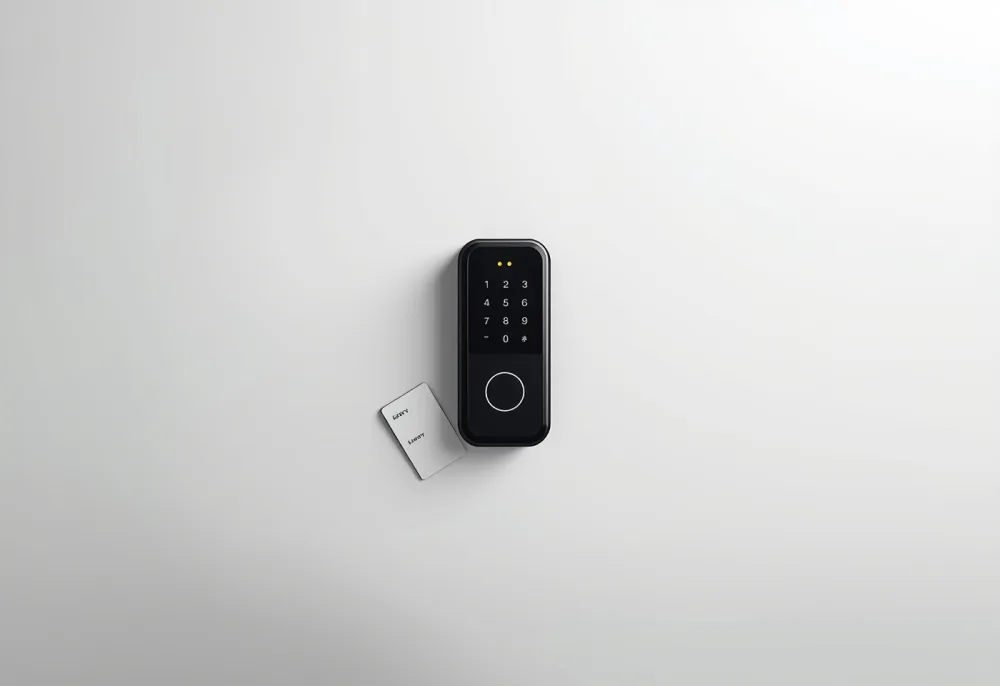
Fobs and cards suit offices and back-of-house doors. Keypads fit a door with many occasional users, like a delivery entrance, though PINs get shared. Phone credentials remove cards altogether. Server rooms and cash offices often take two methods together, such as a card plus a PIN.
Locks: strikes, maglocks and electrified hardware
The lock type depends on the door and on how people exit.
An electric strike replaces the strike plate in the frame and is the usual choice for a single door. A magnetic lock holds a door shut with a magnet, works on glass doors and releases when power is cut. Electrified exit devices and locksets keep a mechanical way out built into the door.
- People leaving must always be able to get out without a key, a card or special knowledge.
- Locks that release on power loss are normal on exit paths. Locks that stay locked on power loss are used where the fire authority allows it.
- A request-to-exit sensor or push bar releases the door from inside and keeps the alarm from sounding.
- Fire alarm release is wired in where the door requires it.
Doors that connect to cameras, alarms and schedules
Access control is more useful when it talks to other systems. A door event can mark the matching clip on your security cameras, so you can find who came in at 2:10 without scrubbing hours of video. Doors can follow a schedule, staying unlocked during business hours and locked after. A door held open too long can alert a manager.
From walkthrough to training
- We walk each door and note the frame, the hardware and where cable can run.
- You get a door schedule that lists the reader, the lock and who has access when.
- We run cable and power from every door back to the controller, usually after hours.
- We install the locks and readers, then test each door the way it is really used, including exiting and a power-off check.
- Your staff get trained, and we service the system Monday to Friday, 8 AM to 5 PM.
Often paired with
Doors, cameras and the network behind them usually go in together, so many jobs add security cameras and structured cabling. An intercom or door release can tie into business phone systems. The rest of our local work is on the Enzo in Tempe page.