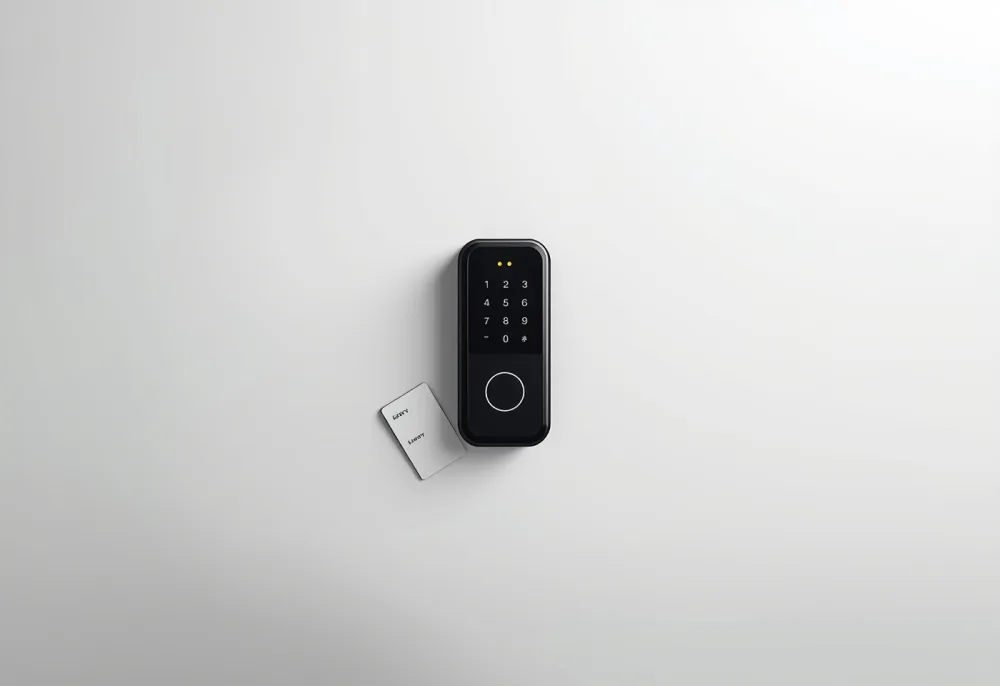
What to know about door access control in Glendale
Glendale Fire's key box sits next to your door
Glendale Fire's key box regulation calls for a UL 1037 key box 60 to 72 inches high, within 5 feet of the door on the swing side. A reader, strike or keypad on that door has to leave the spot clear. The regulation cites the 2018 fire code section, so it may predate the 2024 code. We confirm the current requirement with Fire Prevention.
Glendale's fire code amendments say nothing about door locks
Glendale adopts the 2024 International Fire Code by reference, and the city's list of fire code amendments has no item on door locks, delayed egress or egress hardware, so the standard exit rules apply as written. We checked the amendment list only, not the full code text, so Glendale Fire Prevention confirms the lock type for each door.
Battery and data rooms need panic hardware
Glendale amended the building code so doors serving battery or energy-storage rooms and modular data centers must have panic or fire exit hardware. If your server room or battery room goes on the access system, the door gets that hardware first and the reader is built around it.
Source: Glendale 2024 building code amendments, IBC 1010.2.8.2
Any access plan filed now falls under the 2024 codes
The 2024 building and fire codes took effect January 9, 2026, and plans submitted after July 9, 2026 must comply with them.
Source: City of Glendale, 2024 Building Code implementation memo
What door access control includes
An access system has four parts: the credential (fob, card, phone or PIN), the reader on the wall, the lock on the door, and a controller that decides whether to open. Software on top lets you add or remove people and see who used which door.
Removing someone takes seconds, which is the main reason businesses switch. A lost key means rekeying every lock. A lost fob means deleting one entry.
Choosing the lock: strike, mag lock or electrified hardware
An electric strike fits a standard door that stays latched. A magnetic lock holds a door shut with a magnet and releases when power drops, which suits some glass doors. Electrified lever sets and panic hardware keep the exit simple.
Anyone inside must be able to leave without a key or a special action, and we pick hardware that meets that. If a door is on a fire alarm release, we confirm with Glendale Fire Prevention who must do the work that ties into the alarm.
Credentials: fobs, cards, keypads and phones
Fobs and cards are cheap to replace and easy to hand out. Keypads need nothing in hand, but a code is easy to share, so we keep them for low-risk doors. Phone credentials save on cards, but the person has to carry a charged phone.
At a restaurant, a common setup is a fob for the back door and office, with staff schedules limiting when each person can enter.
Schedules and entry logs
Doors can release at opening, stay open through business hours and lock again at close. After a missing-stock complaint, a manager can pull the entry log for that door.
Near Westgate and State Farm Stadium, game days and arena shows fill the building. Schedules decide who can reach stockrooms and offices while it is packed.
What happens on an access control job
- We walk each door and note the frame, the swing and the cable path.
- You get a written quote naming the lock, reader and credential for every door.
- We install after hours or on a slow day, so no door is left unsecured overnight.
- We enroll your people, set schedules and train whoever will manage the system.
- Service calls run Monday to Friday, 8 AM to 5 PM.
Cameras, cabling and internet
Most access jobs add security cameras, so each entry-log event has video beside it. The reader runs need structured data cabling, and a cloud-managed system needs a connection that stays up, which is where backup internet comes in. The rest of our Glendale work is on the Glendale page. To start, call (602) 769-7992 and we will walk your doors.