What to know about LED video walls in Glendale
A screen facing the street is a window sign
Glendale counts anything placed inside a building so it is meant to be seen from the public right-of-way as a window sign. Window signs are capped at 30% of the exterior window area. Applying that to a screen is our reading of the text, so we confirm with Planning for your specific wall.
Screens only seen inside are different
Glendale exempts interior signs not intended to be viewed from outside a building. A wall in a lobby, dining room or club facing in is a different case from one facing the street.
Building-mounted electronic signs are small and still
On a building, Glendale limits an electronic sign to a reader panel of up to 32 square feet, one per building where the district allows it (the city's permitted-signs-by-use table decides), with static text, a hold time of at least 8 seconds, no animation or video effects, and an instant change. The code also bars a projected wall sign from showing electronic video. A large video facade is not what this rule describes.
Source: Glendale Unified Development Code 35.4.310 and 35.4.311
Dimmer and brightness limits apply
Electronic reader panels need an automatic dimmer and may not raise brightness more than 0.3 foot-candles over ambient light at the property line.
Indoor walls: lobbies, clubs and stages
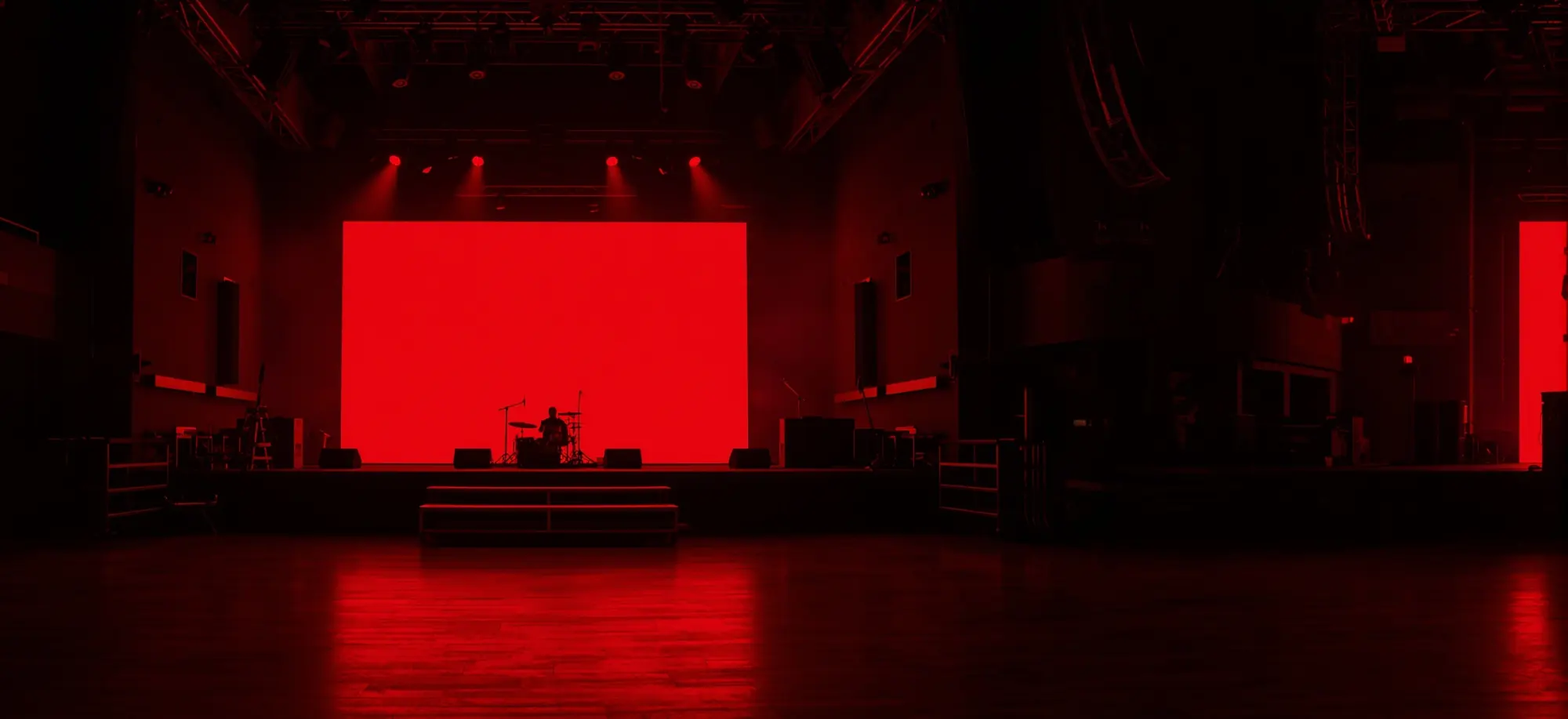
Most LED walls we install are inside: behind a stage, over a bar, in a lobby or behind a reception desk. Facing in, they are not signs in the code's sense, so the work is design: size, pixel pitch, mounting and content. Temporary walls for a one-night show are a different job, covered under event audio and video.
Pixel pitch and viewing distance
Pixel pitch is the distance between LEDs, in millimeters. A tighter pitch gives a sharper picture up close and costs more. As a rule of thumb, viewers should stand at least a few feet back for every millimeter of pitch. A wall behind a stage can use a wider pitch than a lobby wall people walk up to, so we choose pitch from the real viewing distance on your walkthrough.
Size, shape and structure
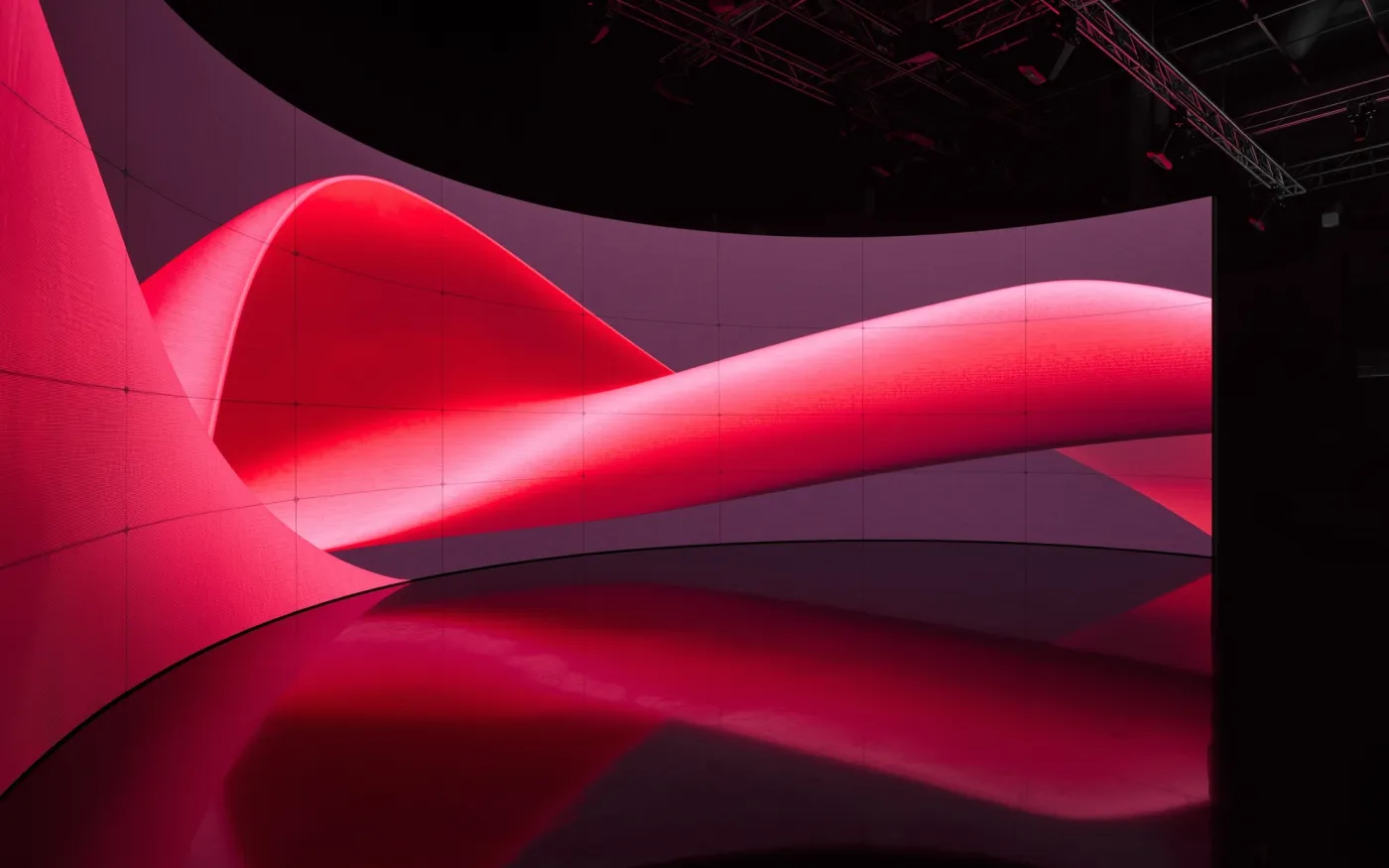
A wall is built from cabinets that lock into a grid, so the size comes in cabinet steps. Curves, corners and thin bezel lines are possible. The wall needs a structure that carries its weight, a power feed sized for the full load, and cooling and service access. We plan all three with the building before the cabinets ship.
If the wall faces the street
If a wall will be seen from outside, we start with Planning. Glendale requires a sign permit before erecting, altering or changing the copy on any sign, and an electrical permit application for every electric sign. A new tenant cannot get a sign permit until it has an approved tenant improvement permit or a certificate of occupancy, and every sign submittal needs a signed landlord approval letter. Glendale also bars digital and static billboards inside the Loop 101 Scenic Corridor, a quarter mile each side of the freeway between 51st Avenue and Bell Road. That applies to billboards, not your own business sign.
Content, control and service
The wall runs from a video processor and a content player. Staff or an outside designer update what it shows from a computer. We label every cable, leave you the settings and a spare-parts list, and handle service calls Monday to Friday, 8 AM to 5 PM.
Sound, control and smaller screens
A wall needs matching sound and control: commercial audio for the room and AV control systems so staff can skip the remotes. Menus and storefront screens fall under digital signage. The rest of our Glendale work is on the Glendale page. Call (602) 769-7992 and tell us where the wall will face.