What to know about door access control in Mesa
A far second entrance needs an extra lock device
Mesa Fire's guidance requires an additional lock device when the travel distance from the main entrance to a second entrance is more than 300 feet. We measure those distances on your plan before deciding which doors get readers.
Source: Mesa Fire, Lock Box Requirements
Fire lock boxes sit 5 to 6 feet high
Mesa Fire lock boxes are ordered from the Knox Company and must be mounted no lower than five feet and no higher than six feet. We keep the box clear of readers and door hardware so crews can reach it. For box placement or key installation, Mesa Fire Prevention is at 480-644-2622.
Source: Mesa Fire, Lock Box Requirements
Permits cover safety systems and alarms
Mesa lists permits for tenant improvements, building electrical systems and safety systems including alarms. Its page doesn't mention low-voltage work such as readers, so when a door project is part of a remodel we confirm with Permit Services at 480-644-4273.
Exit doors are checked against the 2024 codes
Mesa's 2024 International Codes and 2023 electrical code took effect January 8, 2026. Locking hardware on exit doors is checked against the fire and building codes, so every door we plan allows free exit.
What an access system includes
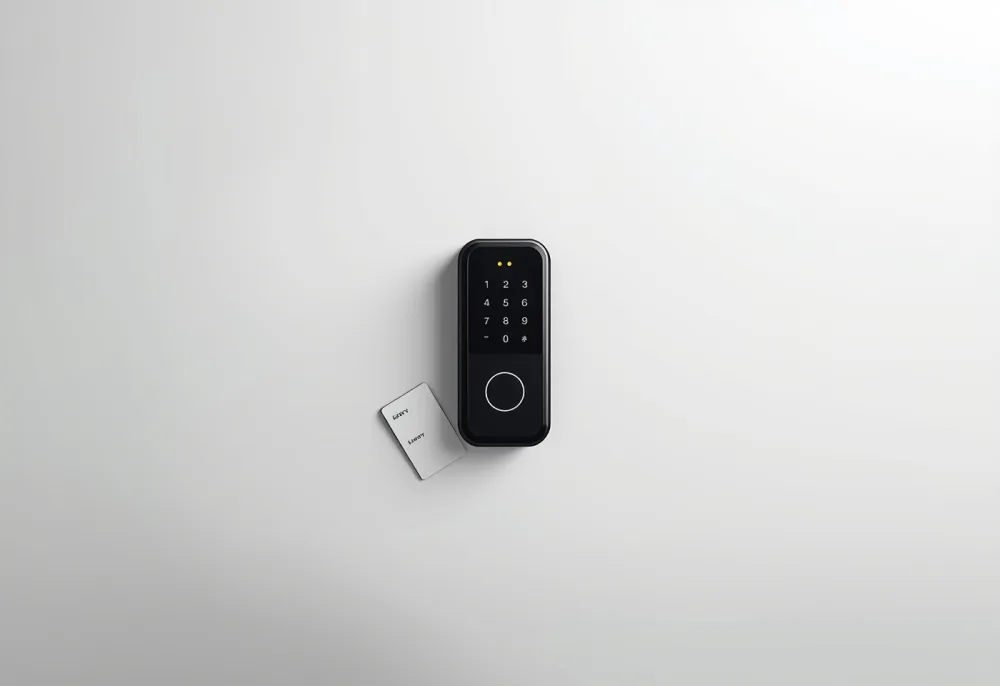
Each controlled door has a reader or keypad outside, a lock, a way out, and a controller that decides who gets in. A server or cloud account holds the user list and schedules, and a cable runs from every door back to the controller.
We install and program the whole system. If you want video tied to door events, we connect it to your camera system.
Choosing the right lock
The lock depends on the door, and a wrong choice either leaves it unlocked or traps someone inside.
- Electric strikes suit most office and storefront doors and keep the existing latch.
- Magnetic locks hold glass and double doors, and release when power is cut.
- Electrified panic hardware keeps exit doors safe to leave while the outside stays locked.
- Keypads work for storerooms and back-of-house doors with a few users.
- Fobs and cards suit staff who come and go all day. Phone credentials avoid replacing lost fobs.
Safe exit comes first
Anyone inside must be able to leave without a key or special knowledge. We wire each lock to release from a request-to-exit button, a motion sensor or the handle itself, and to behave correctly when power fails or the fire alarm sounds. Where a door ties into the fire alarm, we coordinate with the alarm contractor.
Who gets in, and when
Schedules are where access control earns its keep. A closing cook can open the kitchen door but not the office. A cleaning crew gets in between 10 p.m. and 2 a.m. When someone leaves the company, a manager removes their access from a phone in a minute, with no rekeying.
We build the groups and schedules with you and train whoever will run them. Reports show who used which door and when.
Keeping doors working in Mesa
Outside readers take sun, dust and summer storms, and Arizona State Parks lists monsoon season as June 15 to September 30. We use outdoor-rated readers and sealed junction boxes, and put a battery backup on the controller so doors keep following their rules through a power flicker.
For a longer outage, the number to call depends on whether Mesa's electric utility or SRP feeds your building.
Often paired with
Most door projects add security cameras, so the video matches the door log. Readers and controllers also need solid network drops, which is structured data cabling. The full list of what we install here is on Enzo in Mesa.