What to know about fiber in Mesa
Mesa lists five fiber providers
The City's own page names Spectrum (formerly Cox), Gigapower (AT&T Fiber), Google Fiber, Lumen and Ubiquity (Fiber First). Spectrum's and Lumen's fiber is available in select areas only, and the list is not an address-by-address check. Before we plan an entrance, we ask each carrier what reaches your address.
Google Fiber started in Mesa
Google Fiber says it began building a fiber network for homes and businesses in Maricopa County in 2023, first connecting customers in Mesa. It sells business plans with up to 2 gigabit download, with availability checked by address.
Source: Google Fiber, Mesa
Several builders are digging at once
Mesa's council is encouraging private providers to bring fiber to every home and business, and several providers are building independent networks in public rights-of-way. Contractors are using directional drilling, trenching, tunneling and micro-trenching to place conduit. The City says a typical fiber job lasts no more than a couple of weeks, and to ask the provider for the exact schedule.
Paint marks come weeks before crews
The City says colored paint markings go on the ground several weeks before construction begins. Paint in front of your suite means a provider or utility plans to dig, which is a good time to ask about your own service and your building entrance.
Fiber inside your building
Fiber carries more data over longer distances than copper and isn't affected by electrical noise. Copper Cat6 tops out at 100 meters. Fiber runs far past that, which is why it connects floors, campus buildings and warehouse racks far from the main closet.
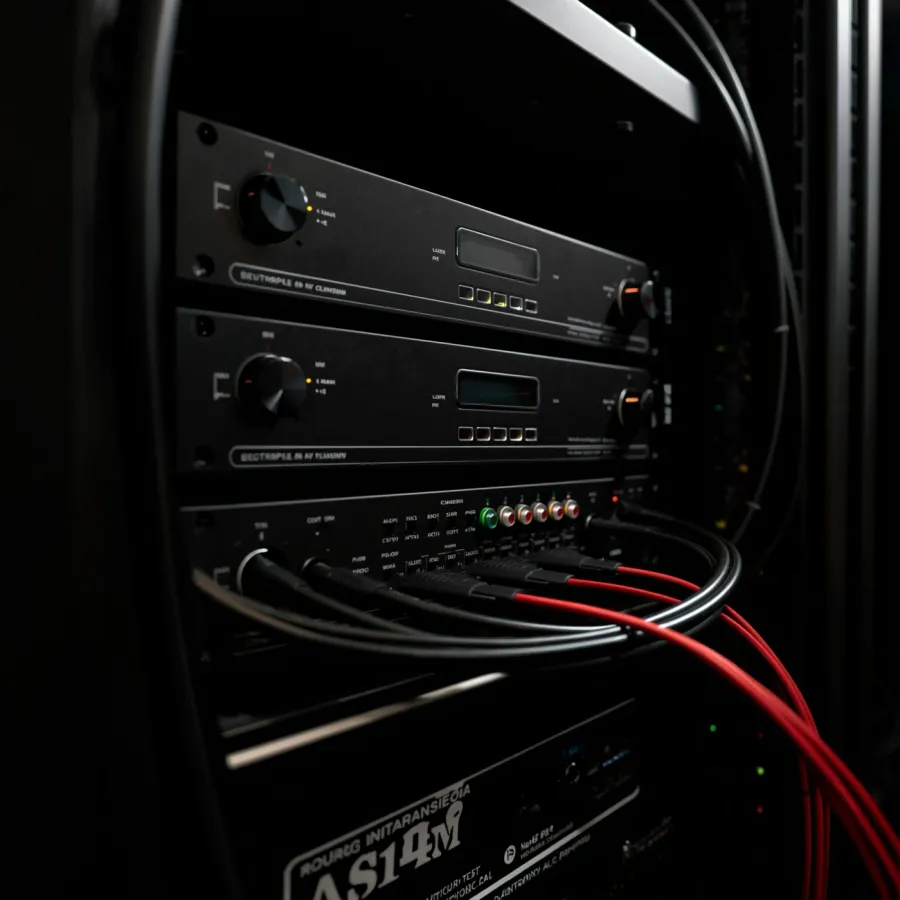
We pull the cable, terminate both ends, clean and test every connection, and land it in a fiber panel in your rack.
Single-mode or multimode
Single-mode fiber is the standard for new work. It handles long distances and any future speed, and the cost difference in cable is small. Multimode is common in older buildings, and we match it when we extend an existing run so equipment keeps working.
The cable is only half of it. Each end needs an optic module that fits the switch and the fiber type. We supply them matched.
Connecting to a carrier's fiber
A carrier brings fiber to your building and ends it at a small box. From there, the line has to reach your router, which may be across the building. We run the inside cable, set up the handoff and place the equipment in your rack with power and labels.
If more than one carrier serves your address, a second fiber line gives you a failover path. For a different kind of second line, see backup internet.
Fiber and construction in Mesa
Fiber work is happening all over Mesa. Because utility companies are not required to share conduit, the City says one provider can finish and restore a street and another can start digging the same area again. If your building sits on one of those streets, plan the fiber entrance and cable paths so a new crew doesn't catch you off guard. Ask about conduit into your building early, since it is often the slowest part.
How an install goes
- Walk the building, the closets and the path the fiber will take.
- A plan with cable type, optics, panels and a written quote.
- Pull and terminate the cable, usually in one or two visits.
- Test every strand and record the results.
- Label both ends and hand over the documentation.
Often paired with
A fiber backbone usually goes in alongside structured data cabling for the desks and rooms it feeds, and business WiFi at the far end. The rest of our Mesa work is on Enzo in Mesa.