What to know about LED video walls in Mesa
Signs need a permit and a final inspection
Mesa's sign permit is not complete when it is issued. A final inspection must be approved. Sign permits are charged on top of any building permit and are reviewed within 10 business days, with paid expedited review available. Confirm whether a storefront wall counts as a sign with Permit Services at 480-644-4273 before you order panels.
Source: City of Mesa, Sign Regulations
Lit signs have fees and electrical paperwork
The base sign permit is $102.40 plus 3% of sign valuation plus $0.30 per square foot, and each illuminated sign carries an $18.25 electrical fee.
The one brightness rule we found is for freeway signs
The only electronic display standards we found in Mesa's sign code text are for freeway landmark monuments: automatic dimming, a 300 nit cap in full white from sunset to 11 p.m., off from 11 p.m. to sunrise, no more than one change every eight seconds, and no animation or video. That rule is for freeway monuments only. We found no general rule for window or facade screens, and we don't treat these numbers as one.
Lit wall signs have a design rule
Mesa's sign checklist says only sign copy may light on an illuminated wall sign, and a freestanding sign with an electronic message panel needs an owner certification letter. A storefront LED wall may be reviewed along those lines, so the design conversation starts at the permit counter.
Source: City of Mesa, Attached and Freestanding Signs checklist
Indoor walls and storefront walls are different jobs
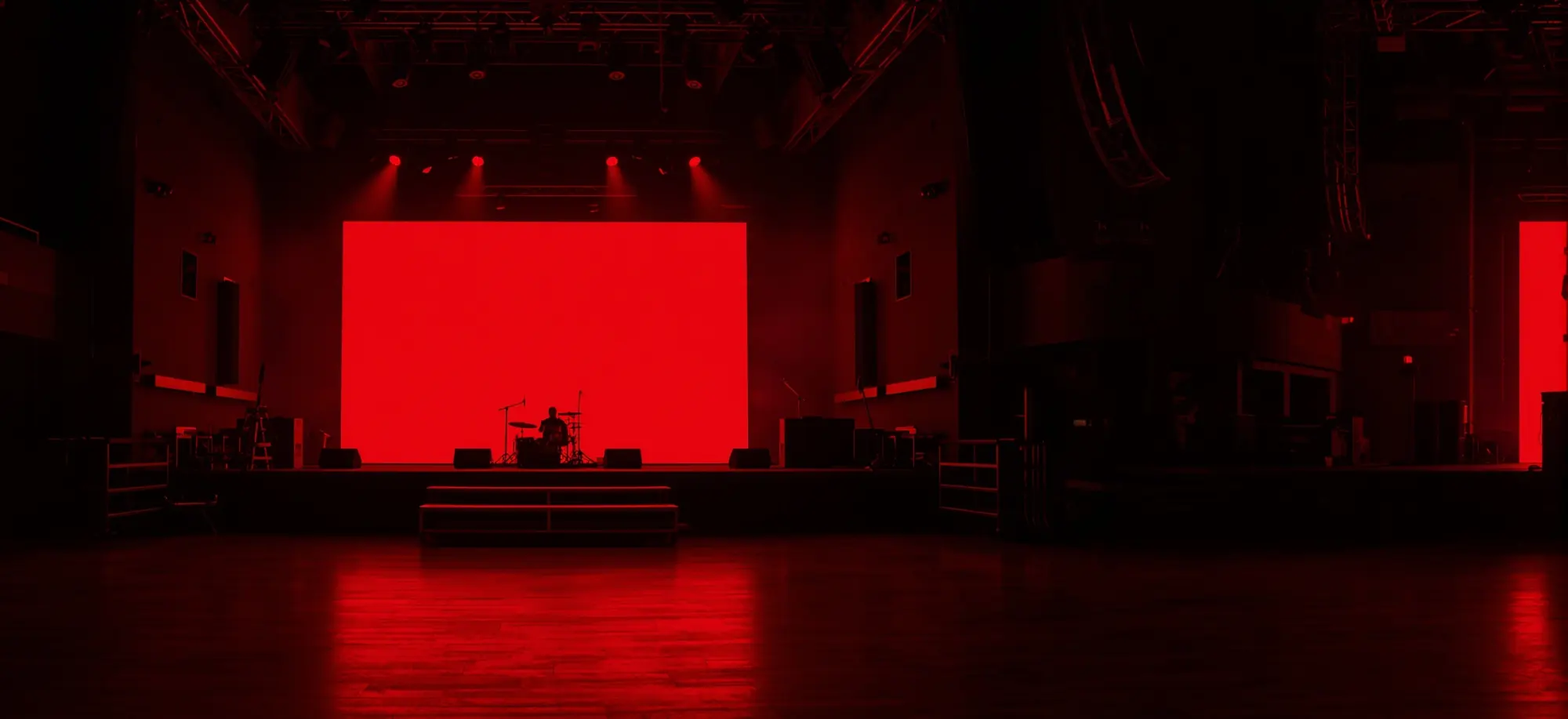
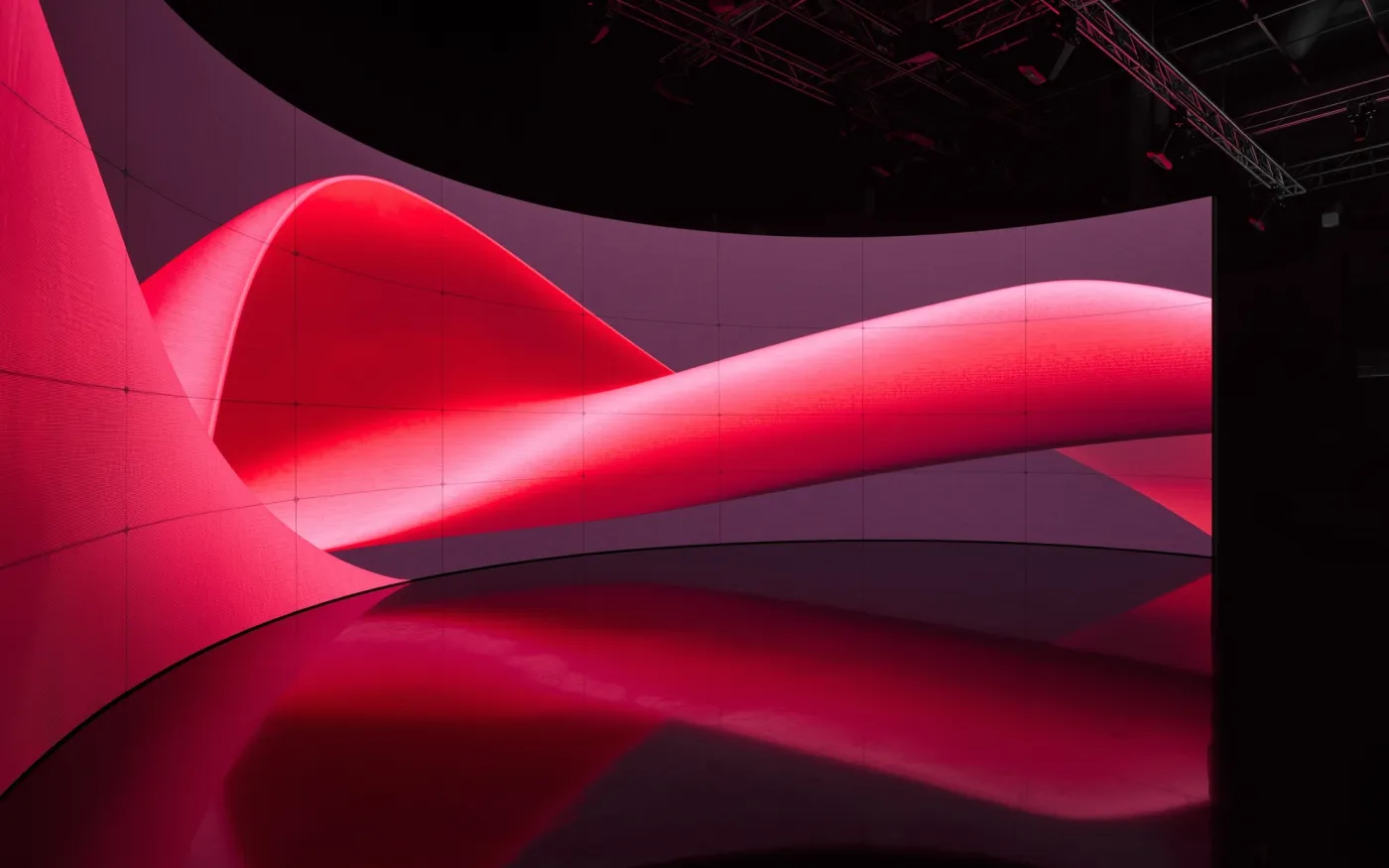
An indoor LED wall behind a bar, in a lobby or on a stage is a display. A wall facing a street is more likely to be reviewed as a sign. We ask which one you are building before choosing panels, because that decides the permit path, the brightness you need and the schedule.
Pixel pitch and viewing distance
Pixel pitch is the distance between LEDs. A tighter pitch gives a sharper picture up close and costs more. A wall people stand a few feet from needs a fine pitch. A wall seen from across a parking lot can use a coarser one. We match pitch to the closest viewing distance in your room.
- Close viewing, such as a lobby or host stand: fine pitch.
- Mid-range, such as a dining room or bar back wall: medium pitch.
- Long viewing, such as a patio facade or event stage: coarser pitch.
Brightness and the Arizona sun
Indoor walls run at modest brightness, and too much hurts eyes in a dark bar. Outdoor and window walls need far more to beat daylight, then have to dim at night, so we choose panels with automatic brightness control from a light sensor. Mesa requires automatic dimming on its freeway monuments, though we found no such rule for storefront walls.
Power, structure and cooling
An LED wall is heavy and draws real power. We confirm the structure can carry the weight, run dedicated circuits, and leave room behind the panels for service access and airflow. If a new circuit is needed, we coordinate it with your electrician. Mesa's commercial permit page lists building electrical systems among the work that needs permits.
Content and control
A video processor takes your signal and fits it to the wall. Most owners add a simple content player so staff or a marketing person can change what shows without touching the hardware. We set up schedules, such as menus at lunch and events at night.
Often paired with
Walls often go in with event audio and video for stages, digital signage for menu and promo screens, and an AV control system so staff never have to learn the processor. The full Mesa list is on Enzo in Mesa.