What to know about TV and video distribution in Mesa
Downtown game days compete with a giant outdoor screen
All 2026 Sun Devil football games are shown live on the ASU Media and Immersive eXperience (MIX) Center's large-format outdoor screen in downtown Mesa, with watch parties. A bar nearby is competing with a big outdoor screen, so picture quality, audio and a reliable feed matter more. Listed dates run through December 4, 2026.
Source: City of Mesa, ASU Football Games
Spring training is a seasonal peak
The Cubs and A's drew a combined 338,641 fans to Mesa games in 2026, up from 310,206 in 2025. We can't tie that to your sales, but those weeks of late February and March are when a bar's TV system is likely to work hardest, so we plan sources and receivers for a full house and several games at once.
Source: Mesa Now, April 1, 2026 release
Hohokam Stadium keeps a year-round schedule
Hohokam Stadium has 7,500 fixed seats plus berm space for 2,500 more, and hosts tournaments, concerts, weddings and group events year-round. Event days there bring crowds that bars and restaurants nearby can plan for.
Source: City of Mesa, Hohokam Stadium
Ask Permit Services about electrical on a remodel
Mesa's commercial permit page names tenant improvements, building electrical systems and safety systems. It does not mention low-voltage work specifically, so on a remodel we confirm with Permit Services at 480-644-4273 how TV wiring and any new power outlets are handled.
One rack, every screen
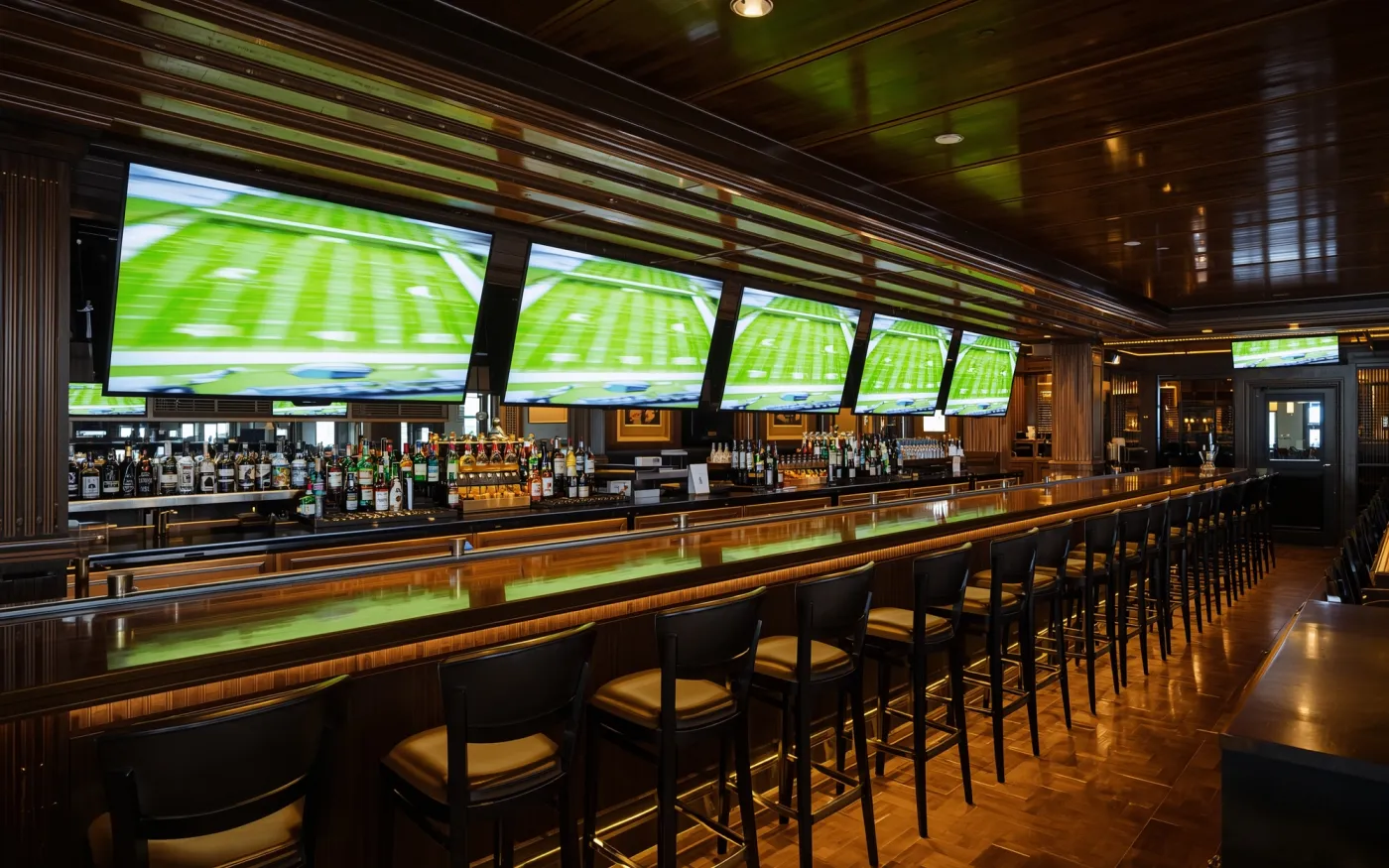
A video distribution system puts your cable box, streaming boxes and satellite receivers in one rack and sends their signals to every TV. Staff pick what each screen shows from a tablet or wall panel, so you no longer need a box and a remote behind every TV.
Matrix switcher or AV over IP
There are two main designs. A matrix switcher sends video over dedicated HDMI or HDBaseT cable from the rack to each TV. It is simple and dependable for a handful of screens. AV over IP sends video across a network, which suits larger rooms, many screens, or later expansion, because adding a TV means adding a network drop and a small receiver.
Which one fits depends on screen count, cable distance and whether you plan to add screens later. We recommend one after a walkthrough.
Sources and what they cost to run
Each sports package needs its own receiver, and a bar often needs several, so the same game can play on one set of screens and another game on another. We count your sources against your screens and tell you how many receivers you need before you buy any.
- Cable and satellite receivers for sports packages.
- Streaming devices for apps and music video.
- A dedicated source for house content, such as promos or menu items.
Mounting and cabling
TVs go on mounts matched to their size and weight, tilted or flat to suit the sightlines. Cable runs go inside walls or in neat raceway, so nothing hangs behind the bar. Where the TV is on an exterior or patio wall, we use outdoor-rated displays or enclosures made for Arizona sun and heat.
Planning for a Mesa game day
Test the system before the busy weekend, not during it. We label every input, set a default source for each screen and leave a one-page guide at the bar. After the install, we're available Monday to Friday, 8 AM to 5 PM, for adds and changes before a big week.
Often paired with
A bar usually adds commercial audio so game sound plays in some zones and music in others, and an AV control system so one panel runs both. Promo screens belong with digital signage. The rest of our Mesa work is on Enzo in Mesa.