What to know about security cameras in Goodyear
The state decides who can be required to have cameras
Arizona bars cities from requiring most retail businesses to install security cameras or lights, whatever the size, type or number of police calls. The ban does not cover bars, hotels, restaurants or businesses with live entertainment, so a city may still set security rules for those.
Source: A.R.S. § 9-500.34(A)
New work follows the 2024 codes
Goodyear has enforced the 2024 International Codes and the 2023 National Electrical Code since June 23, 2026. The city's amendments to the electrical code cover administration, definitions and dwelling-unit GFCI. We found no amendment aimed at low-voltage wiring.
Camera work is a permit question to ask first
Goodyear's commercial permit exemptions are minor repairs, radio and television transmitting equipment and temporary testing systems. Low voltage is not on that list, and the code does not name cameras either way. We put the question to the Building Safety Division before we price a job.
Source: Goodyear City Code 9-1-1
Starting before the permit costs extra
If a permit turns out to be required, beginning work before it is issued adds a fee on top of the permit fees. We do not start until the permit question is answered.
Source: Goodyear City Code 9-1-1
What a commercial camera system includes
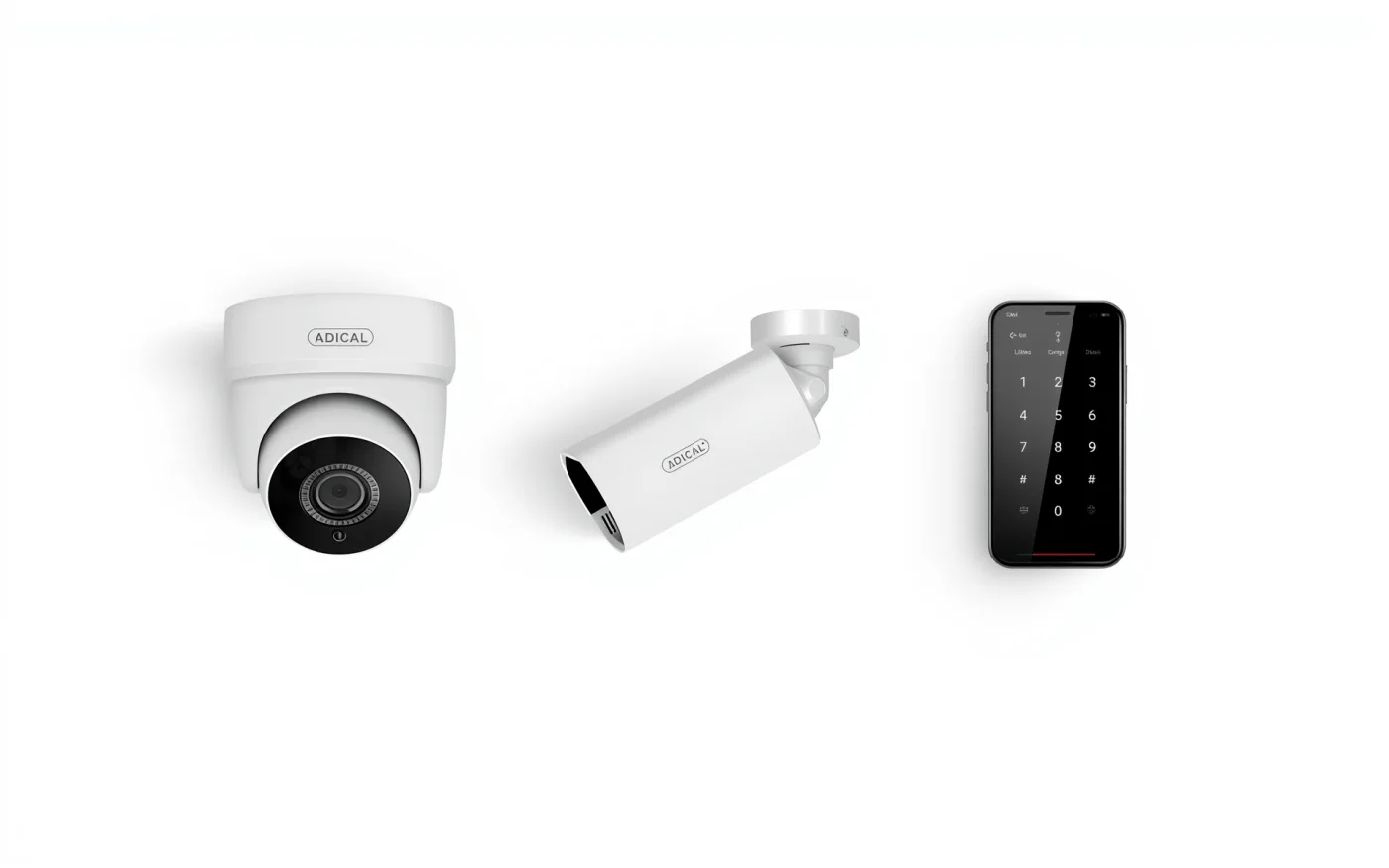
A system has four parts: cameras, the cable that carries video and power, a recorder, and a way to watch. Most new systems use PoE (power over Ethernet) cameras, so one network cable to each camera carries both. That keeps the install clean and lets us place a camera where there's no outlet.
The recorder is an NVR, a small computer with hard drives. Days of video kept depend on the number of cameras, the resolution and the drive size, and we size it to the retention you want.
Where cameras go
We start with what you need to see, then pick the camera and the spot. The usual places:
- Entrances and exits, at face height, so you can identify who walked in.
- Registers and cash handling areas.
- Back doors, dumpster enclosures and loading areas.
- Parking lots and patios, with cameras that handle bright sun and dark nights.
- Storerooms, walk-ins and offices where inventory or records sit.
Choosing cameras for Arizona conditions
Outdoor cameras here take sun, heat, dust and monsoon wind. We use weather-rated housings and mount them out of reach of ladders and passing trucks. Where a camera faces the setting sun or a bright storefront, we choose wide dynamic range so faces don't turn to silhouettes.
Resolution matters most at doors and registers. A wide parking-lot view and a close face shot need different lenses, not one camera doing both.
Cameras in Goodyear's newer centers
Goodyear Civic Square at GSQ, at McDowell Road and 150th Drive, is the city's downtown and mixes restaurants and shops. The city describes the restaurants as having sprawling patios. A patio means exterior cameras, lighting that works with them, and often a separate view of the bar. In a multi-tenant building we also sort out with the landlord where cable can run and who owns the ceiling space.
How an install goes
- We walk the building, cable paths and ceiling access.
- You get a camera plan with each view marked, and a quote.
- We install around your business hours.
- We set up the recorder, phone access and staff logins.
- Service continues Monday to Friday, 8 AM to 5 PM.
Often paired with
Cameras and door readers usually share a network, so we often install them with door access control and the structured cabling underneath. If cameras are how you check on the business remotely, backup internet keeps the feed up when your main line fails. Everything else is on Enzo in Goodyear.