What to know about security cameras in Maricopa
The state decides whether a city can require cameras
Arizona law bars cities and towns from requiring a retail business to install security cameras or security lights based on its size, its type or how many police calls it generates. That ban does not cover bars, hotels, restaurants or businesses with live entertainment, so a city may still set security rules for those.
Source: A.R.S. § 9-500.34(A)
Maricopa registers alarm users, not plain cameras
Every business and residential alarm user in Maricopa needs an Alarm Permit through the city's alarm program. The annual fee for a commercial location is $20. A $100 fine applies if you don't register within 10 days of installation (it can be waived if you get a permit within 14 days of notice), and permits are suspended after more than eight false burglar alarms in 12 months. That program is about alarm systems. If your cameras are tied to a burglar alarm panel, register it.
Source: Maricopa alarm ordinance, Article 9.10 (program page)
Ask whether your camera job needs a building permit
The city's Building Safety page lists no exemption for low-voltage work. It tells applicants to contact the office to find out whether a permit is needed. Development Services answers at 520-316-6920 or [email protected]. We make that call for you before a larger job, such as a camera system that comes with new conduit or a tenant improvement.
Outdoor drilling has a weekday noise exemption
The zoning code exempts construction and remodeling noise on weekdays from 5 a.m. to 8 p.m. The city's noise variance guide also lists Saturdays, Sundays and holidays from 7 a.m. to 7 p.m., and the two sources differ on weekends. We plan lift and drilling work for weekdays and confirm anything else with Development Services.
Source: MCC 18.110.050
What a camera system includes
A commercial system is more than cameras on a wall. Each camera gets a single network cable that carries both data and power, which is what PoE means. The cables run back to a switch and a recorder, and the recorder stores the video.
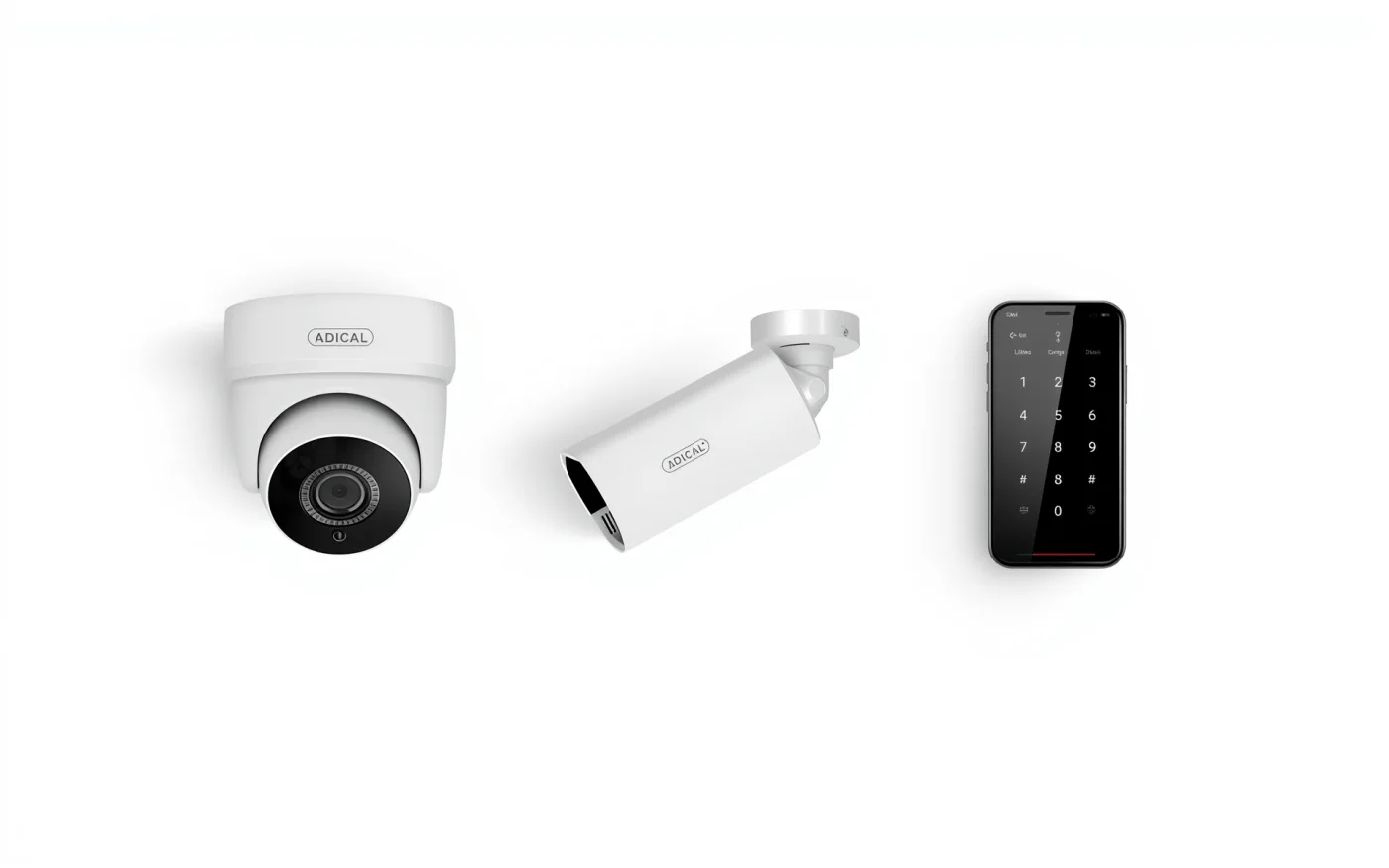
- Cameras sized to the spot: domes for ceilings, bullets for building edges, turrets for entries.
- A PoE switch and cable runs, labeled at both ends.
- A network video recorder with hard drives sized to how many days you want to keep.
- A monitor at the office or bar, if staff want a live wall.
- Accounts for each person who needs to view, with their own logins.
Where cameras go, and what they should see
We walk the building and mark what has to be clear, not just visible: faces at the door, hands at the register, the cash office, the walk-in and the receiving door. A camera that shows the whole parking lot but can't read a plate or recognize a face is a poor use of a mount.
Plate capture and entry faces usually need their own cameras, aimed with the sun in mind. In the Maricopa afternoon, a camera pointed west can wash out at the exact time people are leaving. Low-light cameras with infrared handle the night, and outdoor units have to be rated for heat and dust.
Recording, retention and viewing from your phone
How long video is kept depends on the recorder's drive space, the camera resolution and whether it records all the time or only on motion. We size the drives to the number of days you ask for and tell you what it will hold before you buy.
Viewing from your phone works through the recorder or a cloud service. Either way, your recorder sits behind a firewall, not open to the internet, and each person gets their own login so you can remove a former manager in a minute. If your internet drops, the recorder keeps recording locally. See backup internet if you want live viewing to survive an outage.
Cameras across Maricopa's shopping centers and shops
The city's economic development office lists retail centers such as Maricopa Fiesta at Smith-Enke and John Wayne Parkway, Cobblestone Fiesta, Edison Pointe, Fry's Marketplace and the Maricopa Business Center at 44400 W. Honeycutt Road. In a shared center, the landlord may already have cameras on the lot, so we ask what exists, then aim yours at your own doors, patio and back entry instead of repeating the lot view.
In a new suite, it is cheapest to run the camera cable before the ceiling closes. We can do that during a tenant improvement and coordinate with whoever is doing the rest of the electrical work.
How an install goes
- We walk the building to mark camera spots, cable paths and the recorder's home.
- You get a plan with camera counts, views and storage, plus a quote.
- Cable and mounting happen around your open hours.
- We aim and tune each view at night as well as in the day.
- We set up phone access and show your staff how to pull a clip.
- Support after the install runs Monday to Friday, 8 AM to 5 PM.
Often paired with
Cameras go in with door access control so the door log and the video line up, and with structured cabling when the building needs more network drops first. The Maricopa page lists the rest of what we do in the city.