What to know about security cameras in Peoria
Arizona keeps cities from requiring cameras in retail shops
State law bars a city from requiring a retail business to install security cameras or lights based on its size, type or number of police calls. So for a Peoria retail shop, a camera system is generally a choice about your own risk.
Bars and restaurants are outside that limit
The same statute says a retail business does not include a bar, hotel, restaurant or a business with live entertainment. So a city can still set camera rules for those. If you run one, we ask the city what applies to your kind of business before we finalize the plan.
Outdoor and rooftop power needs ground-fault protection
Peoria amends the electrical code so that, outside dwellings, receptacles in kitchens, rooftops and outdoors need ground-fault protection. Cameras on PoE are powered from a switch indoors, but any outlet we use for a recorder, a rooftop unit or a patio-side rack follows that rule.
Tenant improvements are permitted; ask before you build
Peoria's Development and Engineering Department says nearly any tenant project, including a new restaurant, needs a permit. If cameras are part of a build-out, we coordinate with your contractor. Building Development answers commercial permit questions at (623) 773-7225.
What a camera system includes
A system is more than cameras. It is the cable to each camera, a PoE switch that powers them, a network video recorder (NVR) that stores the footage, and the app or screen where you watch it. We install and label all of it, and we set up user accounts so a manager can see live video without being able to delete anything.
Choosing cameras for each spot
The right camera depends on where it points. Entries and registers need a clear face and a steady image in bright afternoon light. Parking lots and patios need good night video and weatherproof housings. Kitchens and storerooms need housings that handle grease, heat and cleaning.
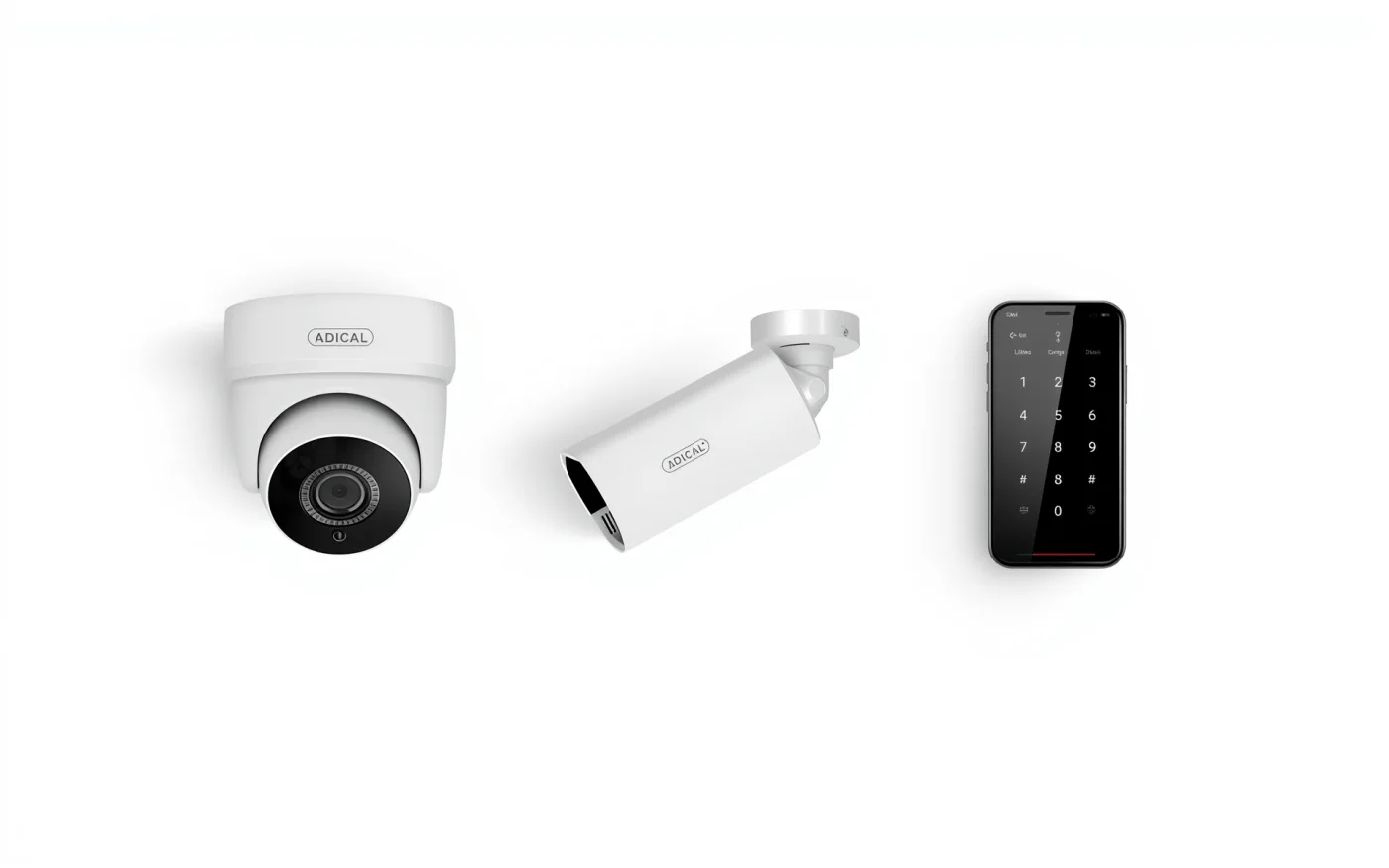
- Dome cameras suit ceilings and are hard to aim away from the shot.
- Bullet cameras suit exterior walls and long views, such as a lot.
- Wide-angle and multi-lens cameras cover a whole room or yard with fewer units.
- Cameras with built-in infrared see in the dark, and many add a spotlight for color at night.
Recording, storage and retention
How long you keep video depends on the number of cameras, their resolution and how much of the day they record. A recorder sized for motion-only recording on a quiet office holds weeks. The same box recording around the clock for a busy bar holds less. We size the drives to the retention you want and tell you the number of days you will actually have.
For remote viewing, we set up the app on your phone and make sure the recorder stays reachable without leaving it open to the internet.
Cameras near the Sports Complex and downtown
Spring training 2026 at Peoria Sports Complex, in the P83 Entertainment District, drew 214,400 fans across a 32-game schedule. Businesses nearby may see game-day crowds, which puts the lot and the front door at the top of the camera plan. Downtown Peoria, bounded by 85th Avenue, Peoria Avenue and Grand Avenue, has outdoor dining and patio areas on street frontage.
In both areas, we point cameras at your own entries, patio and lot, and we check the view so it does not stare into neighboring units.
Installing the system
- Mark camera spots, cable paths and a place for the recorder.
- Write a plan listing every camera and what it will show.
- Install cable and cameras around your hours.
- Aim and tune each camera at the time of day it matters, then set up phone access.
- Train your staff. Service is Monday to Friday, 8 AM to 5 PM.
What cameras share a network with
Cameras sit on the same network as other systems, so they often go in with door access control, structured data cabling and business WiFi. If the recorder must stay online during a line cut, see backup internet. Everything else is on the Peoria page.