What to know about security cameras in Chandler
New work follows the 2024 codes and 2023 NEC
Chandler reviews plans submitted on or after July 1, 2025 against the 2024 International Codes and the 2023 National Electrical Code. For a build-out or tenant improvement, we confirm with plan review how camera wiring and power are handled.
There is no low-voltage permit exemption
Chandler did not add an exemption for low-voltage work. Its electrical exemptions are a narrow equipment swap plus a catch-all the Building Official can use for similar work. We ask the Plan Reviewer of the Day (480-782-3078) before we assume a camera job needs no permit.
Source: City of Chandler, amendments to the 2024 codes (29-2.11)
Pole cameras and parking lots mean digging
Arizona 811 asks for at least two full working days of notice before digging, and crews hand-dig within two feet of marked lines. The free service marks only what utilities own, up to the meter, so a private lighting or parking-lot feed needs a private locator.
Source: Arizona 811
Outdoor crews work inside noise hours
Under the city's 2018 ordinance, within 500 feet of a residence, outside construction work may not start before 5 a.m. or run past 10 p.m. on weekdays. Weekends and holidays run 7 a.m. to 7 p.m. That covers our trenching and lift work on a lot that backs onto homes.
What a camera system includes
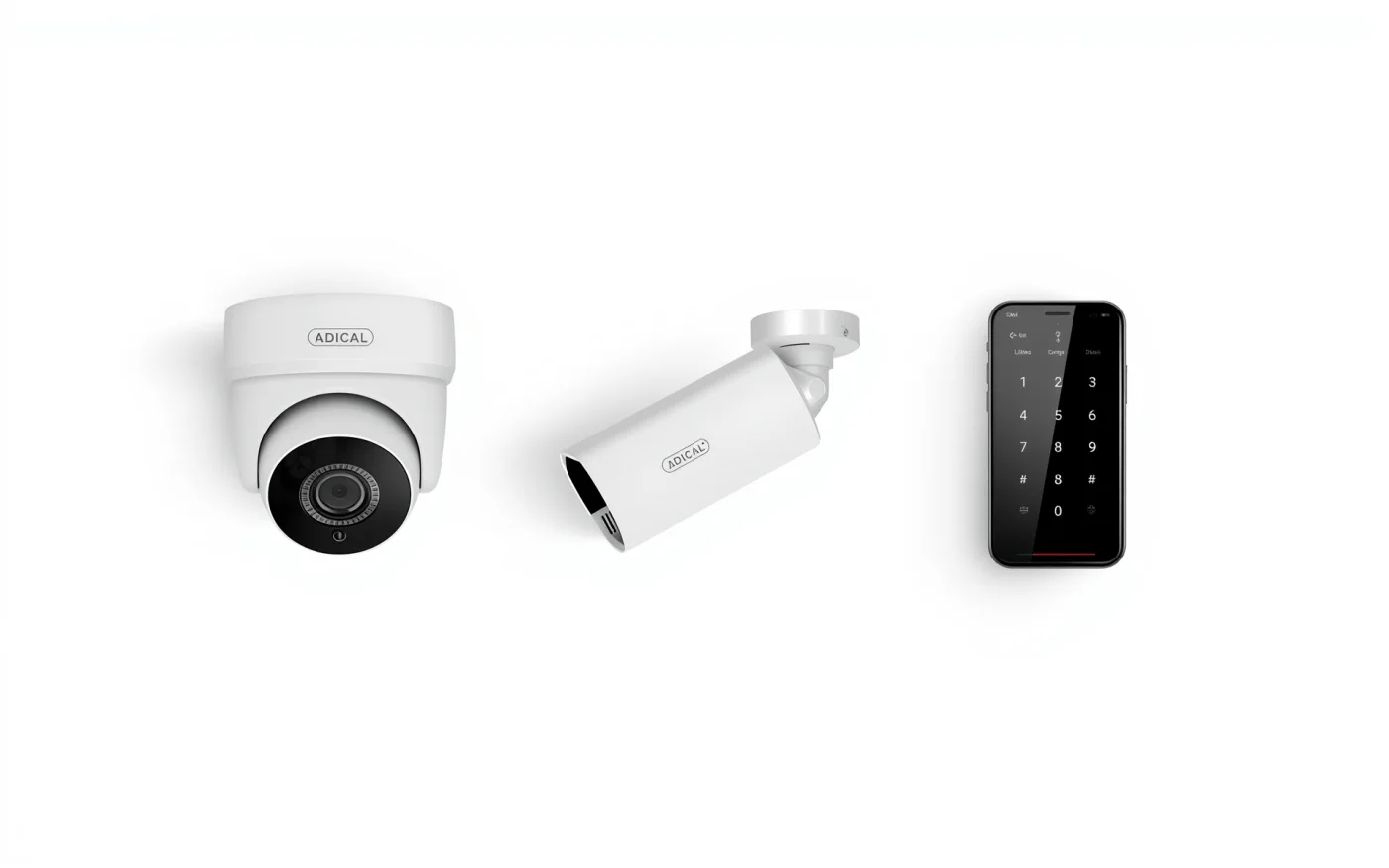
A commercial system has four parts: cameras, a network that carries video and power, a recorder, and a way to watch. Most of ours are IP cameras on Cat6, powered through the same cable by a PoE switch, so each camera needs one cable and no outlet nearby.
Video is stored on a network video recorder in your rack or back office. You watch live or review footage from a phone, tablet or the screen at the bar.
Where cameras go
We place cameras for a purpose, not to fill a wall. Each one gets a job, and the job decides the lens and the height.
Typical positions for a Chandler restaurant, retail shop or warehouse:
- Entrances and exits, set low enough to capture faces.
- The register and cash office.
- Back-of-house doors, the walk-in and the delivery dock.
- Parking lots and patios, with cameras rated for sun, heat and dust.
- Warehouse aisles and loading doors, with wide lenses.
Storage, retention and access
How long footage lasts depends on the number of cameras, the resolution and the size of the recorder's drives. We size storage to the number of days you want to keep, then set the recorder to overwrite the oldest footage.
You decide who sees what. The owner can see every camera. A manager might see only the dining room and the register. Remote access runs through your own network, and we set the accounts up with you.
From walkthrough to night test
- Walk the building to see ceiling types and cable paths.
- Plan each camera spot and field of view, and quote.
- Run cable, mount cameras and set up the recorder, scheduled around your hours.
- Aim and test every camera, day and night.
- Show your staff how to watch and export video.
Cameras in downtown and the Price Corridor
Downtown Chandler has restaurants, galleries and offices around Dr. A.J. Chandler Park, which the city says hosts more than 100 events a year. Patio-facing cameras there should handle busy crowds and mixed light at night. Warehouses and offices usually need parking lot coverage, dock doors and a clear way to find a specific moment fast.
What shares the network
Cameras usually go in with door access control, so a badge swipe and the video of that door sit side by side. They also need a solid network, so we often add structured data cabling or business WiFi on the same visit. The rest of our Chandler work is on Enzo in Chandler.