What to know about structured data cabling in Peoria
Peoria still enforces the 2017 National Electrical Code
Peoria's City Code adopts the 2017 National Electrical Code with local amendments, not the newer 2020 or 2023 edition. That sets the rules for cable types, pathways and firestopping we follow, and it is worth knowing if another contractor quotes you from a newer edition.
The building code is the 2018 IBC, amended
Peoria's code page lists the 2018 International Building Code as the adopted building code, amended locally. Penetrations through fire-rated walls and floors for new cable follow that code and get sealed with approved firestop.
Nearly any tenant project needs a permit
Peoria's Development and Engineering Department says nearly any tenant project, including a new restaurant, needs a permit. Small commercial electrical permits that stay within 225 amps at 120/208 volts, three phase, can get over-the-counter review. Cabling on a build-out is scheduled with the project's inspections.
After-hours inspections and missed permits cost extra
An inspection outside normal business hours costs $300 for a two-hour minimum, then $150 per extra hour, so we plan inspections for the working day. Work without a valid permit costs at least $460 to investigate, and a reinspection costs $230. If a landlord or general contractor handles permits, we ask which scope covers the cabling before we start.
Source: Peoria City Code, fee schedule
What structured cabling includes
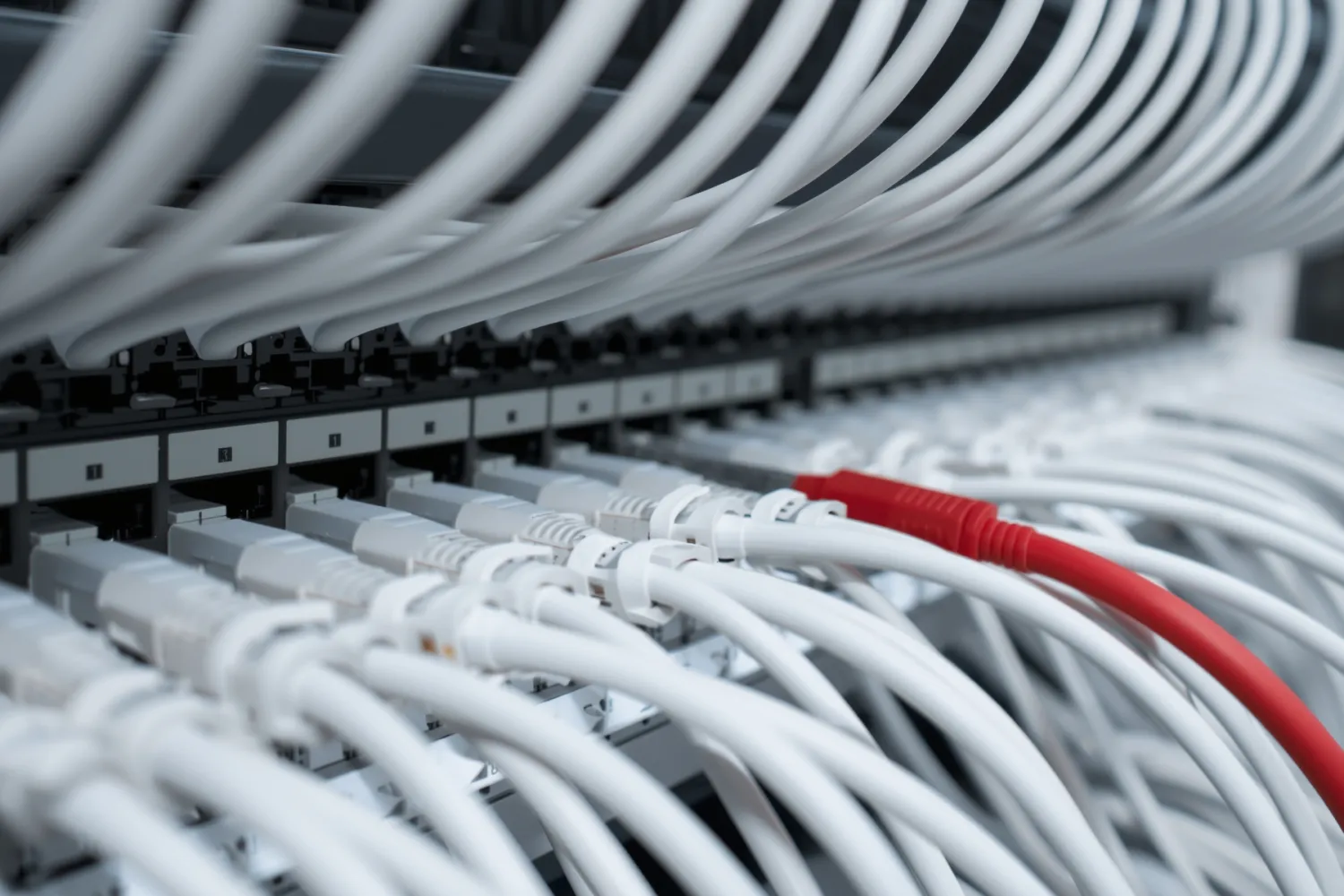
A structured system has a few parts: cable runs from each outlet or device back to a central point, jacks and patch panels at both ends, a rack or wall cabinet, and the labels and test results that tie it together. Done well, you can move a desk, add a camera or swap a switch without re-pulling cable.
Cat6, Cat6A and fiber
Cat6 carries gigabit speeds to 328 feet and handles most offices, shops and restaurants. Cat6A is thicker and handles 10-gigabit speeds over the same distance, which suits new builds and spaces with many access points or cameras. Fiber covers longer distances and links between buildings. Our fiber optic installation page covers that side.
- Plenum-rated cable goes where the ceiling is part of the air handling path.
- Outdoor-rated cable, with the right protection, runs between buildings and to patio devices.
- Separate runs keep power cable and data cable apart where they must cross.
Racks, labels and certified testing
Every run ends at a patch panel in a rack or cabinet. Panels are labeled to match the wall outlet, so a person can trace a jack to a port in seconds. We leave a cable map and the test report, so the next person to service your network starts with facts instead of guessing.
Each run is tested for continuity, length and wiring faults. Certification goes further and measures the run against the category standard, with results saved per cable. Ask for these results with any cabling job. They show a bad crimp before it becomes a slow Monday.
What drives the cost of a cabling job
Price follows a few things you can see on the walkthrough: the number of runs, the distance to the rack, whether the ceiling is open or finished, the cable category, and how much existing cable must be removed. Drops in a block-wall restaurant kitchen take longer than drops in an open office. A warehouse with high ceilings may need a lift.
We list the runs by location in the quote, so you can cut or add outlets before work starts. Extra runs are cheapest during the first pull, when the ceiling is already open and the crew is on site.
Cabling near the Sports Complex and Stadium Point
The city's 2021 development agreement for Stadium Point covered the 17-acre west parking lot of Peoria Sports Complex, with at least 400,000 square feet of office, a 150-room hotel and 200 homes planned. We could not confirm its current status, but new office and hotel space near the P83 District is the kind of project where cabling is planned before drywall closes.
For older buildings in Downtown Peoria, the work is different: finding routes through existing walls and ceilings, and keeping the business open while we do it.
What runs over the cabling
The cabling carries business WiFi, security cameras and business phone systems. The rest of our local services are on the Enzo in Peoria page.