What to know about TV and video distribution in Surprise
Spring training brings game-day crowds
Surprise Stadium hosted 31 Cactus League games in 2026, with Kansas City Royals and Texas Rangers home games, and the games ran from February 20 to March 21. The 2027 schedule had not been announced in the sources we read, but spring training runs from late February to about March 21.
The noise code includes televisions
Surprise bans playing a television, radio or stereo at an unreasonably loud volume that disturbs a neighborhood, whether inside a building or anywhere else. A bar's TV sound falls under the same misdemeanor as its music.
Game-day traffic changes around the stadium
For the 2026 games the city closed Bullard Avenue from south of Paradise Lane to north of Tierra Buena Lane through March 23 and offered free stadium parking. Closures like this are why we schedule installs and deliveries well before the season, not during it.
New work follows the 2024 codes
Surprise applies the 2024 I-Codes and the 2023 National Electrical Code to permit applications submitted on or after January 1, 2026. For a new tenant space we confirm with Community Development at 623-222-3000 how the wiring is handled.
Source: City of Surprise, 2024 Building Code Implementation Process
One source, many screens
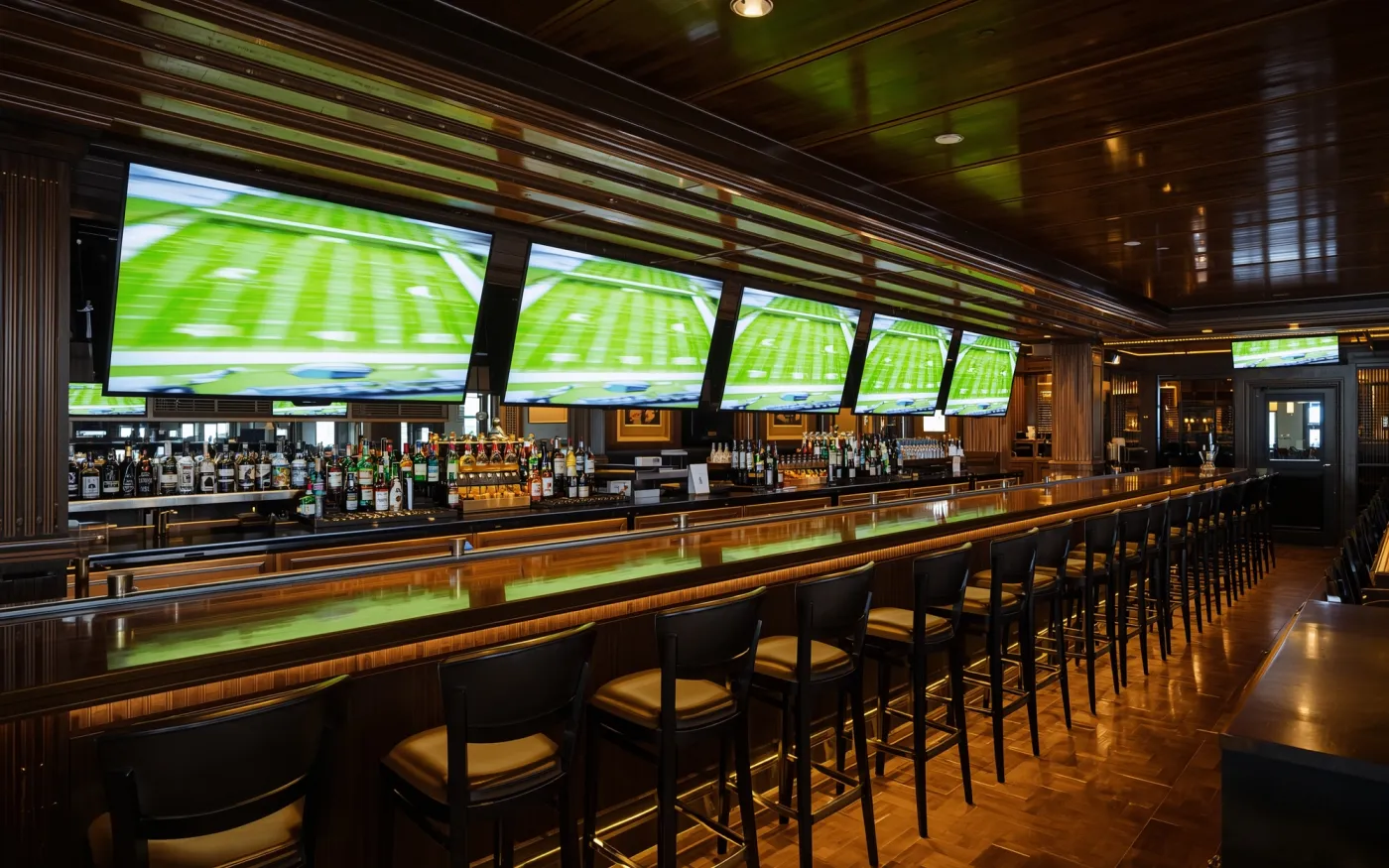
A video distribution system takes sources such as cable or satellite boxes, streaming players and a laptop input, and sends any of them to any screen. In a bar, that means the main game on the big screens, a second game over the pool table and a music video loop on the patio.
For a handful of screens, a matrix switcher with HDMI over twisted-pair cable works well and keeps the signal clean over long runs. For larger rooms we can use AV over IP, which sends video across the network and scales by adding screens.
Control the game from one place
Staff pick what each screen shows from a tablet, a wall panel or a phone. No one climbs a ladder for a remote. We label the sources in plain words, such as Game 1 or Patio, so a new bartender can run it on the first shift.
TV audio without the noise complaint
Most screens in a bar should be silent, with the sound of one game fed to a dedicated zone. That keeps crowd noise down and keeps you clear of the loud-TV rule in the noise code.
We route the audio to your ceiling speakers, set a maximum level, and keep patio zones separate from the dining room. See commercial audio for how those zones work.
Mounts, cabling and the rack
Every screen gets a commercial wall or ceiling mount rated for its weight, with power and video run inside the wall. The sources and switcher live in one labeled rack with ventilation, not behind the bar where they overheat.
We reuse screens you already own when they still work, and we tell you plainly when a set is too old to be worth wiring.
- Screen sizes matched to how far the seats are from the wall.
- Commercial-grade displays for rooms that stay on all day.
- Spare inputs for a laptop or a streaming box when a promoter asks.
Getting ready for the season
If your busiest weeks are spring training, plan the work for the fall or early winter. We install after hours or on slow days, test every source and screen, and show your staff how to switch games before the first pitch. Service calls run Monday to Friday, 8 AM to 5 PM.
Related systems
Video systems share a project with commercial audio, a control panel and guest WiFi on one network. To put a message on those screens between games, see digital signage. More on Enzo in Surprise.