What to know about TV and video distribution in Maricopa
TV audio can trip the noise rule
The City's noise rule names televisions and amplified sound. It applies when the sound is plainly audible beyond the property line and either runs 15 minutes or more or happens between 10 p.m. and 6 a.m. A patio TV with its sound up on game day can meet that description.
Source: City of Maricopa, MCC 18.110.050
Window and interior displays are capped at 50 percent of the glass
Window and interior display signs together may cover no more than 50 percent of the windows they are visible through. The City's sign brochure repeats the cap. If a TV faces out through your glass, we plan the screen size and spot with that limit in mind.
Source: City of Maricopa, MCC 18.115.090
Electrical changes trigger a tenant improvement permit
A commercial tenant-improvement building permit is required when electrical, plumbing or HVAC systems are altered or expanded. The City's guide does not mention low-voltage work, and a zoning permit must be approved first. If a TV install adds power outlets, we confirm with Development Services whether a permit applies.
Source: City of Maricopa, Commercial Tenant Improvement Guide
The 2023 NEC has one local amendment
Maricopa adopted the 2023 National Electrical Code and amended it only for island countertop receptacles. There is no local amendment on low-voltage, plenum or abandoned cable, so the standard rules for cable in ceilings and walls apply.
Source: City of Maricopa, MCC 15.05.100
One rack instead of a box behind every TV
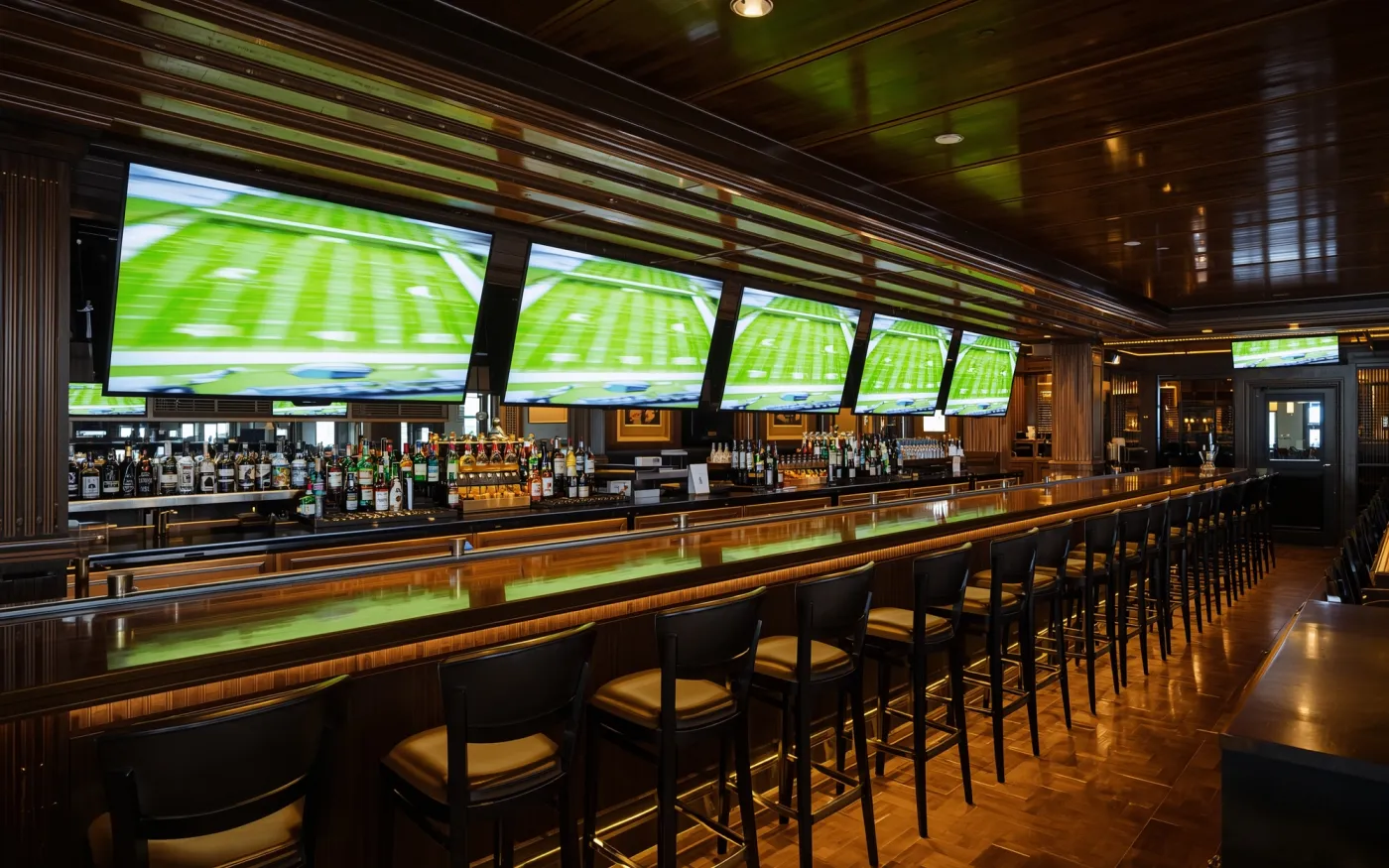
A bar with eight TVs the old way has eight cable boxes and eight remotes. With video distribution, the sources sit in one rack in a back room and the picture runs to each screen over cable. Staff pick what each TV shows from a panel or an app.
Matrix switcher or AV over IP
A matrix switcher takes a set of sources and sends any of them to any screen over HDMI-style cable. It is simple, fast and works well up to a couple dozen screens in one building. AV over IP sends video over your network switches instead, which suits larger sites or screens spread across buildings, but the network has to be built for it.
We pick one by counting screens, distance and how often you will add more. Neither is better in every room.
Screens, mounts and cable runs
Commercial displays are built to run all day, which a retail TV is not. We size screens to the viewing distance, put them at an angle people can actually see, and run cable inside the wall or ceiling where we can.
On an outdoor or patio screen we use displays made for sun and heat, and we plan power and cable before the mount goes on.
- Sources: cable or satellite boxes, streaming players, a sports package receiver, a laptop input.
- Mounts: fixed, tilting or full-motion, sized for the display and the wall behind it.
- Control: one panel or app for the whole room, with a preset for game day.
Game-day sound in Maricopa
Most bars should not play TV audio on every screen. We usually mute the screens and run the game sound through the zoned speakers, so sound is set per room. For a patio, that keeps the audio low and aimed at the seats, which helps with the City's rule on sound carrying past the property line.
Window screens get the same care. Because the City caps window and interior displays at 50 percent of the glass, we measure the glass first, then pick the screen.
How an install goes
We connect to your existing TVs and boxes when they still work.
- We count screens, sources and cable paths on a walkthrough.
- You get a plan with screen spots, the rack location and a quote.
- The install usually happens after hours so you stay open.
- We label every source and screen and train your staff.
- Service continues after the install, Monday to Friday, 8 AM to 5 PM.
Often paired with
Screens go with commercial audio so the sound matches the picture, and an AV control system runs both. Promotional screens belong with digital signage. See the Maricopa page for the rest of our work in town.