What to know about conference room AV in Maricopa
Plans follow the 2024 codes, but the dates disagree
Maricopa City Council approved the 2024 International Codes, including the 2023 NEC and A117.1-2017, on January 20, 2026 (Ordinance 26-01). The City's public notice gives February 20, 2026 as the effective date, while its Building Safety page says February 2 and still names the 2018 fire and building codes for commercial fire plan review. We confirm with the Building Official, 520-316-6932, which set applies to your plans.
A tenant improvement permit applies when electrical systems change
A commercial tenant-improvement building permit is required when electrical, plumbing or HVAC systems are altered or expanded, and a zoning permit must be approved first. The guide doesn't mention low-voltage work. All plans go through the VIP Portal; paper plan submittals are no longer accepted.
Source: City of Maricopa, Commercial Tenant Improvement Guide
No low-voltage exemption is listed
The Building Safety page lists no exemption for low-voltage work and tells applicants to contact the office to find out whether a permit is needed. We call before we quote a build-out, so you know early whether a permit is part of the job.
Large assembly rooms need a manual fire alarm
The City amended IFC 907.2.1 so Group A occupancies need a manual fire alarm system when the assembly occupant load is 100 or more. Fire alarm work needs its own permits, separate from the building permit. If you are planning a training room or boardroom that large, the fire alarm contractor handles that side, and we coordinate our work with theirs.
What goes in a meeting room
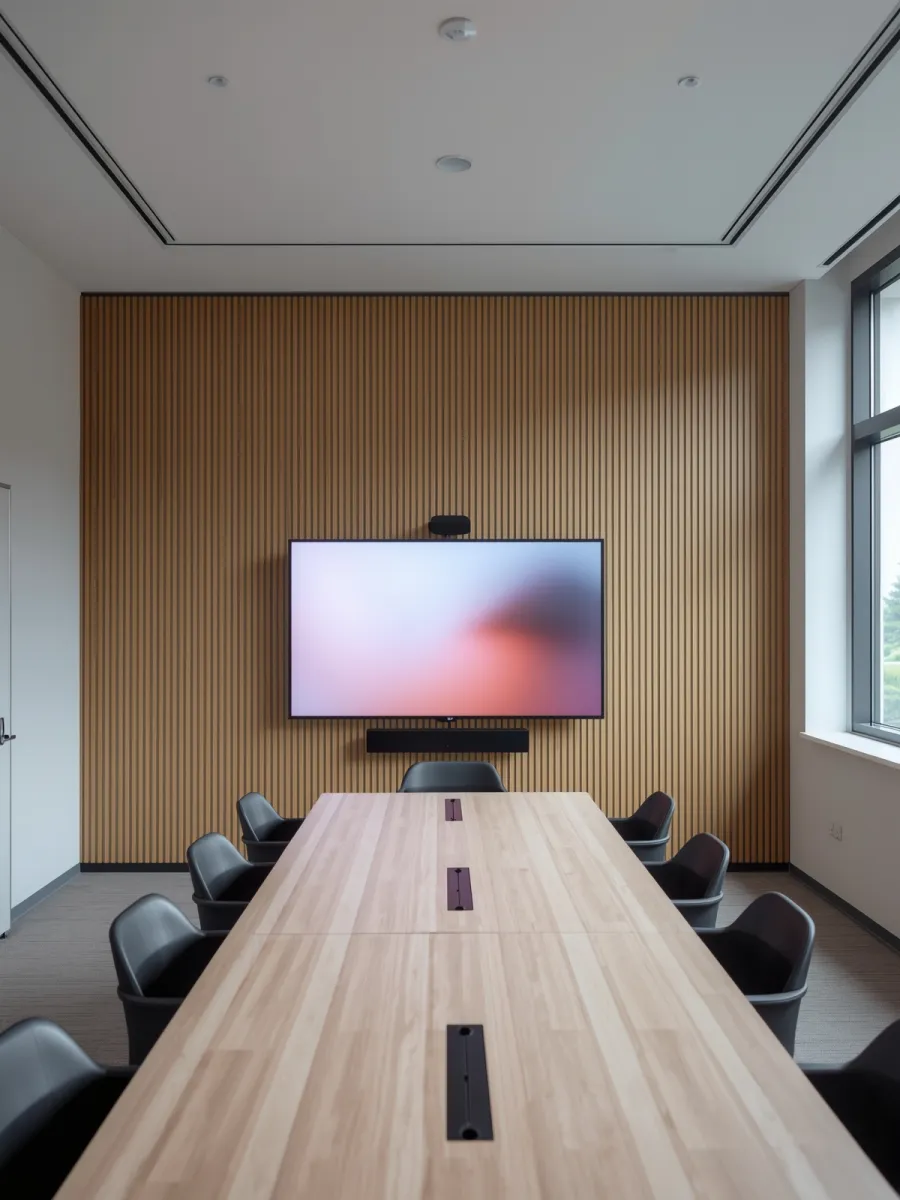
A small huddle room needs a display and a video bar that holds the camera, microphones and speakers in one unit. A larger boardroom usually needs separate ceiling microphones, a camera that follows the speaker, and speakers placed so people at the far end of the table hear clearly.
- Display or displays sized to the farthest seat.
- Camera aimed at the table, not at a window.
- Microphones that cover every seat.
- Speakers for the room, and a place to plug in a laptop.
Works with Teams, Zoom and Meet
Most rooms run whichever call software your company already uses. We pick equipment that works with it, and we set the room so a guest can plug in a laptop and use the same screen and microphones. A good room starts a call in one touch and doesn't need an IT person on the line.
Wireless sharing and control
Wireless sharing lets someone put a laptop or phone screen on the display without a cable. Control is a small touch panel on the table or a button on the wall, so people choose a source, adjust volume and end the call without hunting for remotes. See AV control systems.
Network and cabling come first
A video call depends on the network behind it. Displays, cameras and control panels need wired network ports, and power over Ethernet saves a power outlet at the camera. We plan the data runs with the room, and can pull the cable ourselves under structured data cabling.
Conference rooms in Maricopa
Meeting rooms in tenant suites often have little ceiling void to hide equipment, so we use compact wall-mounted bars, and run cable inside the walls where we can.
Plan for power cuts too. ED3 is the only electric provider in the city, and its outage page lists monsoon season and traffic accidents among the main causes of outages. We put a conference room's rack on a battery backup so a short blip does not restart the room.
Often paired with
Meeting rooms often go in with data cabling, and with digital signage for the lobby. Bigger rooms add an AV control system. Our other work in town is on the Maricopa page.