What to know about LED video walls in Maricopa
Electronic signs hold each message 30 seconds, with no video
Electronic signs in Maricopa must hold each message static for at least 30 seconds. They may not use animation, flashing or moving lights, or any type of video. A video wall can't be run as a sign here. Text on the sign must also be brighter than its background.
Source: City of Maricopa, MCC 18.115.070
Brightness is capped at the property line
Sign lighting is capped at 0.5 foot-candles at the property line. We set the wall's brightness and dimming schedule to stay under that, and signs directly facing a residential district must not be illuminated (neon is excepted), with the light source hidden from the street, sidewalk and adjacent property.
Source: City of Maricopa, MCC 18.115.070
Exterior electronic signs need an electric permit
An electric permit is required for every exterior electronic sign. A sign permit costs $223, plus $56 for each additional sign, and starting work before the permit is issued doubles the permit fee. The application needs the information for an electrical permit for any sign illumination.
Size limits can use up your sign allowance
Total sign area for one business in commercial, mixed-use, office and industrial districts is capped at 100 square feet, and the per-tenant formula is 1.5 square feet per 2 linear feet of frontage, up to 32 square feet. In those districts only up to half of a monument sign's area may be digital. The code does not say whether an interior or window LED wall counts toward the cap.
Source: City of Maricopa, MCC 18.115.090
Where an LED wall makes sense
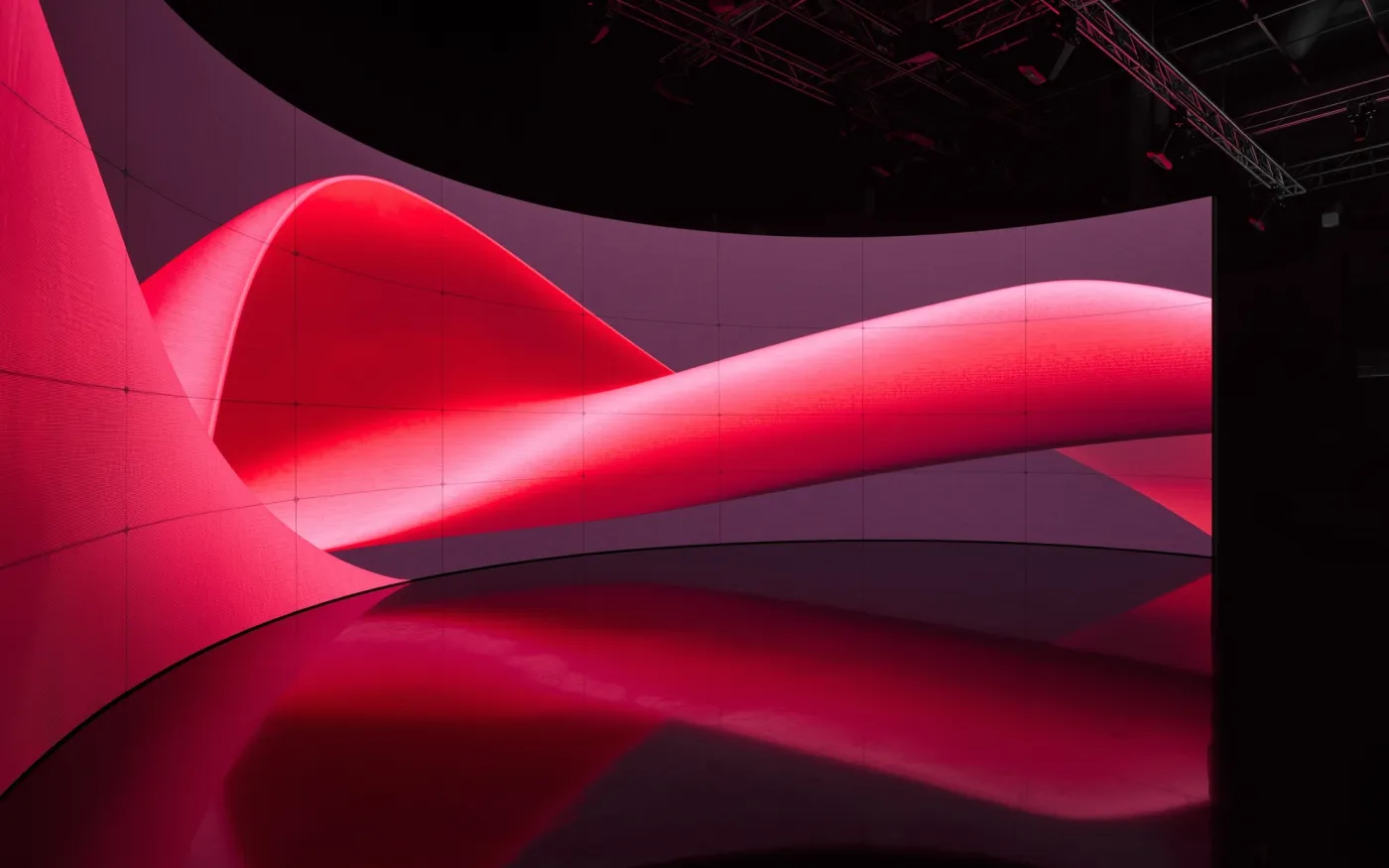
An LED wall gives you one big, bright image with no gaps, which suits a bar back wall, a lobby feature, a stage backdrop or a showroom. A TV array has bezels; an LED wall has none and can be any shape or size.
- Bars and lounges: a feature wall behind the bar or stage.
- Lobbies and showrooms: brand content behind a reception desk.
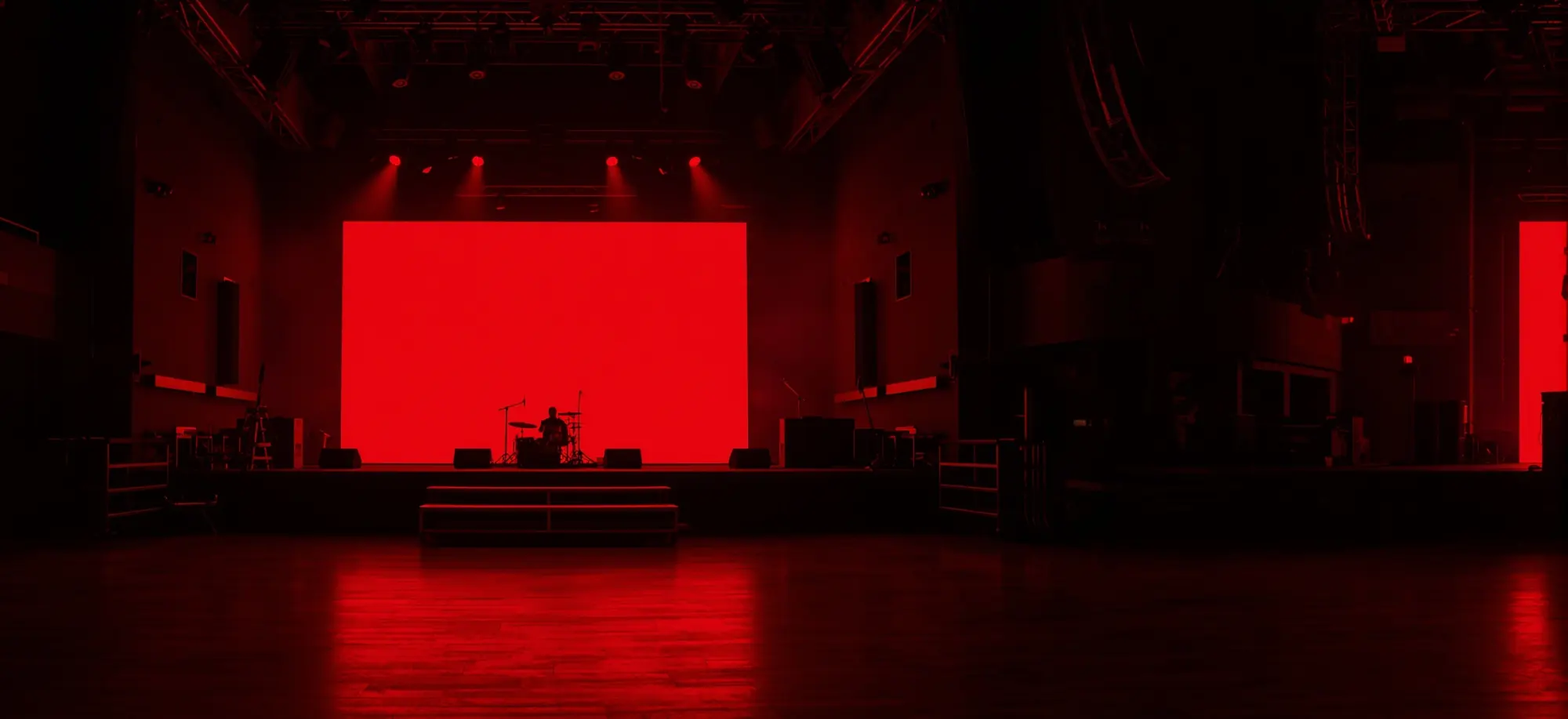
- Event rooms and stages: a backdrop for speakers, bands and slides.
- Storefronts: a message sign, subject to the City's electronic sign rules.
Pixel pitch and viewing distance
Pixel pitch is the distance between LEDs, in millimeters. A smaller pitch gives a sharper picture and costs more. A common rule of thumb is about one meter of viewing distance for every millimeter of pitch.
A bar back wall seen from the dining room can use a coarser pitch than a lobby wall seen from the reception desk. We measure how close people really get, then pick the pitch from that.
Indoor, outdoor and what drives cost
Indoor panels are lighter and finer-pitched. Outdoor panels are sealed against dust and water and driven much brighter, which is where the sign rules, the foot-candle cap and an electric permit are most likely to apply.
Cost follows size, pitch, indoor or outdoor, the structure that holds it, power, and the processor and content system behind it. Quotes follow a walkthrough.
Power, structure and cabling
An LED wall needs dedicated power circuits sized for the load, a processor or controller, and a frame or wall built to carry it. We coordinate with your electrician for the circuits, and we run the data and control cable ourselves.
Panels are serviced from the front or back, so we leave access. A failed panel can be swapped without taking the wall apart.
The Maricopa step before you order
The code text we found does not say whether a screen inside a window is an electronic sign. So before we order a wall that faces out, we ask Development Services at 520-316-6920 how they would treat it, and we give you the answer in writing in the plan. A wall that stays inside, away from windows, is a simpler case.
Often paired with
For stages, an LED wall pairs with event audio and video, and commercial audio covers the room. Menu boards and message screens are digital signage, and an AV control system runs the whole room. More is on the Maricopa page.