What to know about structured data cabling in Avondale
Low-voltage wiring is not on the permit exemption list
Avondale's amended list of electrical work exempt from a permit has three items: minor repair and plugging in portable equipment, radio and TV transmitting equipment, and temporary testing systems. Low-voltage cabling is not on it. The city has not said in writing that cabling needs a permit, so we call Building Services at (623) 333-4000 for a ruling before we tell you either way.
Source: City of Avondale, Building Code Adoption (IBC 105.2, amended)
Avondale's NEC amendments skip the communications articles
The city's local changes to the 2023 National Electrical Code are limited to 90.2(G), 110.7, 210.52(C)(2), 210.52(C)(3) and 210.52(G)(1). None of the amended articles are the communications or low-voltage articles, and no plenum or abandoned-cable amendment appears in the list. The standard NEC rules on cable type and abandoned cable apply as written.
The 2024 codes took effect January 1, 2026
Avondale's adopted building codes are the 2024 International Codes and the 2023 NEC, with city amendments dated December 1, 2025. The NEC points to Chapter One of the 2024 IBC, as amended by Avondale, for permits, inspections and fees.
Permit costs and how to file
An electrical permit is a flat $112 and a re-inspection is a flat $140, per the city's fee schedule effective May 9, 2026. A newer schedule may exist, so we recheck before quoting dollars. Applications go through the Accela Citizen Access portal, and contractors need an account first.
What structured cabling includes
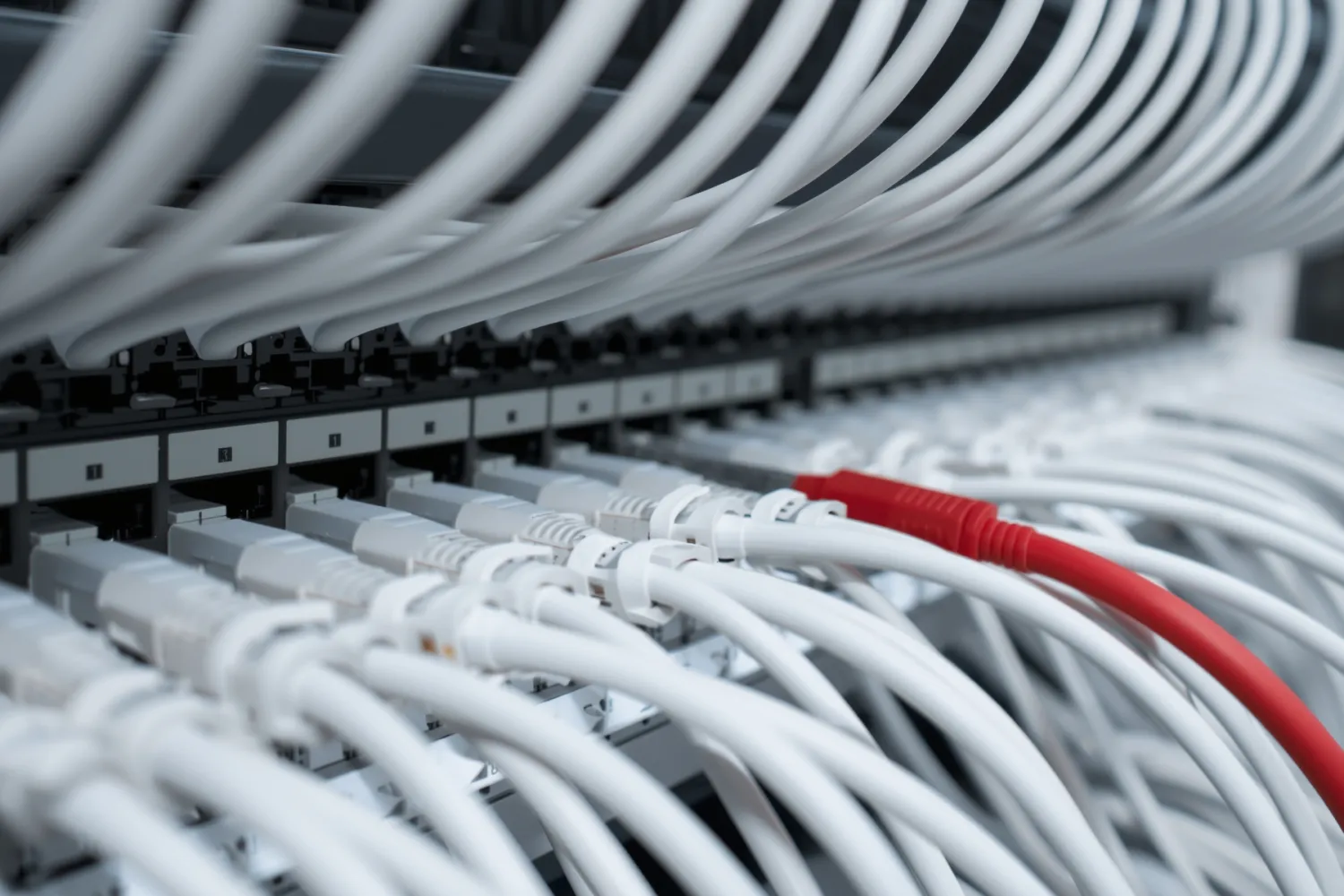
Structured cabling is a planned system, not a pile of cables: a main equipment room, horizontal cable to each outlet, patch panels, and a labeled path from every wall jack back to the switch.
Every run gets a label at both ends and a test result. When something stops working, the label tells you which cable and which port, which saves service time later.
Cat6, Cat6A and fiber
For most Avondale offices, restaurants and retail stores, Cat6 carries gigabit speeds to every desk, register and camera. Cat6A handles 10 gigabit over a full run and resists interference better, so it suits new builds where you want the cable to outlast the next switch upgrade.
Fiber is for runs between buildings, long distances or backbone links between floors. A warehouse with an office a few hundred feet away usually wants fiber between them, and our fiber optic installation page covers that.
Where the cable goes
Cable runs through ceilings, walls, conduit and sometimes across a roof. The right cable type depends on where it goes.
- Plenum-rated cable goes in air-handling spaces, as the electrical code requires.
- Outdoor-rated cable, or conduit, protects runs exposed to sun and heat.
- Wall jacks and floor boxes go where the desks, registers and TVs actually are.
- Racks and patch panels live in a closet with power, cooling and room to work.
Cabling for what runs on it
Count the drops for everything that will plug in. A restaurant might need one at each register and the kitchen display, the office, the music system, the TVs, the cameras and the WiFi access points. A warehouse adds scanners and label printers.
Adding drops while walls are open costs less than coming back later, so we usually suggest a spare drop or two in each area.
Pulling, terminating and testing
- Count the drops, trace the paths and find the equipment room.
- List each outlet, cable type and rack position on a plan.
- Pull and terminate cable around your hours.
- Test every run and label both ends.
- Hand over the documentation. Service runs Monday to Friday, 8 AM to 5 PM.
Often paired with
Cabling goes in first for security cameras, WiFi access points and business phone systems, none of which work well without it. Call (602) 769-7992 to count your drops, or see Enzo in Avondale.