What to know about structured cabling in Scottsdale
There is no low-voltage exemption on the city's list
Scottsdale's amended permit-exemption list for electrical work names only minor repairs and maintenance. It lists no exemption for low-voltage, data, AV or security wiring. We confirm with Permit Services how a cabling job is handled before we start, so you aren't surprised mid-project.
Starting early doubles the fee
Starting electrical or other work before the permit is issued doubles the permit fee. The city says an electrical permit is required to install, alter, reconstruct or repair electrical wiring on any building. Requests are filed through the SPUR portal, and Permit Services is at 7447 E. Indian School Road, 480-312-2500.
New work follows the 2020 electrical code
Scottsdale adopts the 2020 National Electrical Code by reference as part of its Building Code. Its most recent building code adoption, Ordinance 4550 of Sept. 20, 2022, adopted the 2021 IBC and the 2020 NEC. Cable in ceilings and plenum spaces follows the code that applies to the building.
New buildings must support the city's public safety radio
Every non-residential and multifamily building must support the city's public safety radio system, proven before a certificate of occupancy. Buildings that fail the coverage standard must add an FCC-certified amplification system. That is a separate job from data cabling, but it affects how a new build-out is planned and who is on site.
What structured cabling includes
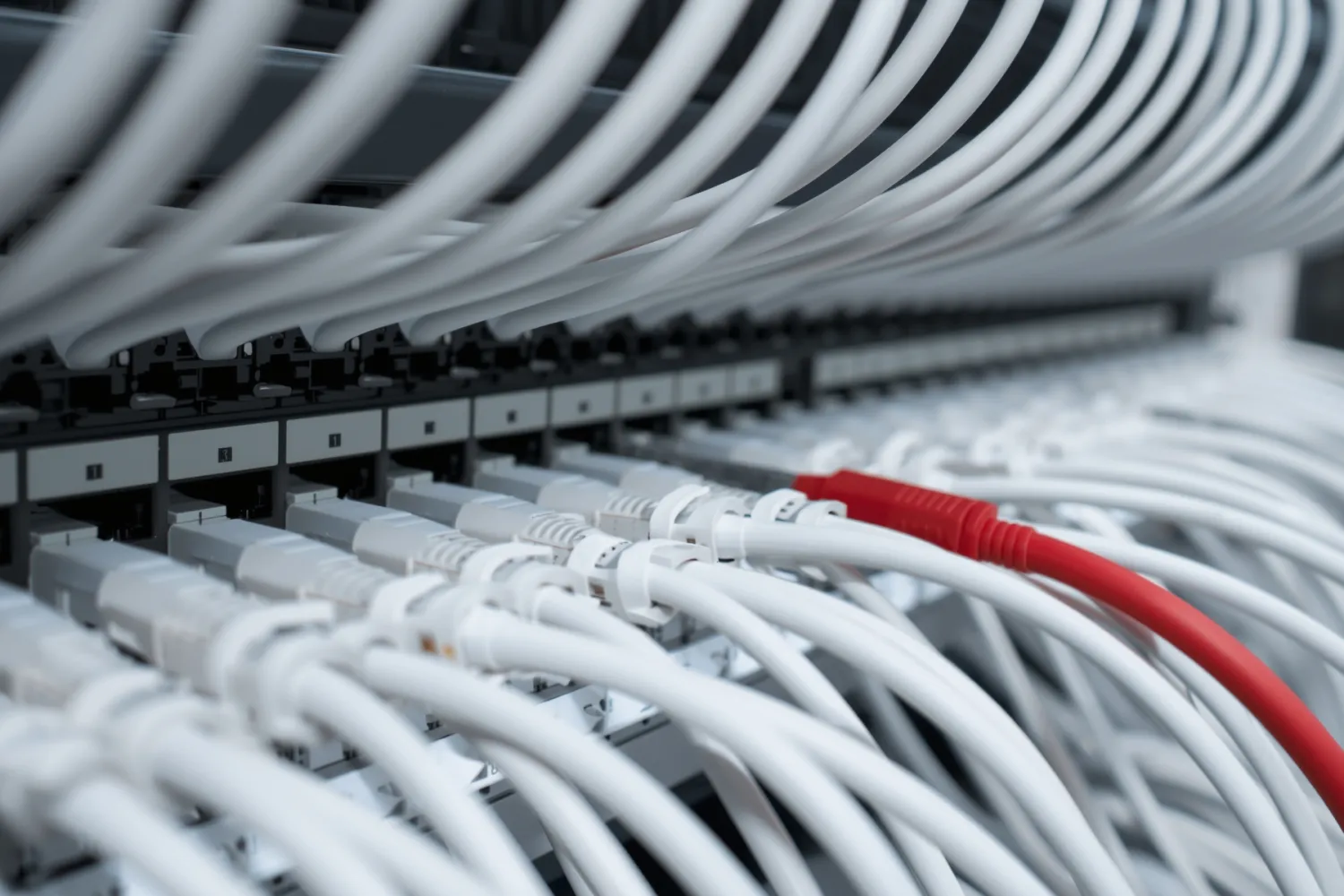
Structured cabling is a planned system, not a pile of cables. It has horizontal cable running from each outlet to a central point, patch panels at that point, racks to hold the gear, and labels on every cable and port. A new wall plate, a new camera or a new phone becomes a matter of one patch cord.
Cat6, Cat6A and fiber
Cat6 handles gigabit speeds to a full 100 meters and suits most offices, restaurants and retail. Cat6A handles 10 gigabit and is worth it where you expect heavy use or want cable that lasts longer. Fiber carries data between buildings or between distant equipment rooms, and we cover it on the fiber optic installation page.
Each cable run tops out at 100 meters, about 328 feet. In a large warehouse, that limit sets where the network closets go.
Where cable gets run
Cable runs through ceilings, walls, conduit and, in warehouses, along cable tray. In tenant spaces with finished ceilings, we plan routes that avoid cutting drywall. In open ceilings and exposed spaces, cable gets hung in neat bundles, not draped over pipes.
Every outlet is tested after termination. You get a record of what each run is and where it ends.
- Data outlets for desks, registers and printers.
- Ceiling drops for WiFi access points and cameras.
- Cable to TVs, menu boards and digital signs.
- Runs to the phone and network room.
Cabling in Scottsdale restaurants and offices
Restaurants need cable in places an office doesn't: the kitchen printers, the bar POS, patio TVs and WiFi, and the back office. Heat, grease and moisture in kitchens call for cable and enclosures that handle them. Offices usually need a clean rack, a patch panel and enough drops for growth.
When you open a space in Old Town, run the cabling before the finishes go in. It costs less to do it early and the walls stay intact.
Labels, documentation and what changes the cost
Cost depends on the number of runs, the length, the ceiling type, the wall construction, the need for conduit and whether the walls are finished. A single room is a day's work. A full build-out takes longer. We give you a number after the walkthrough.
Labeled panels and a printed port map let anyone service the network later, including your next IT provider.
What runs on it
Cabling is the foundation for business WiFi, security cameras and business phone systems. The Scottsdale page has the full list. Call (928) 370-7333 and the walkthrough will count your drops.