What to know about LED video walls in Scottsdale
Check with the city before a changing wall faces the street
Scottsdale's sign code bans animated signs except flags and defines animation as the automatic changing of any part of a sign face. A changing LED or video face on a building or window runs into that definition. This is our reading of two code sections, not a city statement about LED walls, so we confirm with city sign staff before we quote one.
Source: Scottsdale Zoning Ordinance, Art. VIII (Sign Requirements)
A sign is anything visible beyond your property
The code defines a sign as a visual-communication device meant to attract the public's attention and visible beyond the property it is on. That is why the question is not how big the wall is, but who can see it. A wall that can't be seen from another lot or street is a different case from one that can.
Source: Scottsdale Zoning Ordinance, Art. VIII (Sign Requirements)
Exposed LEDs and flashing are also restricted
The same article prohibits exposed LEDs on signs unless they are used for indirect lighting, and bans flashing, blinking or rotating light-emitting devices. It has no separate electronic message center section, so a lit screen is judged under the animation rules. Ask the city which sections govern your screen.
Source: Scottsdale Zoning Ordinance, Art. VIII (Sign Requirements)
Old Town could set its own sign rules
The City Council may form a community sign district covering all or part of Old Town, and such a district can set its own sign rules. We found no adopted Old Town LED or electronic sign rule in the sign article, so confirm what applies to your address.
Source: Scottsdale Zoning Ordinance, Art. VIII (Sign Requirements)
Indoor walls are a different job
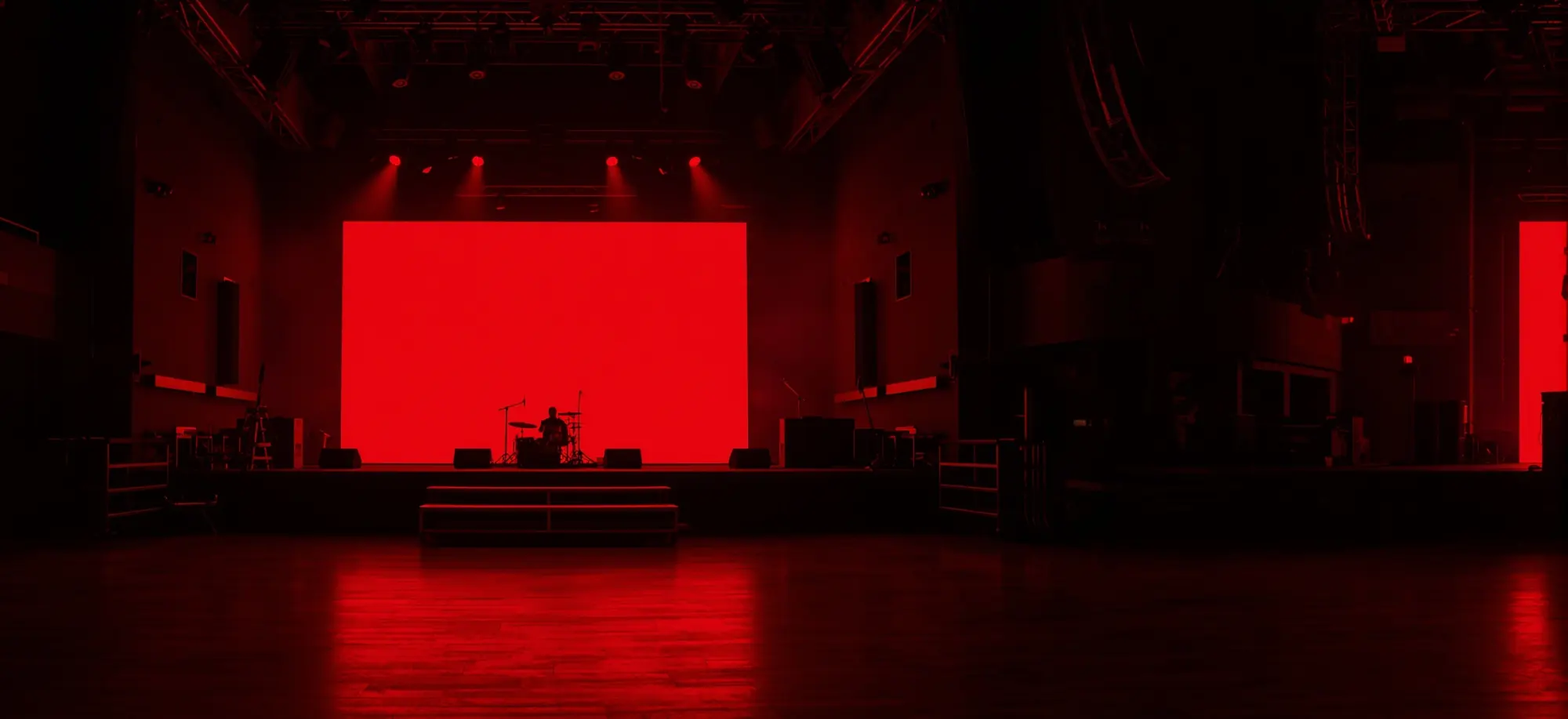
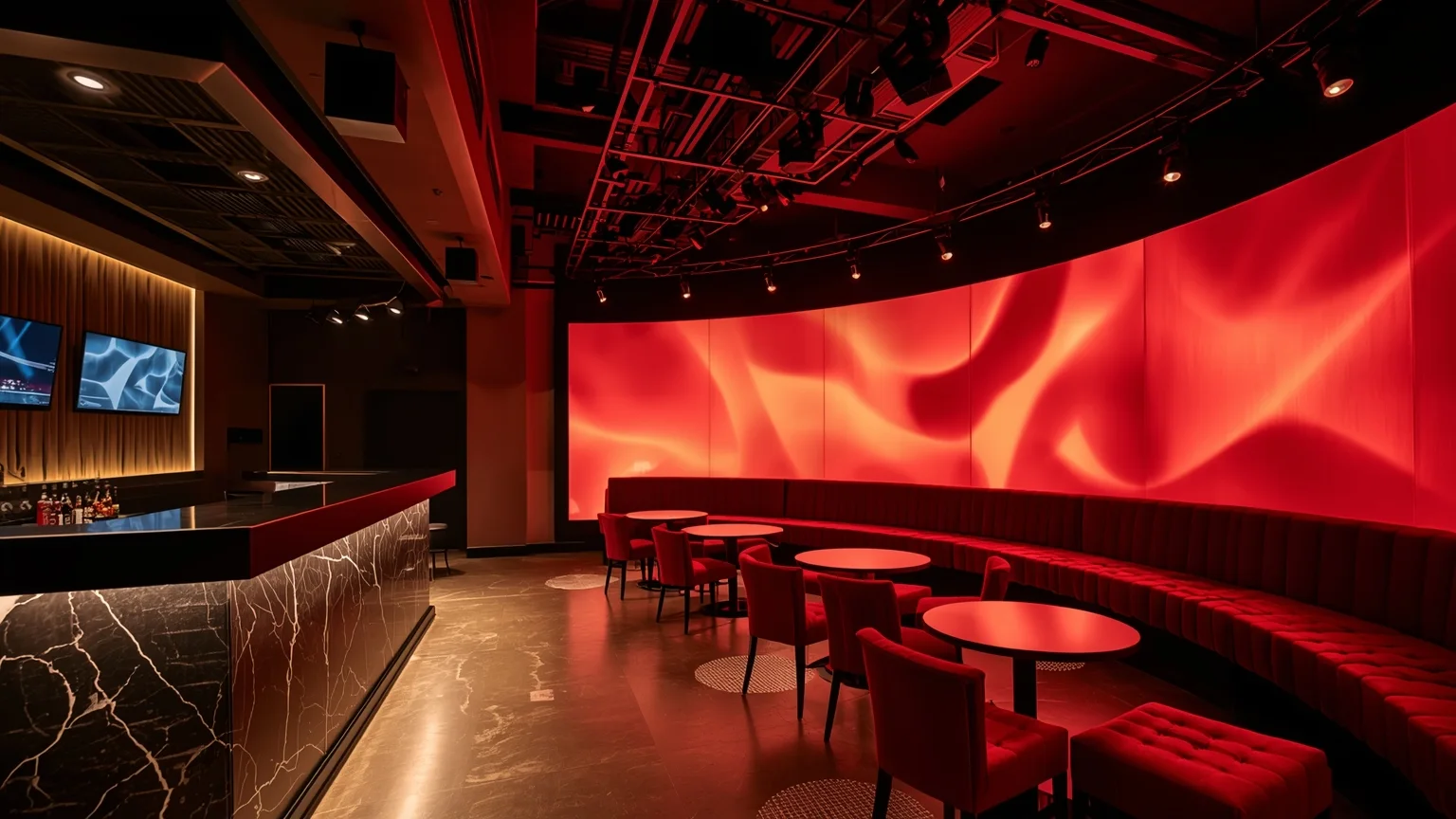
A wall behind a bar, a stage, a dance floor or a lobby desk, not visible from outside, is an AV project rather than a sign project. The design questions are size, resolution, brightness and how the content gets onto it. The sign code questions mostly drop away, though the electrical work still needs a permit.
Pixel pitch and viewing distance
Pixel pitch is the distance between LED points, in millimeters. A smaller pitch gives a sharper picture and costs more. A lobby wall that people read from six feet needs a tighter pitch than a stage backdrop watched from the back of a room.
A common rule of thumb is that the pitch in millimeters is roughly the closest comfortable viewing distance in meters. We use it as a starting point, then adjust for content. Text and logos need more resolution than video and abstract visuals.
Size, shape and brightness
LED walls are built from cabinets, so the size is a whole number of panels. Flat, curved and corner walls are all possible. Brightness matters most near windows, where daylight washes out a dim screen, and we set it low enough in a dark bar that the wall doesn't overpower the room.
Behind the wall sit a video processor, a power distribution plan and cooling. Panels are heavy, so the structure and mounting need a look before the wall is sized.
Permits and the electrical side
The city says an electrical permit is required to install, alter or repair wiring on any building, and its amended exemption list lists nothing for AV or low-voltage work. Illuminated signs also get an electrical inspection. Starting work before a permit is issued doubles the permit fee, and sign work started early doubles the sign fees.
Scottsdale's FY26-27 sign permit fee is a base of $237 per application plus $26 to $363 per sign, depending on size. Electrical permit fees for the wiring are separate. Commercial signs must be installed by an Arizona general contractor or sign contractor, so a street-facing wall may need one on the job.
Install steps for a wall
- Walk the wall location, power, structure and sightlines from outside.
- If the wall faces out, ask the city whether it counts as a sign.
- Draw the panel layout, processor and content sources, with a written quote.
- Install, calibrate and test content after hours.
- Train your staff. Service runs Monday to Friday, 8 AM to 5 PM.
With sound and control
A wall normally goes in with commercial audio and AV control, so one panel runs both. Menus and promotions are a job for digital signage. The Scottsdale page covers the rest. To start, call (602) 769-7992 and tell us who can see the wall.