What to know about LED video walls in Gilbert
Blinking and animated signs are banned, with exceptions
Gilbert bans flashing, blinking, reflective, animated and rotating lights on signs, except Changing Message Displays and Marquee Signs. The code defines an intermittent sign as one that changes light more often than once every 12 hours, and it names LED and digital signs. For a street-facing wall, we check whether it can qualify as a changing message display.
Changing message displays are allowed on named sign types
Outside residential districts, wall-mounted cabinet, marquee, freestanding monument, tower and freeway signs may be Electronic Changing Message Displays. The code names only those types and has no separate category for a video wall, so we check the facade plan with Planning first.
Brightness, dimming and the 48-hour rule
An electronic display must have photocell dimming and be no brighter than 0.3 foot candles above ambient light at the property line. The owner of a malfunctioning display must repair or disconnect it within 48 hours. Those limits sit in the paragraph for non-residential uses in residential districts, so we ask Planning how they apply to a commercial site.
Fees and distance from homes
The fee schedule has its own line for Electronic Wall Signs: $350 plus $100 for each additional sign at 1 to 49 square feet, and $450 at 50 square feet or larger. The fee table is amended through 2025, so confirm current amounts. Under the Land Development Code, no sign within 50 feet of a single-family zoning district may be illuminated.
Source: Town of Gilbert, Fee Schedule and Land Development Code
Indoor walls and walls the street can see
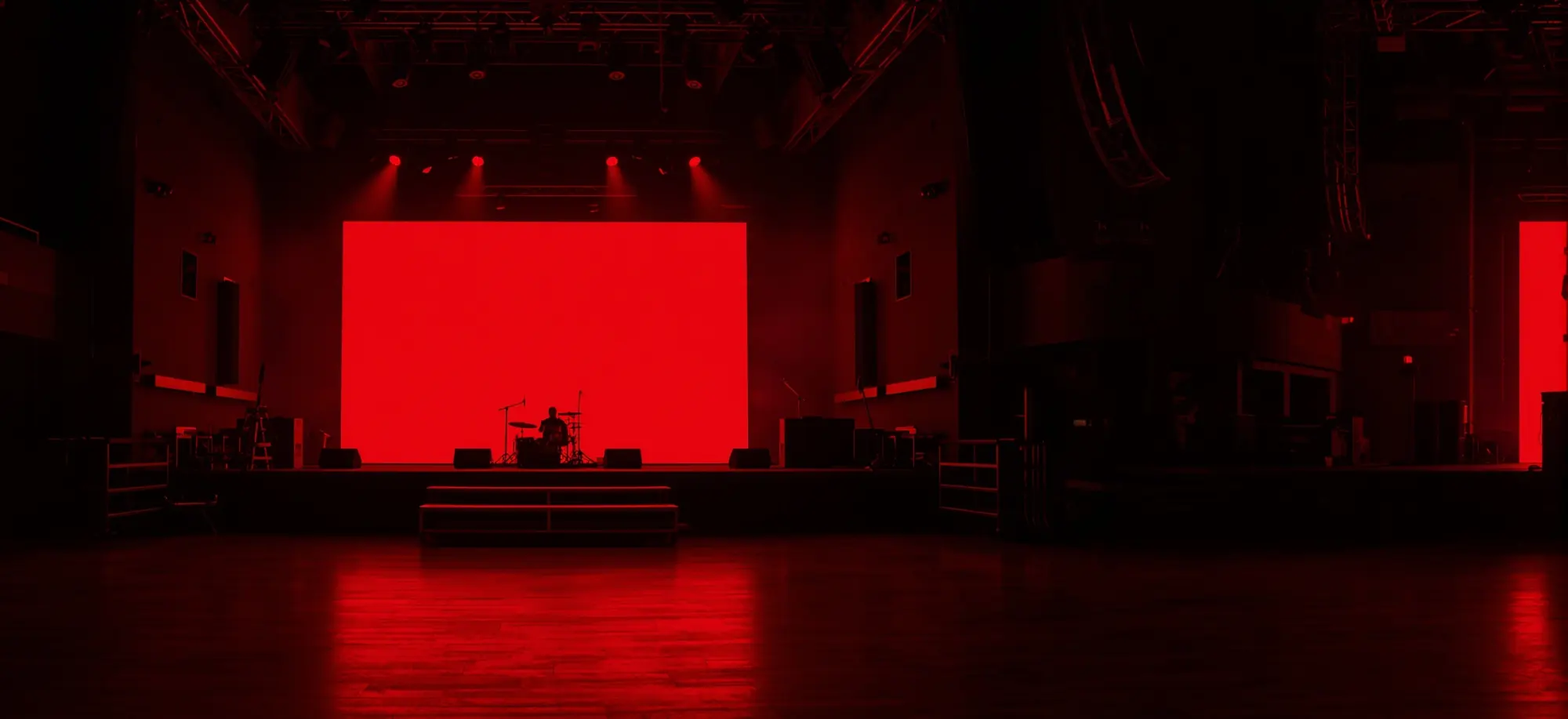
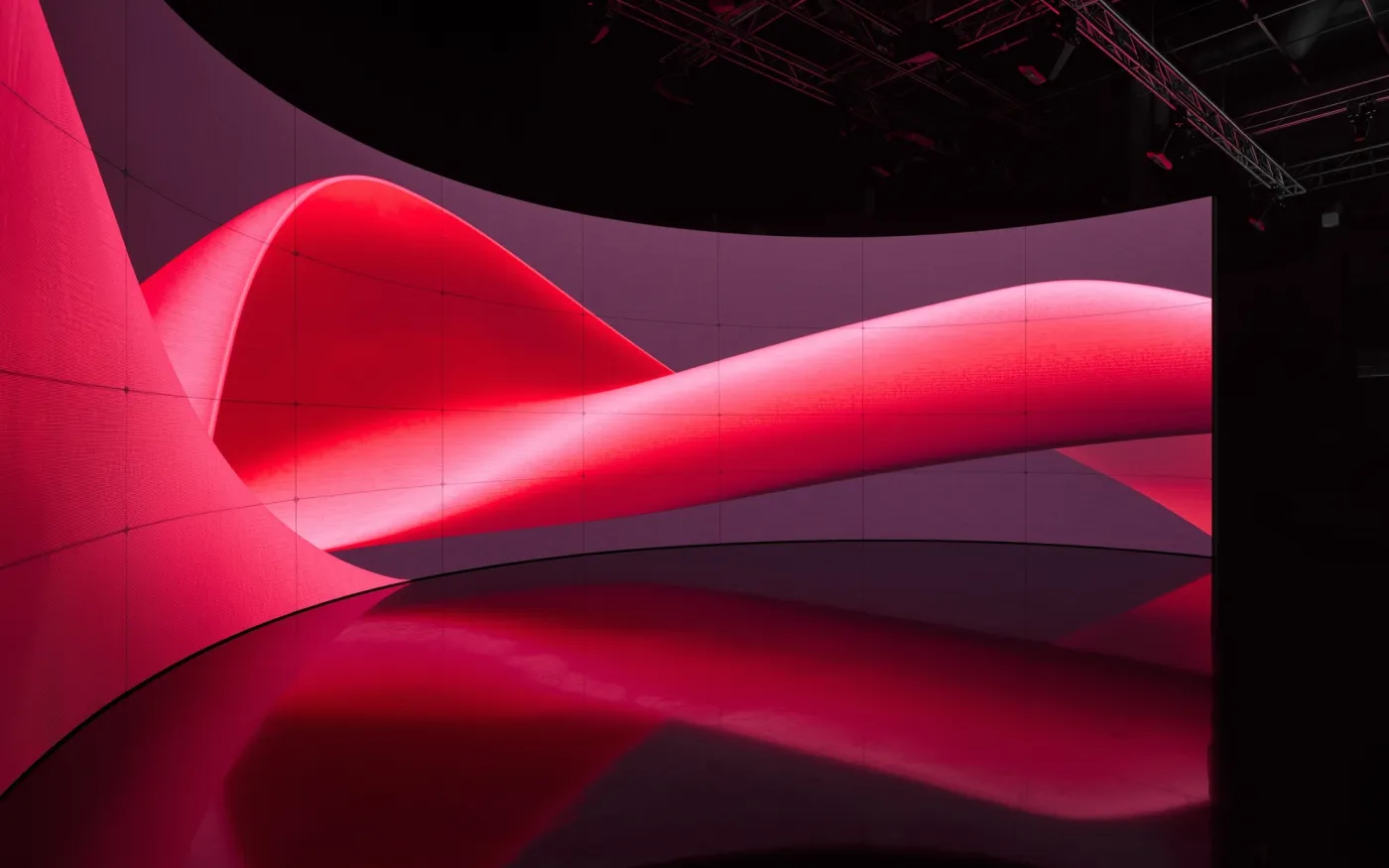
Gilbert's sign code exempts signs located entirely inside a building, other than window signs. A curved LED wall behind a stage, a lobby feature wall or a screen behind a bar sits outside the sign code unless it is near the glass and faces out.
The split drives the whole job. An indoor wall is a design and structure question. A facade or window wall is a sign-permit question, and we settle it before we order cabinets.
Pixel pitch and viewing distance
Pixel pitch is the distance between LEDs, in millimeters. A tighter pitch looks sharper up close and costs more. A lobby wall that people stand three feet from needs a finer pitch than a facade people see from a parking lot.
A common rule of thumb says pitch in millimeters is roughly the closest comfortable viewing distance in meters, so a 2.5 mm wall looks right from around 8 feet and farther. We check that against your room, and on a large wall we test content on a sample.
What goes into the install
An LED wall is cabinets on a frame, a controller, and power and signal cabling. Owners tend to overlook power. A big wall needs dedicated circuits and an electrician for the line-side work, which we coordinate while we handle the video side.
- Structure: a frame or wall that carries the cabinet weight.
- Power: dedicated circuits sized for peak draw.
- Controller and scaler, so content fits the wall's exact shape.
- Content from a laptop, a media player or your video distribution rack.
- Service access from the front or rear, so a failed cabinet swaps out fast.
Heritage District signs
In the Heritage Village Character Area, single-tenant and multi-tenant commercial uses need a Heritage Sign Plan. The Redevelopment Commission approves a plan that isn't consistent with the permanent sign standards, and a plan that meets every requirement may be approved administratively. The fee schedule lists $1,000 for an administrative plan and $1,220 when a hearing is required; confirm current amounts.
The code allows Heritage District roof signs on buildings of three or more stories fronting Gilbert Road, lit only with exposed neon, decorative bulbs or tubing. A wall meant for the street downtown should go through that review before you design it.
Dead cabinets and the 48-hour rule
A dead cabinet on a storefront is a code problem on top of an eyesore. Gilbert requires a malfunctioning electronic display to be repaired or disconnected within 48 hours, and Planning can confirm how that applies to a commercial site. For facade walls we suggest keeping a spare module on hand, and we set up the controller so you can blank the screen from a phone or panel.
Often paired with
A video distribution rack or a digital signage player usually feeds the wall, and a control system runs it. Venues add event AV. More of our Gilbert work is on the Gilbert page.